3 Vessel Disease Treatment Cost in India
CABG or multivessel angioplasty — understand the treatment options for triple-vessel coronary artery disease and get a personalised cost estimate within 48 hours.
Top Hospitals
for Triple-Vessel Disease
Find hospitals equipped for complex multivessel angioplasty, hybrid revascularisation and coronary bypass surgery, with advanced cath labs and dedicated cardiac ICUs.
Explore Hospitals →Top Cardiac Specialists
for Three-Vessel Coronary Disease
Connect with interventional cardiologists and cardiothoracic surgeons experienced in complex triple-vessel and left-main coronary disease.
Find Specialists →Direct answer: 3 vessel disease treatment cost in India generally ranges from ₹2 lakh to ₹9 lakh ($2,085–$9,375) for coronary artery bypass grafting (CABG) at many private hospitals. Angioplasty with multiple stents may cost approximately ₹2.5 lakh to ₹6 lakh ($2,605–$6,250) or more, depending on complexity. The final cost depends on the severity of the blockages, recommended treatment, hospital, ICU stay and the patient's overall health. Approximate exchange rate used: ₹96 = US$1.
| Treatment Information | Details |
|---|---|
| Condition | Three-Vessel Coronary Artery Disease (Triple-Vessel Disease) |
| Diagnosed Via | Coronary Angiography |
| Non-Surgical Treatment | Multivessel Angioplasty with Stent(s) |
| Surgical Treatment | CABG / Bypass Surgery |
| Related Condition | Multiple Heart Blockages |
| Treated By | Cardiologist / Cardiac Surgeon |
3 Vessel Disease Treatment Cost in India: At a Glance
3 vessel disease treatment cost in India generally ranges from ₹2 lakh to ₹9 lakh ($2,085–$9,375) for coronary artery bypass grafting (CABG) at many private hospitals. Angioplasty with multiple stents may cost approximately ₹2.5 lakh to ₹6 lakh ($2,605–$6,250) or more, depending on complexity. The final cost depends on the severity of the blockages, recommended treatment, hospital, ICU stay and the patient's overall health.
| Treatment or Procedure | Approx. Cost (INR) | Approx. Cost (USD) |
|---|---|---|
| Coronary angiography for diagnosis | ₹12,000–₹60,000 | $125–$625 |
| Medication and medical management | Depends on prescription | Depends on prescription |
| Angioplasty with multiple stents | ₹2.5–₹6 lakh+ | $2,605–$6,250+ |
| Complex multivessel angioplasty | ₹3–₹7 lakh+ | $3,125–$7,290+ |
| Conventional CABG surgery | ₹2–₹7 lakh | $2,085–$7,290 |
| CABG at some private tertiary-care hospitals | ₹3–₹9 lakh+ | $3,125–$9,375+ |
| Hybrid coronary revascularisation | Case-specific | Case-specific |
*Approximate exchange rate used: ₹96 = US$1. These figures represent different treatment pathways and should not be treated as interchangeable packages. The cardiology team must first determine which option is appropriate for the patient's coronary anatomy and clinical condition.
What Is 3 Vessel Coronary Artery Disease?
Three-vessel disease is a form of coronary artery disease in which significant narrowing or blockage affects three major coronary arteries or their major branches, depending on the terminology used in the angiography report.
Coronary arteries supply oxygen-rich blood to the heart muscle. Fatty deposits, cholesterol and other substances can accumulate in artery walls, forming plaques that restrict blood flow. This process is known as atherosclerosis.
When multiple coronary arteries are affected, the heart may receive insufficient blood during physical activity or, in more serious cases, even at rest.
Common symptoms include:
- Chest discomfort, pressure or tightness
- Breathlessness during activity
- Unusual fatigue
- Reduced exercise tolerance
- Discomfort spreading to the arm, jaw, shoulder or back
- Sweating, nausea or dizziness in some cases
Some people have few symptoms despite significant coronary disease. The severity of symptoms alone cannot reliably establish the extent of the blockages.
Important: New or persistent chest pain, severe breathlessness, cold sweating or fainting may indicate a heart attack. Seek emergency medical care immediately.
Does Three-Vessel Disease Always Require Bypass Surgery?
No. Although CABG is frequently considered for patients with complex three-vessel disease, it is not automatically necessary for every patient.
The cardiologist and cardiac surgeon may consider several factors:
- The location and severity of each blockage
- Whether the left main coronary artery is involved
- The complexity of the coronary anatomy
- Heart pumping function
- Diabetes and kidney disease
- Age, frailty and other medical conditions
- Surgical risk
- Expected benefits and long-term outcomes
- Patient preferences and ability to follow treatment
For some patients, CABG may offer important advantages. For others, angioplasty or medical management may be appropriate. A multidisciplinary cardiac team may review the case when the choice between angioplasty and surgery is not straightforward.
CABG vs Angioplasty for Three-Vessel Disease
The choice between bypass surgery and angioplasty can significantly affect both the treatment plan and the total bill.
| Factor | CABG Surgery | Angioplasty With Stents |
|---|---|---|
| How it works | Uses blood vessel grafts to bypass blockages | Uses a catheter, balloon and usually stents |
| Typical role | Often considered for complex multivessel disease | May suit selected patients with suitable anatomy |
| Hospital stay | Usually several days | Often shorter for uncomplicated procedures |
| Recovery | Generally several weeks to months | Usually shorter |
| Main cost components | Surgery, anaesthesia, ICU and hospital stay | Cath lab, stents, devices and hospital care |
| Long-term considerations | Graft durability and progression of coronary disease | Stent-related risks and progression of coronary disease |
CABG may be favoured for selected patients with diabetes and multivessel disease, complex coronary anatomy or other circumstances where surgery is expected to provide better outcomes. However, the appropriate choice depends on individual clinical findings.
The lowest upfront cost should not determine treatment. The cardiac team should explain the expected benefits, risks and long-term implications of each suitable option.
Cost of CABG Surgery for 3 Vessel Disease
Coronary artery bypass grafting creates alternative routes for blood to reach the heart muscle. A surgeon uses suitable blood vessels, commonly from the chest or leg and sometimes the arm, to bypass the affected coronary arteries.
For three-vessel disease, CABG may involve several grafts. However, the number of grafts is not necessarily identical to the number of diseased arteries.
Estimated CABG Cost
| CABG Cost Component | Approx. Cost (INR) | Approx. Cost (USD) |
|---|---|---|
| Conventional CABG package | ₹2–₹7 lakh | $2,085–$7,290 |
| Private tertiary-care hospital package | ₹3–₹9 lakh | $3,125–$9,375 |
| Additional ICU stay | Hospital-specific | Hospital-specific |
| Additional investigations | ₹10,000–₹40,000+ | $105–$415+ |
| Rehabilitation and follow-up | Varies | Varies |
The investigation and rehabilitation figures are broad budgeting allowances, not standard fees. Some expenses may already be included in the hospital package. The final cost depends on the surgical technique, hospital, graft requirements, existing medical conditions, length of stay and any complications.
Cost of Angioplasty for 3 Vessel Disease
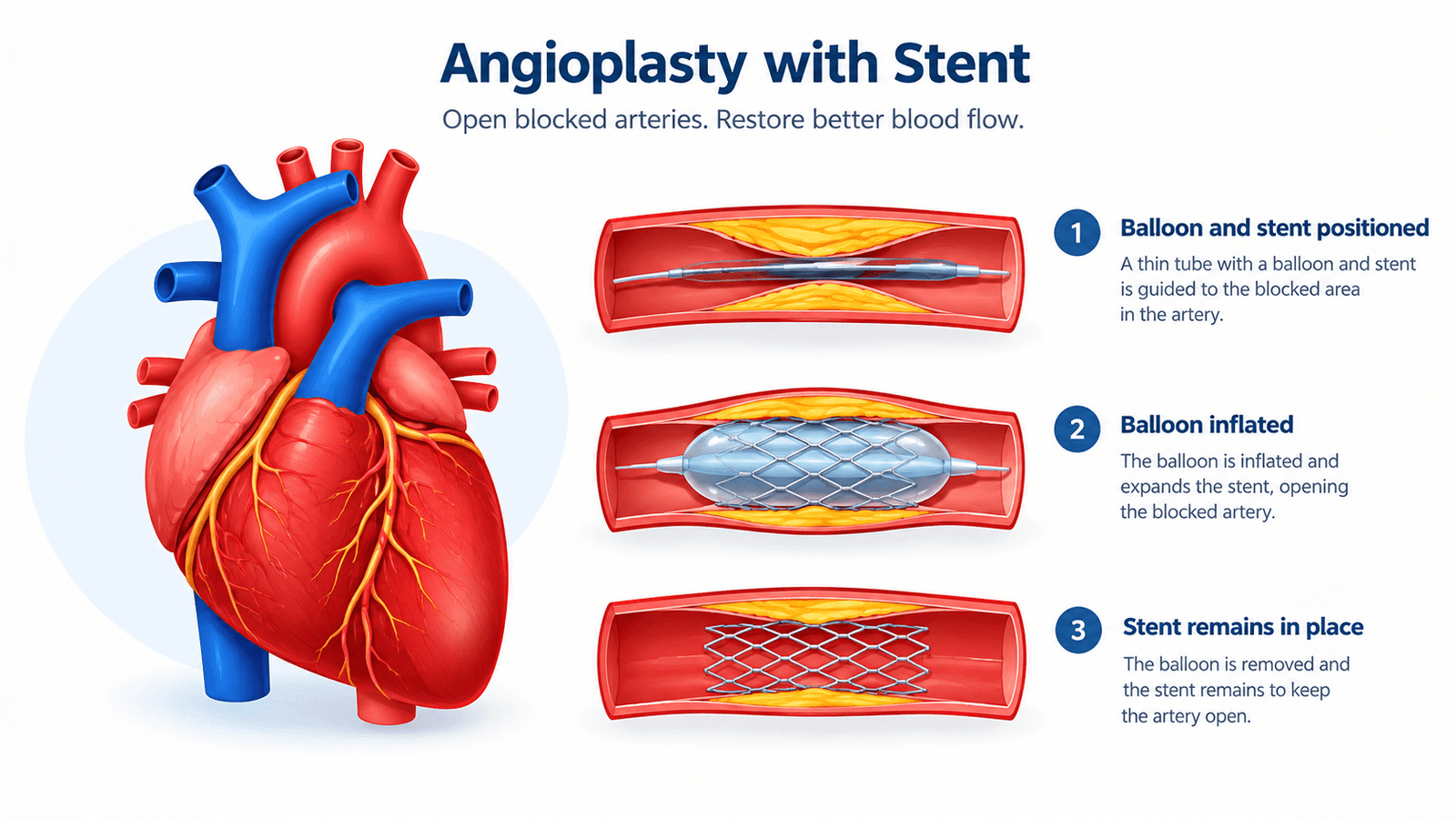
Angioplasty, also known as percutaneous coronary intervention (PCI), is a catheter-based treatment that opens selected narrowed coronary arteries. A stent is generally placed to help keep the treated artery open.
In three-vessel disease, the cardiologist may treat suitable lesions during one procedure or plan staged procedures. Complex cases can require additional equipment, imaging or specialised techniques.
Estimated Multivessel Angioplasty Cost
| Procedure | Approx. Cost (INR) | Approx. Cost (USD) |
|---|---|---|
| Angioplasty with one stent | ₹1–₹3 lakh | $1,040–$3,125 |
| Angioplasty involving multiple stents | ₹2.5–₹6 lakh | $2,605–$6,250 |
| Complex multivessel PCI | ₹3–₹7 lakh+ | $3,125–$7,290+ |
| Additional intravascular imaging or specialised equipment | Depends on requirement | Depends on requirement |
These are broad estimates, not guaranteed prices. The exact bill depends on the number of lesions treated, stent requirements, procedural complexity, hospital charges and whether additional treatment is needed.
Three-vessel disease does not necessarily require three stents. Some patients may need more than three devices, fewer stents, bypass surgery or another treatment strategy.
2026 Coronary Stent Prices in India
India regulates the ceiling prices of coronary stents through the National Pharmaceutical Pricing Authority (NPPA). Effective April 1, 2026, the published ceiling prices before applicable GST are:
| Stent Type | Ceiling Price Before GST | Approx. USD |
|---|---|---|
| Bare-metal stent (BMS) | ₹10,762.15 | $112 |
| Drug-eluting stent (DES) | ₹39,186.03 | $408 |
These prices apply to the stent device, not the complete angioplasty procedure. Hospitals should separately identify the stent category and applicable device charge in the estimate and final bill.
For example, three drug-eluting stents priced at the ceiling amount would total approximately ₹1,17,558 before applicable GST. This is only a device-cost illustration; it is not a recommendation that every patient with three-vessel disease needs three stents.
The final PCI bill also includes professional fees, catheter-lab charges, balloons, guidewires, other devices, medicines and hospital care.
Get Your Personalised Treatment Cost Estimate
Share your angiography report and details — our cardiac care team will respond on WhatsApp within 48 hours.
By submitting, you agree to be contacted by Azzocare's care team.
Request Sent!
Our team will WhatsApp you back shortly.
What Factors Affect the Cost of Three-Vessel Disease Treatment?
1. Complexity of Coronary Blockages
The location and characteristics of each blockage can influence the treatment plan. Heavily calcified lesions, chronic total occlusions, branch-point blockages and left main disease may require specialised techniques.
2. Recommended Treatment
CABG and PCI have different cost structures. Surgery generally involves an operating theatre, anaesthesia and postoperative ICU care, whereas PCI involves a catheterisation laboratory and specialised disposable devices.
3. Hospital and City
Prices vary between hospitals based on facilities, professional fees, room category and package inclusions. A premium cardiac centre may charge more than a smaller facility.
4. Existing Medical Conditions
Diabetes, kidney disease, reduced heart function and other conditions can affect investigations, treatment choices, monitoring and recovery.
5. Emergency Admission
Treatment during a heart attack can require urgent procedures, intensive monitoring and additional hospital care, potentially increasing the total cost.
6. Length of Hospital Stay
A longer ICU or ward stay, complications or additional treatment can increase the bill beyond the original estimate.
7. Follow-Up and Rehabilitation
Long-term care may involve medicines, cardiac rehabilitation, follow-up consultations and additional tests. These costs may not be included in the initial procedure package.
City-Wise 3 Vessel Disease Treatment Cost in India
The following are broad budgeting ranges for treatment at private hospitals. They include different treatment options and are not verified hospital-specific tariffs.
| City | Estimated Treatment Cost | Approx. USD |
|---|---|---|
| Delhi | ₹2–₹9 lakh+ | $2,085–$9,375+ |
| Mumbai | ₹2.5–₹10 lakh+ | $2,605–$10,415+ |
| Bangalore | ₹2–₹8 lakh+ | $2,085–$8,335+ |
| Chennai | ₹2–₹8 lakh+ | $2,085–$8,335+ |
| Hyderabad | ₹2–₹8 lakh+ | $2,085–$8,335+ |
| Kolkata | ₹2–₹7 lakh+ | $2,085–$7,290+ |
| Pune | ₹2–₹8 lakh+ | $2,085–$8,335+ |
| Gurgaon | ₹2.5–₹9 lakh+ | $2,605–$9,375+ |
| Ahmedabad | ₹2–₹7 lakh+ | $2,085–$7,290+ |
| Lucknow | ₹1.8–₹6 lakh+ | $1,875–$6,250+ |
The range can be wide because it covers more than one treatment pathway. Request a written estimate from the hospital based on the actual angiography report and recommended procedure.
3 Vessel Disease Treatment Cost in India Compared With Other Countries
International patients may compare cardiac treatment prices before deciding where to receive care. However, international estimates are affected by the hospital, insurance, surgical complexity and what is included in the package.
| Country | Indicative Cost (USD) | Approx. Cost (INR) |
|---|---|---|
| India | $2,085–$9,375+ | ₹2–₹9 lakh+ |
| Thailand | $4,000–$25,000 | ₹3.8–₹24 lakh |
| Malaysia | $5,000–$25,000 | ₹4.8–₹24 lakh |
| Turkey | $5,000–$25,000 | ₹4.8–₹24 lakh |
| UAE | $8,000–$40,000 | ₹7.7–₹38.4 lakh |
| Germany | $12,000–$50,000 | ₹11.5–₹48 lakh |
| United Kingdom | $15,000–$60,000 | ₹14.4–₹57.6 lakh |
| United States | $20,000–$100,000+ | ₹19.2–₹96 lakh+ |
These are broad planning estimates across different procedures, not like-for-like hospital quotations or standard national prices. Travel, accommodation, rehabilitation and complications may add costs. Patients should obtain a written estimate directly from the treating hospital.
How Is Three-Vessel Disease Diagnosed?
The cardiac team combines symptoms, medical history, physical examination and test results to assess coronary artery disease. Common investigations include:
- ECG: Records the electrical activity of the heart.
- Echocardiogram: Evaluates heart structure and pumping function.
- Blood tests: May assess cardiac injury, kidney function, blood counts and other relevant factors.
- Coronary angiography: Uses a catheter, contrast material and X-ray imaging to visualise coronary arteries.
- CT coronary angiography: Provides coronary artery images in selected patients without inserting a catheter into the coronary arteries.
- Additional coronary assessments: Selected patients may need further physiological or intravascular tests to help guide treatment.
Coronary angiography is particularly important when doctors need to understand the location and extent of coronary blockages before choosing between medication, PCI and CABG. Not every patient needs every test. The treating team determines which investigations are appropriate.
What Should a Hospital Treatment Estimate Include?
Before planned treatment, request an itemised estimate rather than relying on an advertised starting price.
| Expense | What to Confirm |
|---|---|
| Cardiology consultation | Specialist and surgeon fees |
| Coronary angiography | Whether diagnostic costs are included |
| Angioplasty or CABG | Exact procedure proposed |
| Stents or graft-related supplies | Device category, quantity and cost |
| Cath lab or operating theatre | Procedural and equipment charges |
| ICU and room | Included days and additional-day rates |
| Medicines | Included and excluded medicines |
| Diagnostic tests | Preoperative and postoperative investigations |
| Additional devices | Whether specialised equipment costs extra |
| Follow-up | Consultations, rehabilitation and further tests |
Ask the hospital to explain the circumstances that could cause the final bill to exceed the initial estimate.
Recovery After Treatment for Three-Vessel Disease
Recovery depends on the treatment performed and the patient's overall condition.
After Angioplasty
Uncomplicated PCI often involves a shorter hospital stay. Patients may need access-site care, follow-up and medication adjustment.
Antiplatelet medicines are commonly prescribed after stenting. Do not stop aspirin, clopidogrel or another prescribed antiplatelet medicine without medical advice, because stopping treatment prematurely can increase the risk of a clot inside the stent.
After CABG
CABG usually involves several days in hospital, including intensive monitoring immediately after surgery. Recovery may take several weeks to a few months.
Patients may need wound care, medicines, gradual physical activity and cardiac rehabilitation. Follow the surgeon's instructions about lifting, driving, exercise and return to work.
Long-Term Management
Regardless of the treatment chosen, coronary artery disease requires continued care. This may include cholesterol management, blood-pressure control, diabetes treatment, smoking cessation, a heart-healthy diet and physical activity as advised by the cardiac team.
Treatment can improve blood flow and reduce risk, but it does not remove the need for long-term cardiovascular care.
Does Insurance Cover Three-Vessel Heart Disease Treatment?
Many Indian health insurance policies cover medically necessary angioplasty or CABG, subject to their terms and conditions. Coverage can depend on sum insured, waiting periods, pre-existing disease clauses, network hospital status, room-rent limits, deductibles and co-payments, pre-authorisation, policy exclusions, and approved package rates.
For planned treatment, ask the hospital's insurance desk to confirm the approved amount and expected out-of-pocket expenses. Ask specifically whether additional devices, ICU extensions and complications are covered. Emergency treatment should not be delayed while comparing prices or completing routine insurance paperwork.
How Azzocare Helps International Patients
Azzocare connects international patients diagnosed with three-vessel coronary artery disease to verified cardiologists and cardiac surgeons across Delhi NCR, coordinating every step at no extra cost:
- Free medical opinion and itemised cost estimate within 48 hours of sharing your angiography reports
- Side-by-side comparison of angioplasty vs. bypass surgery options for your specific case
- Medical visa documentation and travel planning support
- Airport pickup and accommodation arranged near your hospital
- Interpreter support throughout consultations and admission
- A dedicated case manager from first contact through follow-up care
International patients can seek an initial review by sharing angiography images, reports, ECG, echocardiogram and relevant medical history. The treating team will confirm the proposed treatment, expected costs and medical suitability for travel.
Frequently Asked Questions
What is the 3 vessel disease treatment cost in India?
A broad estimate is ₹2–₹9 lakh ($2,085–$9,375) or more for CABG at private hospitals, while multivessel angioplasty may cost around ₹2.5–₹6 lakh ($2,605–$6,250) or more. The exact amount depends on the treatment, hospital and complexity.
Is three-vessel disease serious?
Three-vessel disease can indicate extensive coronary artery disease and requires timely assessment by a cardiologist. Its severity depends on the location and degree of narrowing, heart function, symptoms and other medical conditions.
Is bypass surgery always necessary for three-vessel disease?
No. CABG is often considered for complex multivessel disease, but selected patients may be suitable for PCI or medical management. The cardiac team should review the angiography findings and overall clinical condition before recommending treatment.
Can three-vessel disease be treated with stents?
Yes, selected patients may undergo multivessel PCI. Suitability depends on coronary anatomy, lesion complexity, other medical conditions and the expected benefits compared with CABG.
How many stents are needed for three-vessel disease?
There is no fixed number. Some patients need multiple stents, while others may be better suited to bypass surgery or another approach. The number and type of devices depend on the individual coronary anatomy and treatment plan.
What is the cost of triple-vessel bypass surgery in India?
A broad planning range is ₹2–₹9 lakh ($2,085–$9,375) or more, depending on the hospital, surgical technique, ICU stay and clinical complexity. Obtain a written quotation for the proposed operation.
Does the price of the stent include angioplasty?
Not necessarily. The regulated ceiling price applies to the stent device, while angioplasty also involves professional fees, catheter-lab charges, other equipment, medicines and hospital care.
Can medication alone treat three-vessel disease?
Some patients may be managed medically, but others need revascularisation. Medication can control symptoms and cardiovascular risk, but it does not physically remove a blockage. The appropriate plan depends on clinical findings and should be decided by the treating team.
How long does recovery take after CABG?
Many patients spend several days in hospital and gradually return to normal activities over several weeks. Full recovery may take a few months. The timeline depends on the operation, complications and the patient's general health.
Can international patients travel to India for treatment?
International patients can seek an initial review from an Indian cardiac centre by sharing angiography images, reports, ECG, echocardiogram and relevant medical history. The treating team should confirm the proposed treatment, expected costs and medical suitability for travel.
Related Pages
Legal Disclaimer
The costs mentioned on this page are approximate figures based on published provider estimates for treating three-vessel coronary artery disease in India as of 2026. Actual pricing depends on the hospital chosen, the city, severity and complexity of the blockages, treatment method, patient's health, ICU requirements and each patient's individual medical needs. This page is for general information only and is not a substitute for personalised medical advice. New or persistent chest pain, severe breathlessness, cold sweating or fainting may indicate a heart attack — seek emergency medical care immediately rather than waiting for a cost estimate. For an accurate, individualised treatment estimate, please consult your cardiologist or reach out to our care team directly.

Mohammad Nafis Khan is an SEO and digital marketing professional with over 5 years of experience creating search-optimized, patient-focused content for healthcare and medical websites. He follows E-E-A-T principles to make complex healthcare topics clear and accessible, structuring articles around what patients actually search for.
Read full bio
Dr. Md Ehsanullah is a physician with 4+ years of clinical experience in internal and general medicine. He completed his MBBS and MD from Asian Medical University, Kyrgyzstan, and currently practices at VMMC & Safdarjung Hospital, New Delhi. He reviews Azzocare's healthcare content for clinical accuracy, ensuring medical information aligns with current best practices and E-E-A-T principles.
Read full bio