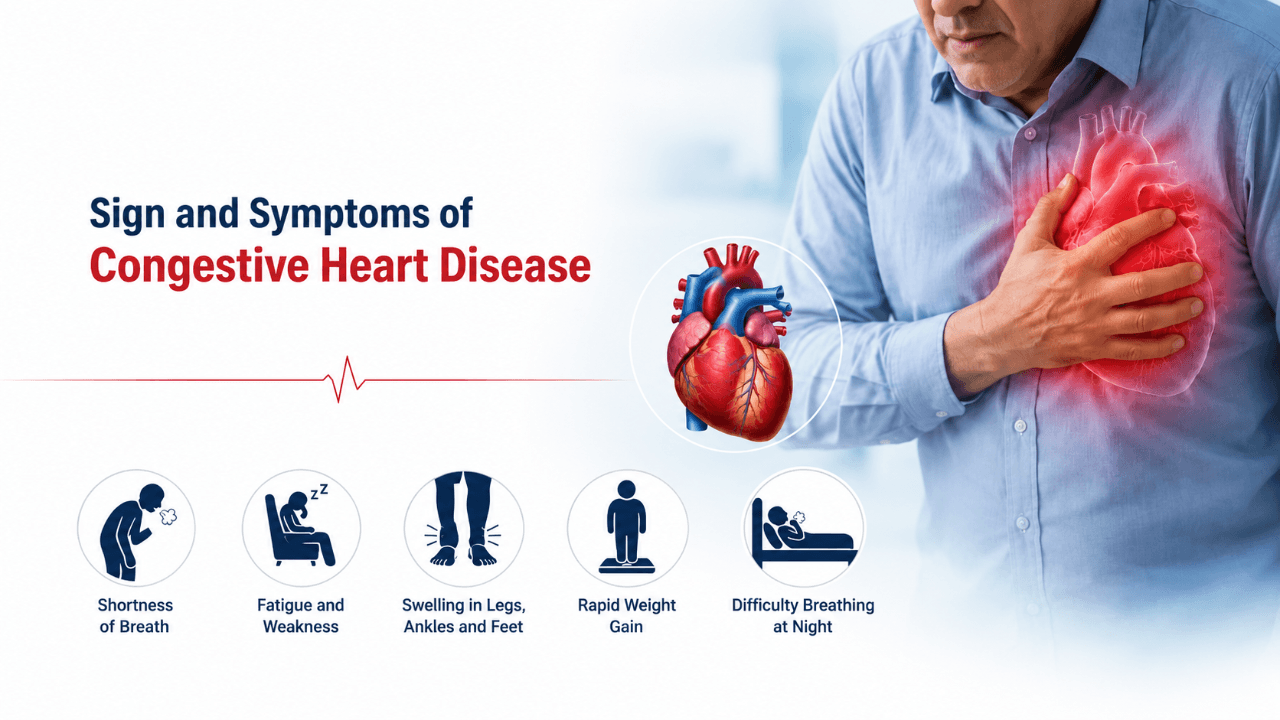
The sign and symptoms of congestive heart disease include shortness of breath, persistent fatigue, swollen legs and ankles, rapid heartbeat, a persistent cough with white or pink mucus, sudden weight gain due to fluid retention, reduced exercise tolerance, and difficulty concentrating. These occur because the heart cannot pump blood efficiently, causing fluid to build up in the lungs, legs, and other organs.
What is Congestive Heart Disease?
Congestive heart disease (CHD) is a serious condition in which the heart muscle becomes too weak or too stiff to pump blood effectively throughout the body. When the heart cannot meet the body’s demand for blood and oxygen, fluid starts to congest in the lungs, legs, and other tissues — hence the name “congestive.”
Recognizing the sign and symptoms of congestive heart disease early is critical, because the condition tends to worsen silently before it becomes life-threatening. According to the World Health Organization, cardiovascular diseases claim over 17.9 million lives each year globally — making them the single largest cause of death. In India, particularly across Delhi NCR, the burden is rising sharply among younger adults.
If you or someone you care about has been experiencing unexplained breathlessness, swelling, or persistent fatigue, do not put off a cardiac evaluation. Getting checked early by a qualified specialist is always the right call — Azzocare has a wide network of verified doctors across India, so you can find the right cardiologist for your situation without any hassle.
Early Warning Signs of Congestive Heart Disease
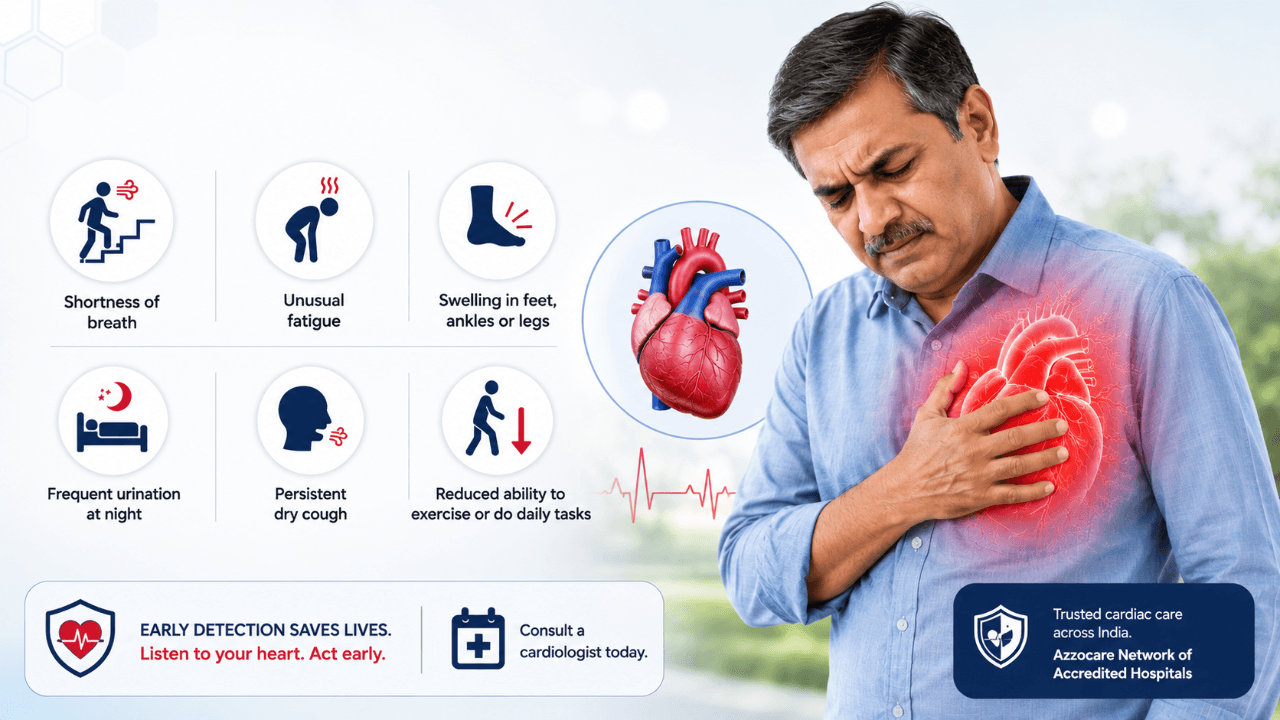
The early sign and symptoms of congestive heart disease are often subtle and easy to dismiss. Most patients attribute them to stress, ageing, or a poor night’s sleep — which is exactly why they go undetected for so long.
- Shortness of breath during normal activities like walking or climbing stairs
- Unusual fatigue that does not improve even after rest
- Mild swelling in the feet, ankles, or lower legs at the end of the day
- A need to urinate frequently during the night (nocturia)
- A slight dry cough that lingers for weeks without explanation
- A noticeable drop in your ability to exercise or carry out daily tasks
These may seem harmless on their own, but when they appear together — or progressively worsen — they deserve prompt medical attention. Many of India’s best cardiac care facilities are part of Azzocare network of accredited hospitals that specialize in evaluating and managing exactly these kinds of presentations.
Common Sign and Symptoms of Congestive Heart Disease
As congestive heart disease progresses, the sign and symptoms become more pronounced and harder to ignore. Here is a detailed breakdown of what patients commonly experience:
😮💨 Shortness of Breath — Difficulty breathing at rest or during activity. Many patients cannot lie flat and need extra pillows to sleep.
😴 Persistent Fatigue — Constant tiredness even after sleeping, caused by reduced blood and oxygen reaching the muscles and organs.
🦵 Swollen Legs & Ankles — Fluid builds up in the lower body, causing visible puffiness or a “pit” when pressed with a finger (pitting edema).
💓 Rapid Heartbeat — The heart beats faster to compensate for its poor pumping ability, causing palpitations or fluttering in the chest.
🤧 Persistent Cough — Fluid in the lungs leads to a chronic cough, often producing white or pink blood-tinged mucus when lying down.
⚖️ Sudden Weight Gain — Gaining 1–2 kg within a few days is a red flag — a direct result of dangerous fluid accumulation in the body.
🧠 Confusion & Brain Fog — Reduced blood flow to the brain can impair memory, concentration, and mental sharpness, especially in elderly patients.
🤢 Nausea & Poor Appetite — Fluid buildup around the digestive organs causes persistent bloating, a feeling of fullness, and reduced appetite.
If several of these sign and symptoms of congestive heart disease appear at the same time — or if any one of them worsens over days — do not wait. An early diagnosis makes a significant difference in how well the condition can be managed, and the earlier a specialist evaluates you, the more treatment options remain available.

Advanced Stage Symptoms
When congestive heart disease reaches a severe stage, the sign and symptoms escalate rapidly and require immediate emergency care. Waiting too long at this point can be fatal.
- Acute pulmonary edema — severe breathlessness and complete inability to breathe while lying down
- Coughing up blood-tinged frothy sputum
- Severe chest pain or pressure that may radiate to the arm or jaw
- Fainting or sudden loss of consciousness
- Cyanosis — a bluish tint to the lips, fingertips, or skin caused by critically low oxygen levels
- Ascites — fluid accumulation in the abdomen causing visible distension and discomfort
⚠️ Medical Emergency — Sudden severe chest pain, inability to breathe, or loss of consciousness are life-threatening sign and symptoms of congestive heart disease. Call emergency services immediately — do not drive yourself to the hospital.
4 Stages of Congestive Heart Disease (NYHA Classification)
The New York Heart Association (NYHA) classifies congestive heart disease into four stages based on how severely the sign and symptoms affect a patient’s daily life:
Stage I — Mild | No Limitation of Physical Activity Ordinary physical activity does not cause fatigue, breathlessness, or palpitations. Most patients are unaware anything is wrong at this stage.
Stage II — Mild–Moderate | Slight Limitation During Activity Comfortable at rest, but moderate exertion — like climbing stairs or walking fast — causes fatigue, breathlessness, or palpitations.
Stage III — Moderate–Severe | Marked Limitation with Light Activity Symptoms appear with even minimal exertion such as dressing, bathing, or walking short distances. Comfortable only when resting.
Stage IV — Severe | Symptoms Present Even at Rest Any physical activity causes severe discomfort. Breathlessness, chest pain, and exhaustion are present even while lying still.
Getting diagnosed at Stage I or II dramatically improves the long-term prognosis. Heart disease caught early responds far better to medication and lifestyle changes, and patients at this stage often avoid the need for surgery altogether.
What Causes Congestive Heart Disease?
Understanding what causes congestive heart disease helps in preventing it and in making sense of the sign and symptoms when they appear. The most common underlying causes include:
- blockage of heart symptoms — coronary artery disease (CAD) causes blockages in the arteries that supply blood to the heart muscle itself
- High blood pressure (hypertension) — forces the heart to work harder over years, gradually weakening the muscle
- A previous heart attack — permanently damages heart tissue and reduces the heart’s pumping capacity
- Diabetes mellitus — doubles the risk of heart disease and accelerates arterial damage
- Cardiomyopathy — a disease of the heart muscle that affects its structure and function
- Valvular heart disease — damaged or leaky valves that disrupt normal blood flow through the heart
- Arrhythmias — irregular heart rhythms that reduce the efficiency of each heartbeat
- Obesity and a sedentary lifestyle — the most preventable and modifiable risk factors in urban India
According to the American Heart Association, roughly half of all heart disease cases involve a preserved ejection fraction — meaning the heart squeezes normally, but the ventricles are abnormally stiff and cannot fill properly between beats.
How is Congestive Heart Disease Diagnosed?
Accurately diagnosing congestive heart disease involves a combination of a physical examination and targeted investigations. If you are experiencing any of the sign and symptoms described in this guide, your doctor will likely recommend one or more of the following:
- Echocardiogram (Echo) — the single most important test; it directly measures how well the heart is pumping by calculating the ejection fraction
- Electrocardiogram (ECG) — detects arrhythmias, chamber enlargement, and evidence of a previous heart attack
- Blood tests — elevated BNP or NT-proBNP levels in the blood are a reliable marker of heart stress and fluid overload
- Chest X-ray — shows whether the heart is enlarged and whether fluid has collected in the lungs
- Cardiac stress test — evaluates how your heart responds to controlled physical exertion
- Cardiac MRI — provides detailed, high-resolution images of the heart’s structure and muscle health
Most of these tests are available at well-equipped cardiac centres across India. Azzocare partner hospitals carry out these investigations with modern equipment and experienced cardiac teams. Booking a diagnostic appointment through the platform takes only a few minutes.
Treatment Options for Congestive Heart Disease
There is no complete cure for advanced congestive heart disease, but the sign and symptoms can be managed effectively with the right plan — and many patients go on to live fulfilling, active lives for years after diagnosis.
Medication
The foundation of treatment is medication. Cardiologists typically prescribe ACE inhibitors or ARBs to reduce the strain on the heart, beta-blockers to slow the heart rate and improve pumping, diuretics (water pills) to clear excess fluid, and aldosterone antagonists to reduce fluid retention. Newer SGLT2 inhibitors have also shown remarkable benefits in reducing hospitalizations and improving outcomes in heart disease patients.
Lifestyle Changes
Medication alone is not enough. Patients are strongly advised to reduce their salt and fluid intake, maintain a healthy body weight, quit smoking, limit alcohol, and engage in supervised cardiac rehabilitation exercise — starting with simple exercise for heart health at home that require no equipment and suit most cardiac patients. These lifestyle modifications directly reduce the frequency and severity of sign and symptoms of congestive heart disease over time.
Following practical strategies to improve heart health naturally — including better nutrition, daily movement, stress reduction, and quality sleep — may help reduce the progression and severity of congestive heart disease symptoms over time.
Devices and Surgical Procedures
In moderate-to-severe cases, a cardiologist may recommend an implantable cardioverter defibrillator (ICD) to prevent sudden cardiac death, cardiac resynchronization therapy (CRT) to improve the heart’s pumping coordination, or coronary artery bypass grafting (CABG) to restore blood flow. Patients considering CABG often want to understand the surgery cost before making treatment decisions. Heart valve repair or replacement surgery may also be indicated, and in rare end-stage cases, a heart transplant may be considered. These are not decisions to make alone — it helps to speak with a specialist who can explain each option clearly, and you can review profiles of cardiac surgeons and cardiologists on Azzocare before deciding who to consult.
When Should You See a Cardiologist?
Not every case of breathlessness or fatigue points to heart disease — but certain combinations of sign and symptoms of congestive heart disease should prompt an urgent cardiology review:
- Breathlessness that is worsening progressively over days or weeks, especially when lying flat
- Swollen feet or legs that do not improve after keeping them elevated
- Gaining more than 1–2 kg in weight within just two or three days
- Waking up multiple times each night to urinate
- Heart palpitations, irregular heartbeat, or a persistent sensation of fluttering in the chest
- Chest tightness or heaviness, even if mild or occasional
- A family history of heart disease, combined with any two or more of the above
Acting early is always better. If two or more of the above apply to you, that is reason enough to get checked. Azzocare’s Cardiology page is a good starting point — it covers what to expect from a cardiac consultation and helps you understand your options before you even walk into a clinic.
Key Takeaways
- Sign and symptoms of congestive heart disease include breathlessness, fatigue, ankle swelling, rapid heartbeat, and sudden weight gain.
- Early detection — especially at Stage I or II — leads to significantly better long-term outcomes.
- Common causes include high blood pressure, coronary artery disease, diabetes, and a history of heart attacks.
- Treatment combines medication, lifestyle changes, and in advanced cases, devices or surgery.
- Never ignore worsening symptoms — consult a verified cardiologist as soon as possible.
Frequently Asked Questions
What are the first sign and symptoms of congestive heart disease to watch for?
The earliest sign and symptoms of congestive heart disease include unusual fatigue, mild breathlessness during regular activities, slight ankle swelling by the end of the day, and needing extra pillows to sleep comfortably. These early signals are often dismissed — but they should always prompt a doctor visit.
Can congestive heart disease be reversed or cured?
In some cases — for example, when caused by alcohol-related cardiomyopathy or untreated thyroid disease — heart function can improve significantly once the underlying cause is treated. For most patients, however, congestive heart disease is a lifelong condition that requires medication, lifestyle changes, and regular monitoring to manage effectively.
How is congestive heart disease different from a heart attack?
A heart attack occurs suddenly when a blood vessel supplying the heart is completely blocked, causing part of the heart muscle to die. Congestive heart disease develops gradually over months or years as the heart becomes progressively weaker or stiffer. A heart attack can, however, be one of the causes that triggers or worsens congestive heart disease.
How long can someone live with congestive heart disease?
Life expectancy depends heavily on the stage at diagnosis, the underlying cause, and how consistently the patient follows their treatment plan. Many patients diagnosed at an early stage live for 10 to 15 or more years with good quality of life. This is why recognizing the sign and symptoms of congestive heart disease early and seeking care promptly is so important.
Is congestive heart disease painful?
Congestive heart disease is not always painful. The most distressing symptoms are typically breathlessness and extreme fatigue. However, during acute episodes or in advanced stages, chest pain or pressure can occur and should be treated as a medical emergency.
Where can I find a heart specialist in India?
Azzocare connects patients across Delhi NCR and 15+ cities in India with verified cardiologists at NABH and JCI accredited hospitals. You can view doctor profiles, check availability, and book a confirmed appointment directly through the platform — without long waiting times.