
Exercise for Heart Health at Home: The 5 Best Workouts That Actually Strengthen Your Heart
The best exercise for heart health at home includes brisk walking, jumping jacks, stair climbing, yoga, and bodyweight circuits — all of which you can do without equipment. These activities strengthen the heart muscle, improve circulation, lower blood pressure, and reduce cardiovascular risk. Even 30 minutes of moderate activity most days of the week can produce measurable improvements in heart function.
Introduction
Most people assume a gym membership, a treadmill, or expensive equipment is the price of a healthy heart. That’s simply not true.
Your heart is a muscle. Like every other muscle in your body, it gets stronger when you challenge it — and weaker when you don’t. The good news is that some of the most effective heart-strengthening exercises require nothing more than your body weight, a small space, and a consistent habit.
Whether you’re managing a family history of heart disease, recovering from a cardiac event, worried about early symptoms, or simply trying to stay ahead of the curve, this guide covers everything you need to know about exercise for heart health at home — what works, why it works, and how to do it safely.
Key Takeaways
- Aerobic (cardio) exercise is the most evidence-supported form of activity for improving heart health
- You don’t need equipment — walking, dancing, and bodyweight movements all count
- Seniors and those with heart conditions can exercise safely with appropriate modifications
- Consistency matters more than intensity, especially when starting out
- Exercise alone cannot treat heart blockage — but it can meaningfully reduce risk and support recovery alongside medical care
- Warning signs during exercise should never be ignored — always consult a doctor before starting a new program if you have existing cardiac concerns
Why Exercise Is So Important for Heart Health
The heart pumps roughly 100,000 times a day. Every contraction pushes oxygen-rich blood through thousands of kilometres of blood vessels. When the heart is deconditioned — from inactivity, poor diet, stress, or age — this system becomes less efficient. Blood pressure rises. The heart works harder just to do the same job.
Regular physical activity reverses this trend in measurable ways. Exercise strengthens the cardiac muscle, improves the elasticity of blood vessel walls, lowers resting heart rate, reduces LDL (bad) cholesterol, raises HDL (good) cholesterol, and helps maintain a healthy weight — all factors that directly reduce your risk of heart attack and stroke.
According to the American Heart Association, adults should aim for at least 150 minutes of moderate-intensity aerobic activity each week. That’s just over 20 minutes a day — and the most practical way to achieve it is through consistent exercise for heart health at home.
Along with regular exercise, following a science-backed routine to improve heart health naturally can further support blood pressure, cholesterol balance, circulation, and long-term cardiovascular wellness.
The 5 Best Exercises to Strengthen Your Heart at Home
1. Brisk Walking (Indoors or on Your Terrace)
Don’t underestimate this one. Brisk walking — at a pace where you’re slightly breathless but can still hold a conversation — is one of the most consistently recommended exercises for cardiovascular health across all age groups.
How to do it: Walk at a pace that elevates your heart rate. Swing your arms. Keep your back straight. Aim for 20–30 minutes at a time. If you have a staircase or terrace, use it. If not, walking laps through your home counts — especially for seniors or those with limited outdoor access.
Why it works: Sustained moderate activity trains the heart to pump more efficiently at rest. Over weeks, resting heart rate drops and blood pressure improves.
Best for: Beginners, seniors, people recovering from cardiac events, those with joint issues.
2. Jumping Jacks and Low-Impact Cardio Bursts
Jumping jacks are a complete cardiovascular workout requiring zero equipment. They raise your heart rate quickly, engage large muscle groups simultaneously, and improve coordination.
How to do it: Start with 3 sets of 20–30 jumping jacks with a 30-second rest between sets. As you get fitter, increase to 4–5 sets. If jumping is hard on your knees, do a modified version — step out one foot at a time instead of jumping.
For a heart-lung circuit: Alternate jumping jacks with marching in place, arm circles, and side steps. Keep moving for 15–20 minutes without stopping for best cardiovascular benefit.
Why it works: This kind of interval-style movement improves VO2 max — your body’s ability to use oxygen efficiently — which is one of the strongest predictors of long-term cardiovascular health.
3. Stair Climbing
If your home has a staircase, you have one of the best cardio machines in existence.
How to do it: Walk up and down stairs at a comfortable but sustained pace for 10–15 minutes. Rest if needed, then continue. Progress to taking stairs at a brisker pace, or adding two flights instead of one.
Why it works: Stair climbing significantly elevates heart rate, engages the large muscles of the legs and glutes, and improves cardiovascular endurance. A 2019 study published in the European Heart Journal found that stair climbing was associated with meaningfully lower risks of cardiovascular disease and mortality.
Note for seniors: Hold the railing. Start with fewer floors. Consistency over intensity.
4. Yoga and Deep Breathing Exercises
Yoga is often underrated as a cardiovascular intervention — but there is growing clinical evidence supporting its role in heart health.
Certain yoga styles (Hatha, Vinyasa) raise heart rate enough to qualify as moderate aerobic exercise. Beyond that, yoga’s emphasis on deep, controlled breathing activates the parasympathetic nervous system, which directly lowers blood pressure, reduces cortisol, and slows heart rate.
Heart-supportive yoga poses:
- Tadasana (Mountain Pose): Improves posture and breathing capacity
- Virabhadrasana (Warrior Pose): Strengthens legs, improves circulation
- Setu Bandhasana (Bridge Pose): Opens the chest, improves cardiac circulation
- Shavasana with pranayama: Activates the rest-and-digest response, lowers resting heart rate
Pranayama (breathwork): Techniques like Anulom Vilom (alternate nostril breathing) and Bhramari have been shown in small clinical studies to reduce blood pressure and improve heart rate variability — a key marker of cardiac resilience.
Best for: Stress-related heart concerns, high blood pressure, seniors, post-cardiac recovery (with physician clearance).
5. Bodyweight Circuit Training
Bodyweight exercises done in sequence — with minimal rest between movements — create a sustained cardiovascular demand that rivals gym-based training.
A simple heart-health circuit (no equipment):
| Exercise | Reps/Duration | Rest |
|---|---|---|
| Marching in place | 1 minute | None |
| Squats | 10–15 reps | 15 seconds |
| Standing push-ups (against wall) | 10 reps | 15 seconds |
| Side steps | 1 minute | None |
| Seated leg raises | 10 reps | 15 seconds |
| Arm circles | 30 seconds each direction | None |
Repeat this circuit 2–3 times. Total time: approximately 20–25 minutes.
Why it works: Circuit training combines aerobic and strength components, which has been shown to improve both cardiac output and metabolic health simultaneously.
Exercise for Heart Blockage: What You Need to Know
One of the most common questions people ask is whether exercise can help with heart blockage symptoms. The honest answer is nuanced.
Exercise cannot physically dissolve arterial plaque or reverse coronary artery disease on its own. However, regular physical activity — particularly aerobic exercise — does reduce the progression of coronary artery disease by:
- Improving endothelial (blood vessel lining) function
- Reducing inflammation in vessel walls
- Lowering LDL cholesterol and triglycerides
- Improving collateral circulation (the heart’s ability to reroute blood around blockages)
If you’ve been diagnosed with any degree of heart blockage, exercise should always be discussed with and supervised by your cardiologist. Cardiac rehabilitation programs — which often include supervised exercise — are a core part of standard treatment. Never start an independent exercise program after a cardiac diagnosis without professional guidance.
In some cases, advanced coronary artery disease may require surgical treatment, making it helpful to understand the cost of bypass surgery before planning care.
Exercise for Heart Health in Seniors: Safe Modifications
Older adults often worry that vigorous movement will be harmful. In most cases, the opposite is true — appropriate physical activity is protective, not risky.
Safe starting points for seniors:
- Start with 10-minute sessions and work up gradually
- Chair-based exercises (seated marching, seated arm raises, ankle circles) are excellent for those with balance concerns
- Use a chair or wall for support during standing exercises
- Focus on consistency over intensity
- Monitor perceived exertion — aim for “somewhat hard” but never “extremely hard”
- Hydrate well, especially in warm climates
If you or a loved one has symptoms of congestive heart disease such as swelling in the legs, shortness of breath at rest, or fatigue with minimal exertion — consult a doctor before beginning any exercise program.
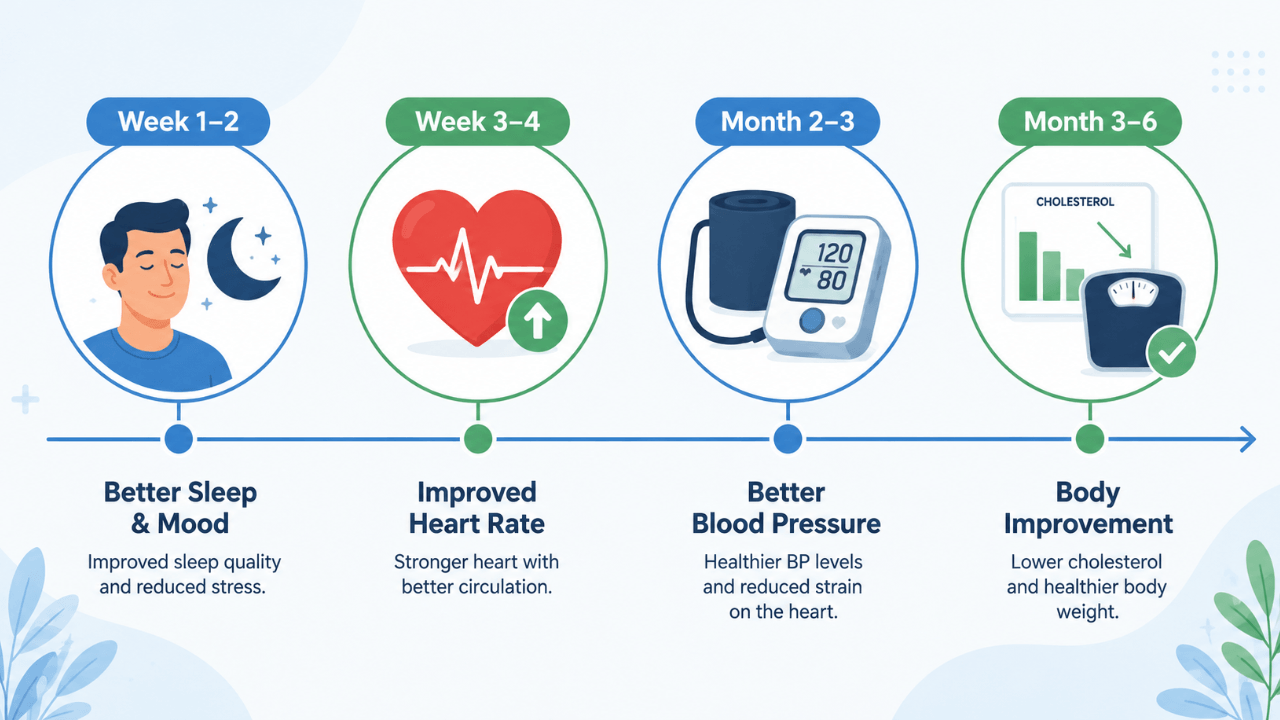
How to Improve Heart Health Quickly: A Realistic Timeline
People often want to know how fast exercise for heart health at home starts working. Here’s what evidence generally shows:
- Week 1–2: Improved mood, better sleep, slightly increased energy
- Week 3–4: Measurable improvements in resting heart rate begin
- Month 2–3: Noticeable improvements in blood pressure and exercise tolerance
- Month 3–6: Meaningful changes in cholesterol profile, body weight, and cardiac efficiency
“Quickly” in cardiac health means weeks to months, not days. But the changes are real, and they compound over time.
What Most People Don’t Know About Heart Exercise
1. Low intensity counts — often more than you think. The “no pain, no gain” philosophy is not appropriate for cardiac health. Moderate-intensity activity sustained consistently over time outperforms occasional intense exercise in cardiovascular outcomes.
2. Sitting is a separate risk factor from not exercising. Even people who exercise regularly but sit for 8–10 hours a day have elevated cardiovascular risk. Breaking up prolonged sitting with even 5-minute movement breaks every hour has measurable benefits.
3. Recovery time is part of the training. The heart adapts and strengthens during rest, not during the workout itself. Sleep quality and stress management are as important as the exercise itself.
4. Breathing patterns matter. Holding your breath during exertion (Valsalva manoeuvre) can briefly spike blood pressure — something that matters for those with existing cardiac concerns. Always breathe continuously and deliberately during exercise.
5. Exercise affects heart rhythm. People with arrhythmias, particularly atrial fibrillation, need specific exercise guidance. Certain types of exercise can trigger or worsen arrhythmias, while others help stabilise them. This is a discussion to have with your cardiologist.
Common Myths About Exercise and Heart Health
Myth: “If I have heart disease, I should avoid exercise entirely.” Not true. Supervised, appropriate exercise is a cornerstone of cardiac rehabilitation and has been shown to reduce mortality risk in heart disease patients.
Myth: “High-intensity exercise is always better for the heart.” Evidence does not support this for most people. Moderate-intensity exercise sustained over time provides robust cardiovascular benefits with far lower injury risk.
Myth: “My heart rate has to reach a specific number to count.” Heart rate targets are guides, not mandates. Listen to your body. The perceived exertion scale — how hard you feel you’re working — is often more practical and safer than chasing a specific heart rate.
Myth: “Exercise will make my palpitations worse.” In most healthy individuals, exercise actually reduces the frequency of benign palpitations. However, exercise-induced palpitations that feel like racing, fluttering, or missed beats should always be evaluated.
Practical Lifestyle Tips to Support Heart Health
Exercise for heart health at home works best as part of a broader lifestyle approach. A few evidence-supported additions:
- Diet: Reduce sodium, saturated fats, and refined carbohydrates. Increase vegetables, whole grains, legumes, and healthy fats (olive oil, nuts, fatty fish)
- Sleep: Chronic sleep deprivation raises blood pressure and inflammatory markers — aim for 7–8 hours
- Stress management: Chronic psychological stress contributes to hypertension and arrhythmia. Yoga, meditation, and social connection all help
- Smoking: If you smoke, quitting is the single most impactful thing you can do for your heart — more impactful than any exercise program
- Alcohol: Moderate or reduce intake; heavy alcohol consumption directly damages the heart muscle
Along with regular exercise, choosing the right foods can further support cardiovascular wellness. Learn more about the best foods for healthy arteries and how they may help support circulation, cholesterol management, and long-term heart health.
When to See a Doctor
Exercise is safe for the vast majority of people. But certain symptoms demand prompt medical evaluation — and should never be attributed to fitness or “just getting older.”
Stop exercising and seek medical care if you experience:
- Chest pain, pressure, tightness, or heaviness during or after exercise
- Severe shortness of breath disproportionate to effort
- Dizziness, lightheadedness, or fainting
- Palpitations that feel rapid, irregular, or sustained
- Sudden unusual fatigue or weakness
If you’re unsure whether you’re safe to begin an exercise program, a cardiac evaluation is the right first step. Azzocare’s team of experienced cardiologists can assess your heart health and guide you toward the right exercise plan. You can find a specialist near you or book an appointment online.
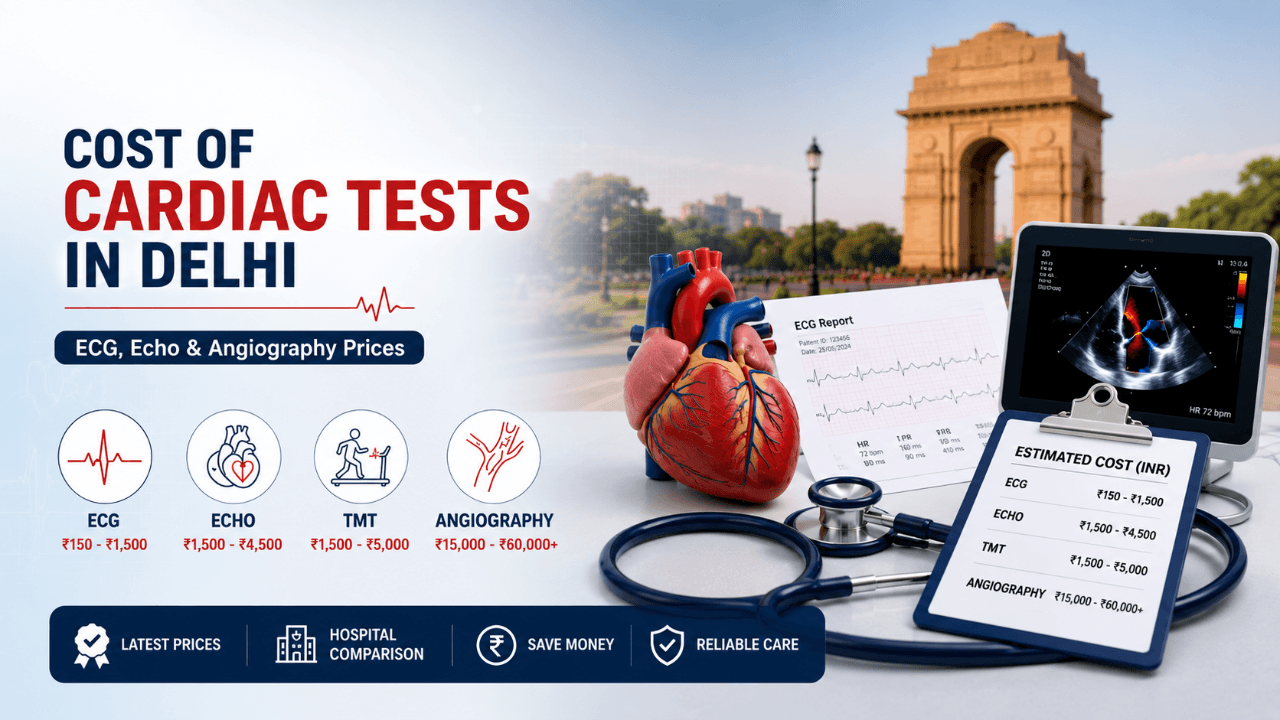
For those in Delhi, understanding the cost of cardiac tests — including ECGs, stress tests, and echocardiograms — can help you plan proactively. You can also explore hospitals equipped for cardiac care in your region.
Frequently Asked Questions
Q: What is the single best exercise for heart health at home?
Brisk walking is the single best exercise for heart health at home for most people — it’s low-impact, requires no equipment, and is accessible to nearly every age group. Sustained aerobic activity like walking directly strengthens cardiac muscle, improves blood pressure, and supports healthy cholesterol levels.
Q: Can I exercise at home if I have a heart blockage?
Yes, in many cases — but only with your cardiologist’s guidance and approval. Exercise forms a key component of cardiac rehabilitation for many heart conditions, including coronary artery disease. The type, intensity, and duration must be tailored to your specific condition.
Q: How long does it take for exercise to improve heart health?
Measurable improvements in resting heart rate and blood pressure typically begin within 3–4 weeks of consistent moderate aerobic exercise. Meaningful changes in cholesterol and cardiac efficiency often appear within 2–3 months.
Q: Are there heart health exercises specifically for seniors?
Yes. Chair-based exercises, slow walking, gentle yoga, and modified bodyweight movements are all suitable and effective for older adults. Seniors should start with shorter sessions, use support if needed, and avoid extreme exertion — but should not avoid movement altogether.
Q: Is it safe to exercise daily for heart health?
Yes, though the intensity matters. Moderate-intensity exercise most days of the week is the widely recommended target. Rest days or lighter activity days (such as gentle walking or yoga) are important for recovery. Vigorous high-intensity exercise should not be done every single day.
Conclusion
The relationship between exercise and heart health is one of the most thoroughly supported in medicine. Starting a routine of exercise for heart health at home doesn’t require expensive equipment, a gym membership, or extraordinary athletic ability. What you need is consistency, appropriate intensity, and the willingness to make movement a daily habit.
Start where you are. Walk for 15 minutes today. Add jumping jacks tomorrow. Try a yoga video next week. Build gradually, listen to your body, and trust the process.
Your heart is worth the effort. And the effort, honestly, doesn’t have to be as dramatic as most people think.
For personalised cardiac assessment or guidance, consult an Azzocare cardiologist. You can book an appointment here.
Medical Disclaimer
The information in this article is intended for general educational purposes only and does not constitute medical advice. It is not a substitute for professional medical consultation, diagnosis, or treatment. Always consult a qualified healthcare provider before beginning any new exercise program, especially if you have a pre-existing heart condition, have experienced cardiac symptoms, or are taking medications. Never disregard professional medical advice or delay seeking it because of something you have read here. In case of a medical emergency, seek immediate emergency care.