
CTO Angioplasty Cost in India
Chronic total occlusion (CTO) PCI explained — complexity, technique, risks and a realistic cost breakdown, with a free personalised estimate within 48 hours.
Top Hospitals
for Complex Coronary Intervention
Find hospitals with dedicated CTO programs, advanced cath labs and experience in antegrade and retrograde recanalisation techniques.
Explore Hospitals →Top CTO Specialists
for Chronic Total Occlusion
Connect with interventional cardiologists experienced specifically in complex CTO-PCI procedures, not just routine angioplasty.
Find Specialists →Direct answer: CTO angioplasty cost in India can be estimated at approximately ₹5.3 lakh to ₹13.4 lakh ($5,500–$14,000) for preliminary planning in specialised treatment settings. CTO angioplasty is a complex form of coronary intervention used to open an artery that has been completely blocked for a prolonged period. The final cost depends on blockage complexity, specialist expertise, stents, equipment, hospital stay and the patient's medical condition. Approximate exchange rate used: US$1 = ₹96.
| Treatment Information | Details |
|---|---|
| Procedure | CTO Angioplasty / CTO PCI (Chronic Total Occlusion) |
| Related Procedure | Routine Coronary Angioplasty with Stent(s) |
| Alternative Treatment | CABG / Bypass Surgery |
| Diagnosed Via | Coronary Angiography |
| Treated By | Interventional Cardiologist |
CTO Angioplasty Cost in India: Quick Overview
CTO angioplasty cost in India can be estimated at approximately ₹5.3 lakh to ₹13.4 lakh ($5,500–$14,000) for preliminary planning in specialised treatment settings. CTO angioplasty is a complex form of coronary intervention used to open an artery that has been completely blocked for a prolonged period. The final cost depends on blockage complexity, specialist expertise, stents, equipment, hospital stay and the patient's medical condition.
| Procedure or Expense | Approx. Cost (INR) | Approx. Cost (USD) |
|---|---|---|
| CTO angioplasty planning estimate | ₹5.3–₹13.4 lakh | $5,500–$14,000 |
| Routine coronary angioplasty | ₹1–₹3 lakh | $1,040–$3,125 |
| Complex CTO angioplasty with additional devices | Case-specific; may exceed the range above | Case-specific |
| Coronary angiography for diagnosis | ₹12,000–₹60,000 | $125–$625 |
| Drug-eluting coronary stent (device price before GST) | ₹39,186.03 ceiling price | Approx. $408 |
| Additional hospital stay or ICU care | Hospital-specific | Hospital-specific |
*Approximate exchange rate used: US$1 = ₹96. The CTO range is a specialised planning estimate, not a standard price across all Indian hospitals. Routine angioplasty figures are included only for comparison; the two procedures differ considerably in complexity. A written estimate from the treating hospital is essential.
What Is CTO Angioplasty?
CTO stands for chronic total occlusion. It describes a coronary artery that has been completely blocked for a prolonged period, commonly understood clinically as approximately three months or longer.
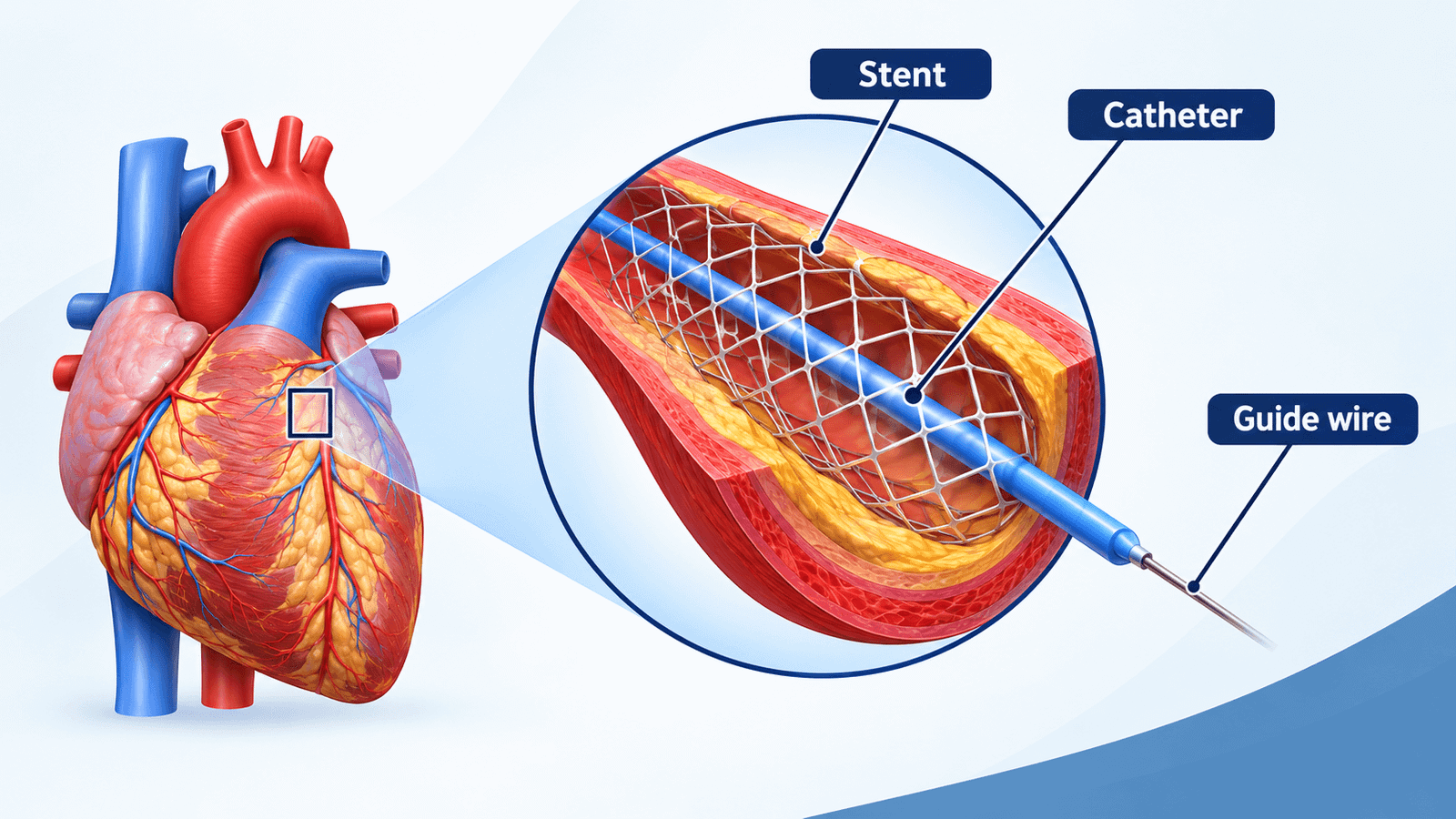
CTO angioplasty, also called CTO PCI, is a catheter-based procedure intended to reopen the affected artery and restore blood flow where appropriate.
During the procedure, an interventional cardiologist guides specialised wires and catheters through blood vessels towards the blocked coronary artery. The operator attempts to cross the obstruction, open the vessel and usually place one or more stents if the procedure succeeds and stenting is appropriate.
Unlike many routine angioplasty procedures, CTO PCI can require advanced techniques, specialised equipment and additional procedural planning.
Not every chronic total occlusion needs to be opened. The decision depends on symptoms, heart function, the amount of heart muscle supplied by the artery, other coronary blockages and the expected benefits and risks.
Why Is CTO Angioplasty More Expensive Than Regular Angioplasty?
The CTO angioplasty cost in India may be higher than routine PCI because the procedure can require more time, specialised equipment and an experienced CTO intervention team.
1. Dedicated Guidewires and Catheters
A chronic blockage can be difficult to cross with a guidewire. The operator may need specialised wires, microcatheters and other devices designed for complex coronary intervention.
2. Dual-Artery Access
Some procedures use access from two arteries to help visualise the blockage from different directions. This can require additional equipment and technical expertise.
3. Longer Procedure Time
CTO procedures can take several hours, depending on the length and structure of the blockage and the technique used. Longer catheter-lab time can increase procedural and hospital charges.
4. Multiple Stents
If the artery is reopened successfully, one or more stents may be required. Long blockages can require longer stented segments or more than one device.
5. Advanced Imaging
In selected cases, intravascular imaging or other specialised assessment may help guide treatment. Whether it is required depends on the clinical situation and the operator's approach.
6. Specialist Experience
CTO PCI requires specific expertise. Hospitals with experienced complex-coronary intervention teams may have different fees and equipment charges from facilities that primarily perform routine angioplasty.
Who May Need CTO Angioplasty?
A chronic total occlusion does not automatically mean that a patient needs angioplasty. The cardiologist considers the expected clinical benefit before recommending the procedure. CTO PCI may be considered for selected patients who have:
- Persistent angina or chest discomfort despite appropriate medical treatment
- Breathlessness or activity limitation that may be related to reduced blood flow
- Evidence that a viable area of heart muscle may benefit from improved blood supply
- A coronary anatomy suitable for an attempted intervention
- Symptoms that meaningfully affect quality of life
The potential benefit varies between patients. In some cases, the principal goal is to improve symptoms and exercise tolerance rather than to guarantee longer survival. A cardiologist may recommend continued medical treatment, CTO PCI, CABG or another approach after reviewing the full clinical picture.
Do not assume that every completely blocked coronary artery should be opened. A qualified cardiology team must determine whether intervention is appropriate.
CTO Angioplasty vs Routine Angioplasty
| Feature | CTO Angioplasty | Routine Angioplasty |
|---|---|---|
| Type of blockage | Complete, longstanding coronary occlusion | Usually a narrowing that can be crossed more readily |
| Technical complexity | Often high | Frequently lower, depending on anatomy |
| Procedure duration | Can take several hours | Often shorter |
| Equipment | May require specialised wires, microcatheters and additional devices | Depends on lesion complexity |
| Number of stents | Depends on the reopened vessel and lesion | Depends on the treated narrowing |
| Cost | Usually higher for complex cases | Often lower for uncomplicated cases |
| Specialist requirements | Experience with complex coronary intervention is important | Depends on the case |
These are general comparisons. Some routine angioplasties are complex, and not all CTO procedures have the same difficulty or cost.
Factors That Determine the Final CTO Angioplasty Cost
Length and Location of the Blockage
A short, relatively straightforward occlusion may be easier to treat than a long, calcified blockage or one located near a major coronary branch.
Calcification and Vessel Anatomy
Heavy calcification, tortuous vessels and difficult entry or exit points can make crossing and treating the blockage more challenging.
Antegrade or Retrograde Technique
An antegrade approach attempts to cross the blockage from the usual direction of blood flow. In selected cases, a retrograde approach may be considered using collateral vessels to reach the other side of the occlusion. The approach is determined by the operator based on the anatomy, procedural feasibility and safety.
Stents and Additional Devices
The number and type of stents, specialised wires, balloons, microcatheters and other equipment can affect the total bill.
Hospital and Specialist Fees
Hospital facilities, catheter-lab charges, professional fees, room category and the experience of the treating team influence the quotation.
Additional Medical Conditions
Kidney disease, reduced heart function, diabetes and other conditions can affect preparation, monitoring and recovery.
Staged Procedures
Some patients may require a planned staged procedure rather than completion in a single session. If another admission or intervention is necessary, the overall treatment expense may increase.
2026 Coronary Stent Prices in India
The stent itself is only one component of the CTO angioplasty bill. India regulates the ceiling prices of scheduled coronary stents through the National Pharmaceutical Pricing Authority (NPPA). The revised prices effective from April 1, 2026, are:
| Stent Type | Ceiling Price Before Applicable GST | Approx. USD |
|---|---|---|
| Bare-metal stent (BMS) | ₹10,762.15 | $112 |
| Drug-eluting stent (DES) | ₹39,186.03 | $408 |
These are regulated ceiling prices for the device, not the cost of the complete procedure. For example, two drug-eluting stents at the ceiling price would total approximately ₹78,372 before applicable GST. This is an illustration only; it does not mean that every CTO procedure needs two stents.
The complete treatment bill may also include:
- Cardiologist and specialist fees
- Catheter-lab charges
- Guidewires and microcatheters
- Balloons and other disposable devices
- Additional imaging where required
- Medicines and monitoring
- Hospital room charges
- ICU care when clinically necessary
Ask the hospital to specify the stent type, quantity, applicable price and other equipment charges in the written estimate.
Get Your Personalised CTO Angioplasty Cost Estimate
Share your angiography images and report — our cardiac care team will respond on WhatsApp within 48 hours.
By submitting, you agree to be contacted by Azzocare's care team.
Request Sent!
Our team will WhatsApp you back shortly.
CTO Angioplasty Cost in Major Indian Cities
A reliable, comparable city-by-city tariff for CTO angioplasty is not consistently available from published sources. The following table therefore uses the broad national planning estimate rather than inventing different prices for individual cities.
| City | CTO Angioplasty Planning Estimate | Approx. USD |
|---|---|---|
| Delhi | ₹5.3–₹13.4 lakh | $5,500–$14,000 |
| Mumbai | ₹5.3–₹13.4 lakh | $5,500–$14,000 |
| Bangalore | ₹5.3–₹13.4 lakh | $5,500–$14,000 |
| Chennai | ₹5.3–₹13.4 lakh | $5,500–$14,000 |
| Hyderabad | ₹5.3–₹13.4 lakh | $5,500–$14,000 |
| Kolkata | ₹5.3–₹13.4 lakh | $5,500–$14,000 |
| Pune | ₹5.3–₹13.4 lakh | $5,500–$14,000 |
| Gurgaon | ₹5.3–₹13.4 lakh | $5,500–$14,000 |
| Ahmedabad | ₹5.3–₹13.4 lakh | $5,500–$14,000 |
Important: These are national planning figures repeated for comparison, not verified prices for the named cities. Actual hospital quotations may be lower or higher. Patients should confirm availability of an experienced CTO operator and request a written, itemised estimate from the specific hospital.
CTO Angioplasty Cost in India Compared With Other Countries
International patients may compare CTO treatment costs in different countries. However, pricing can vary widely according to the specialist, complexity of the occlusion, devices used, hospital stay and package inclusions.
| Country | Indicative CTO Angioplasty Cost (USD) | Approx. INR |
|---|---|---|
| India | $5,500–$14,000 | ₹5.3–₹13.4 lakh |
| United States | $35,000–$85,000 | ₹33.6–₹81.6 lakh |
Comparable, reliably verified national CTO-specific price ranges were not available for every country, so additional country estimates are omitted rather than presented as established tariffs. These figures are for preliminary planning only. Insurance, travel, accommodation, additional procedures and follow-up may affect the total expense. Obtain a written estimate from the hospital before making treatment or travel arrangements.
What Tests Are Needed Before CTO Angioplasty?
The treating team reviews the patient's medical history, symptoms and coronary anatomy before deciding whether CTO PCI is appropriate. Investigations may include:
- Coronary angiography and review of the original images
- Electrocardiogram (ECG)
- Echocardiogram to assess heart function
- Kidney-function tests
- Blood counts and other blood tests
- Assessment of symptoms and exercise tolerance
- Additional tests for heart-muscle viability or ischaemia in selected patients
Not every patient requires every investigation. The cardiologist determines which tests are useful for treatment planning. If a patient is seeking a second opinion, sharing the original angiography images — not just the written report — may help the specialist assess the blockage and procedural options.
How Is CTO Angioplasty Performed?
CTO angioplasty is performed in a specialised cardiac catheterisation laboratory. The procedure usually involves these stages:
- Access: The operator accesses an artery, often at the wrist or groin.
- Imaging: Contrast dye and X-ray imaging help visualise the coronary arteries and occlusion.
- Crossing the blockage: Specialised wires and catheters are used to attempt to pass through or around the occlusion.
- Opening the vessel: Once the blockage is crossed, balloons and other devices may be used to prepare the artery.
- Stent placement: One or more stents may be implanted if the artery is reopened and stenting is appropriate.
- Monitoring: The team checks blood flow and monitors the patient after the procedure.
The procedure can take several hours. In some cases, the operator may decide not to continue or may plan another session if the blockage cannot be safely crossed or the procedural risk becomes excessive. The exact technique depends on the patient's anatomy and the specialist's assessment.
What Are the Risks of CTO Angioplasty?
CTO PCI is a complex coronary intervention and carries risks that the treating cardiologist should discuss before the procedure. Potential complications include:
- Bleeding or injury at the access site
- Damage or perforation of a coronary artery
- Heart attack
- Abnormal heart rhythms
- Contrast-associated kidney injury
- Allergic reaction to contrast material
- Radiation-related injury in prolonged procedures
- Emergency surgery in rare situations
- Failure to cross or successfully open the occlusion
The likelihood of complications depends on patient health, blockage anatomy, procedural strategy and operator experience. The team should explain the expected benefits and risks for the individual patient.
Recovery After CTO Angioplasty
Recovery depends on procedural complexity, kidney function, heart function and whether complications occur. Some patients can leave hospital after a short period of observation, while complex CTO cases may require overnight or longer monitoring.
After discharge, the patient may need to:
- Take prescribed medicines exactly as directed
- Follow instructions for care of the wrist or groin access site
- Attend follow-up appointments
- Follow temporary activity restrictions
- Complete recommended cardiac rehabilitation
- Manage cholesterol, blood pressure and diabetes
- Stop smoking if applicable
Antiplatelet medicines are often prescribed after coronary stent placement. Do not stop prescribed antiplatelet medicines without medical advice, as doing so may increase the risk of a clot inside the stent. Follow the treating team's advice about hydration, especially if contrast dye was used and kidney function is a concern.
Does Health Insurance Cover CTO Angioplasty in India?
Some health insurance policies may cover medically necessary CTO angioplasty, subject to the policy's terms and conditions. Coverage can depend on sum insured, waiting periods, pre-existing disease provisions, network hospital status, room-rent limits, deductibles and co-payments, pre-authorisation, policy exclusions, and approved package rates.
Before a planned procedure, ask the hospital insurance desk to confirm the approved amount and identify any expected out-of-pocket expenses. Check whether specialised devices, additional hospital days and repeat procedures are included.
How Azzocare Helps International Patients
Azzocare connects international patients diagnosed with a chronic total coronary occlusion to verified interventional cardiologists with CTO-PCI experience across Delhi NCR, coordinating every step at no extra cost:
- Free medical opinion and itemised cost estimate within 48 hours of sharing your angiography images and reports
- Second-opinion review of blockage complexity and procedural approach
- Medical visa documentation and travel planning support
- Airport pickup and accommodation arranged near your hospital
- Interpreter support throughout consultations and admission
- A dedicated case manager from first contact through follow-up care
International patients can request a preliminary assessment by sharing coronary angiography images, reports, ECG, echocardiogram and relevant medical history. The treating team should confirm suitability, estimated cost and medical fitness for travel.
Frequently Asked Questions
What is the CTO angioplasty cost in India?
A specialised planning estimate is approximately ₹5.3–₹13.4 lakh ($5,500–$14,000). This is not a uniform hospital tariff. The actual cost depends on the blockage, specialist, equipment, stents and hospital stay.
What does CTO mean in cardiology?
CTO stands for chronic total occlusion. It describes a coronary artery that has been completely blocked for a prolonged period, commonly around three months or longer.
Is CTO angioplasty more difficult than regular angioplasty?
It can be. Chronic occlusions may be difficult to cross and can require specialised wires, catheters, additional imaging and advanced techniques. Complexity varies from one patient to another.
How long does CTO angioplasty take?
The procedure can take several hours. The duration depends on the anatomy, the technique used and whether the blockage can be crossed successfully. Some cases may require a staged approach.
How many stents are needed for CTO angioplasty?
There is no fixed number. Depending on the length and location of the blockage, the operator may use one or more stents, or may decide that stenting is not appropriate if the artery cannot be safely reopened.
Is CTO angioplasty always necessary for a completely blocked artery?
No. Some patients benefit from symptom improvement, while others may be managed with medication, CABG or another strategy. The decision depends on symptoms, heart function, coronary anatomy and the expected benefits and risks.
Can CTO angioplasty fail?
Yes. The operator may be unable to cross the occlusion safely or may decide to stop if the risk becomes excessive. A specialist should discuss the likelihood of success and possible alternatives before the procedure.
Is CTO angioplasty covered by insurance?
It may be covered if medically necessary, depending on the policy, hospital and approved treatment plan. Confirm coverage and exclusions with the insurer before planned treatment.
Can patients travel to India for CTO angioplasty?
International patients can request a preliminary assessment from a cardiac centre by sharing coronary angiography images, reports, ECG, echocardiogram and relevant medical history. The treating team should confirm suitability, estimated cost and medical fitness for travel.
What should be included in a CTO angioplasty quotation?
Request an itemised estimate covering the specialist's fees, catheter-lab charges, anticipated stents, specialised wires and devices, imaging, medicines, hospital stay, possible additional procedures and follow-up.
Legal Disclaimer
The costs mentioned on this page are approximate figures based on published provider estimates for CTO (chronic total occlusion) angioplasty in India as of 2026. Actual pricing depends on the hospital chosen, the city, blockage complexity, technique, specialist expertise, stents, equipment and each patient's individual medical needs. This page is for general information only and is not a substitute for personalised medical advice. New or persistent chest pain, severe breathlessness, cold sweating or fainting may indicate a heart attack — seek emergency medical care immediately rather than waiting for a cost estimate. For an accurate, individualised estimate, please consult your cardiologist or reach out to our care team directly.