
Pacemaker Surgery Cost in India: Price, Types & Recovery
Single-chamber, dual-chamber, CRT-P and leadless pacemaker surgery costs, risks and recovery — with a free personalised estimate within 48 hours.
Top Hospitals
for Pacemaker Surgery
Find hospitals with cardiac catheterisation laboratories, device follow-up clinics and itemised written estimates.
Explore Hospitals →Top Cardiologists
for Heart Rhythm Disorders
Connect with cardiologists and electrophysiologists experienced in pacemaker, CRT-P and leadless device implantation.
Find Specialists →Direct answer: The pacemaker surgery cost in India generally ranges from US$1,060–US$3,720 (₹1 lakh–₹3.5 lakh) for conventional pacemaker implantation, based on published hospital estimates. The total cost may be higher for advanced devices, including dual-chamber, biventricular and leadless pacemakers. The final price depends on the device model, number of leads, hospital charges, specialist fees and the patient's medical condition.
| Treatment Information | Details |
|---|---|
| Procedure | Permanent pacemaker implantation under the skin near the collarbone |
| Conditions Treated | Bradycardia, heart block, sick sinus syndrome, selected heart failure |
| Device Types | Single-chamber, dual-chamber, CRT-P, leadless |
| Pre-Procedure Tests | ECG, Holter, echocardiogram, chest X-ray, see cardiac test costs |
| Related Guide | Warning Signs of Cardiovascular Disease |
| Performed By | Cardiologist & Electrophysiologist |
Pacemaker Surgery Cost in India: Quick Overview
Pacemaker surgery is a cardiac procedure in which an electronic device is implanted to help regulate the heartbeat. It is commonly recommended for selected patients with a slow heart rate, heart block or other electrical conduction disorders.
The overall treatment bill may include the pacemaker device, implantation procedure, cardiologist's fees, hospitalisation, investigations and post-operative device programming.
| Pacemaker type | Indicative total cost |
|---|---|
| Conventional pacemaker surgery (published hospital estimate) | US$1,060–US$3,720 (₹1–₹3.5 lakh) |
| Single-chamber pacemaker (Delhi estimate) | US$1,595–US$3,190 (₹1.5–₹3 lakh) |
| Dual-chamber pacemaker (Delhi estimate) | US$2,660–US$4,785 (₹2.5–₹4.5 lakh) |
| Biventricular pacemaker, CRT-P (Delhi estimate) | US$5,315–US$9,575 (₹5–₹9 lakh) |
| Leadless pacemaker (Delhi estimate) | US$8,510–US$12,765 (₹8–₹12 lakh) |
These are indicative planning estimates based on published hospital and provider pricing. They are not guaranteed quotations. Device prices, procedure packages and total patient bills may be reported separately. Confirm the exact device model, implant cost and package inclusions directly with the hospital. Medicover lists lower device-wise ranges: single-chamber US$1,060–US$1,910 (₹1–₹1.8 lakh), dual-chamber US$1,910–US$2,975 (₹1.8–₹2.8 lakh) and CRT US$2,660–US$3,720 (₹2.5–₹3.5 lakh).
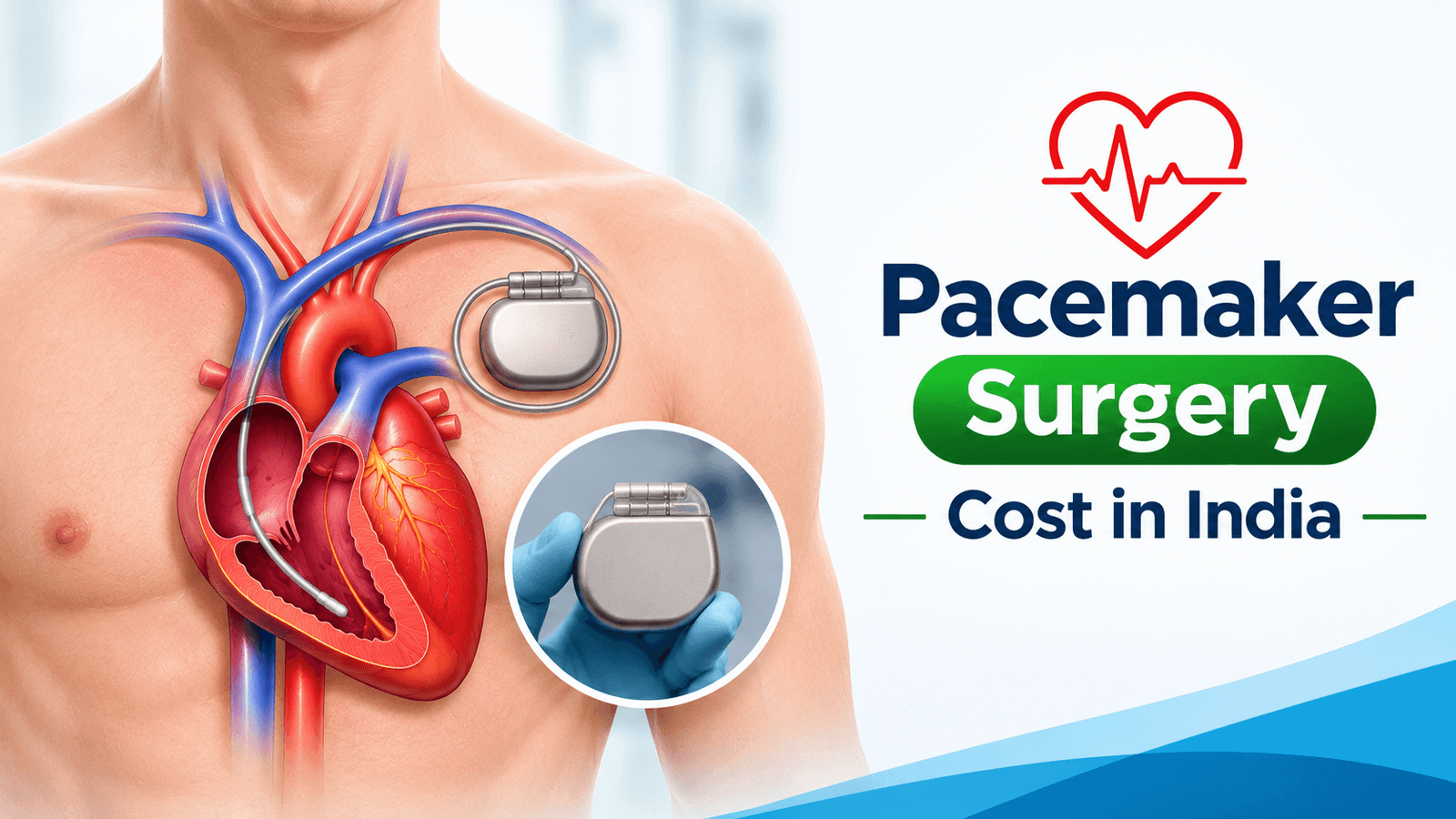
What Is Pacemaker Surgery?
Pacemaker surgery is a procedure in which a small electronic device is implanted to help maintain an appropriate heart rate.
The heart has a natural electrical system that controls when its chambers contract. When this system does not generate or conduct electrical signals properly, the heartbeat may become too slow or irregular.
A pacemaker monitors the heart's electrical activity and delivers small electrical impulses when required to support the heart rate.
A conventional pacemaker generally consists of:
- Pulse generator: The electronic unit containing the battery and control circuitry.
- Leads: Thin insulated wires that connect the generator to the heart.
- Electrodes: Parts of the leads that deliver electrical stimulation to the heart tissue.
The pulse generator is usually placed under the skin near the collarbone. Depending on the device, one or more leads are guided through a vein into the heart.
A leadless pacemaker is different. It is a small self-contained device placed directly inside the heart through a catheter-based procedure.
Pacemaker surgery may help reduce symptoms caused by an abnormally slow heartbeat and support appropriate heart rhythm in patients with certain conduction disorders.
Who Needs Pacemaker Surgery?
A cardiologist or cardiac electrophysiologist may recommend pacemaker implantation when the heart's electrical system cannot maintain an adequate heartbeat. The decision is based on symptoms, ECG findings, the type of conduction disorder and the patient's overall medical condition.
1. Patients with Bradycardia
Bradycardia refers to a slower-than-normal heart rate. A slow heart rate does not always require treatment, particularly when a person has no symptoms.
However, when bradycardia causes dizziness, fatigue, fainting or inadequate blood circulation, a cardiologist may evaluate the need for pacemaker implantation. Learn about the warning signs of cardiovascular disease.
2. Patients with Complete Heart Block
Complete heart block occurs when electrical signals from the upper chambers of the heart do not properly reach the lower chambers. This can cause the ventricles to beat too slowly or independently of the atria.
Permanent pacemaker implantation is commonly recommended for acquired complete heart block when it is not caused by a reversible condition.
3. Patients with Second-Degree Heart Block
Second-degree heart block occurs when some electrical signals fail to travel from the atria to the ventricles.
Certain forms, particularly Mobitz type II and advanced forms of heart block, may require permanent pacing depending on the clinical assessment.
4. Patients with Sick Sinus Syndrome
Sick sinus syndrome, also called sinus node dysfunction, occurs when the heart's natural pacemaker does not generate electrical impulses consistently.
Symptoms may include:
- Dizziness.
- Fatigue.
- Fainting episodes.
- Slow heartbeat.
- Unusual weakness.
A permanent pacemaker may be considered when symptoms are linked to the rhythm disorder and reversible causes have been evaluated.
5. Patients with Tachycardia-Bradycardia Syndrome
This condition involves alternating episodes of unusually fast and slow heart rhythms.
Some patients may require a pacemaker to manage the slow-heart-rate component, particularly when necessary treatment for the fast rhythm could worsen bradycardia.
6. Selected Patients with Heart Failure
Some patients with heart failure and electrical conduction abnormalities may benefit from cardiac resynchronisation therapy.
A specialised device called a CRT-P can coordinate contractions between the heart's ventricles in selected patients. CRT-P is not suitable for every person with heart failure. The decision depends on heart function, ECG findings and clinical guidelines.
Types of Pacemakers and Their Surgery Costs in India
The type of pacemaker selected is one of the most important factors affecting the overall surgery cost.
1. Single-Chamber Pacemaker Surgery
A single-chamber pacemaker generally uses one lead placed in either the right atrium or right ventricle, depending on the patient's rhythm disorder and pacing requirements. It may be recommended for selected patients who need pacing in one heart chamber.
Indicative cost: US$1,595–US$3,190 (₹1.5 lakh–₹3 lakh).
Important features:
- Uses one pacing lead.
- Requires a pulse generator implanted under the skin.
- May be suitable for selected patients with specific conduction disorders.
- Device selection depends on the patient's heart rhythm and clinical requirements.
2. Dual-Chamber Pacemaker Surgery
A dual-chamber pacemaker generally uses two leads: one in the right atrium and another in the right ventricle. It can coordinate electrical stimulation between the upper and lower chambers of the heart when appropriate.
Indicative cost: US$2,660–US$4,785 (₹2.5 lakh–₹4.5 lakh).
Important features:
- Uses two pacing leads.
- Can coordinate atrial and ventricular activity.
- May be recommended for selected patients with sinus node dysfunction or atrioventricular conduction disorders.
- Requires additional lead placement compared with a single-chamber device.
3. Biventricular Pacemaker Surgery (CRT-P)
A biventricular pacemaker, also known as cardiac resynchronisation therapy pacemaker (CRT-P), is designed for selected patients with heart failure and electrical conduction abnormalities. It helps coordinate contractions between the right and left ventricles.
Indicative cost: US$5,315–US$9,575 (₹5 lakh–₹9 lakh).
Important features:
- Uses specialised pacing leads.
- Helps coordinate ventricular contractions.
- May be recommended for selected patients with heart failure and electrical dyssynchrony.
- Requires detailed heart function and ECG assessment.
CRT-P is different from CRT-D, which also includes a defibrillator function.
4. Leadless Pacemaker Surgery
A leadless pacemaker is a small, self-contained device implanted directly inside the heart. It is generally delivered through a catheter inserted into a vein in the groin. Unlike a conventional pacemaker, it does not require a chest pocket or traditional pacing leads.
Indicative planning estimate: US$8,510–US$12,765 (₹8 lakh–₹12 lakh).
Important features:
- No conventional chest pocket.
- No traditional pacing leads.
- Delivered through a catheter-based procedure.
- Suitable only for selected patients, depending on the device and pacing requirements.
Leadless pacemakers are not appropriate for everyone. The cardiologist determines whether the available device can meet the patient's pacing needs.
Get Your Personalised TAVR Cost Estimate
Share your echocardiogram, CT scan, ECG or previous cardiac reports and details — our cardiac care team will respond on WhatsApp within 48 hours.
By submitting, you agree to be contacted by Azzocare's care team.
Request Sent!
Our team will WhatsApp you back shortly.
What Is Included in the Total Pacemaker Surgery Cost?
The complete pacemaker surgery bill may contain several separate charges. Patients should understand these components before comparing hospital quotations.
| Cost component | What it covers |
|---|---|
| Pacemaker device | Pulse generator and selected device model |
| Pacing leads | One or more leads, depending on device type |
| Cardiologist's fees | Implanting specialist's professional charges |
| Procedure charges | Cath lab or operating room and implantation costs |
| Anaesthesia | Local anaesthesia and sedation, if required |
| Diagnostic tests | ECG, echocardiogram, chest X-ray and blood tests |
| Hospital stay | Room, nursing and monitoring charges |
| Medicines | Medicines and procedural consumables |
| Device programming | Initial device configuration and testing |
| Follow-up | Device checks and specialist consultation |
Important: Some hospitals quote only the implantation procedure and charge the pacemaker device separately. A published Medanta tariff, for example, lists pacemaker procedure packages but states that the pacemaker or implant is charged separately. Always check whether the quotation is device-inclusive.
Government CGHS rates follow the same approach. The CGHS rate schedule (office memorandum dated 3 October 2025) lists permanent pacemaker implantation packages that exclude the cost of the pacemaker, which is billed separately.
| CGHS package (Tier I, NABH hospital) | Package rate, device excluded |
|---|---|
| Temporary pacemaker implantation, single-chamber | US$225 (₹21,120) |
| Permanent pacemaker implantation, single-chamber | US$375 (₹35,200) |
| Permanent pacemaker implantation, dual-chamber | US$505 (₹47,300) |
| Permanent pacemaker implantation, biventricular | US$580 (₹54,588) |
CGHS rates are scheduled reimbursement package rates, not private hospital prices, and rates differ by city tier, hospital accreditation and ward category. The figures shown are for a Tier I NABH hospital with a semi-private ward.
Pacemaker Surgery Cost in Major Indian Cities
Patients often compare hospitals in Delhi, Mumbai, Chennai, Bengaluru and other metropolitan cities before selecting a cardiac centre. However, published city-specific prices are not consistently available for identical pacemaker models and hospital packages.
The following table uses a broad national planning estimate for conventional pacemaker surgery rather than claiming independently verified local tariffs.
| City and search phrase | Indicative conventional pacemaker surgery cost |
|---|---|
| Pacemaker surgery cost in Delhi | US$1,060–US$3,720 (₹1–₹3.5 lakh) |
| Pacemaker surgery cost in Mumbai | US$1,060–US$3,720 (₹1–₹3.5 lakh) |
| Pacemaker surgery cost in Chennai | US$1,060–US$3,720 (₹1–₹3.5 lakh) |
| Pacemaker surgery cost in Bengaluru | US$1,060–US$3,720 (₹1–₹3.5 lakh) |
| Pacemaker surgery cost in Hyderabad | US$1,060–US$3,720 (₹1–₹3.5 lakh) |
| Pacemaker surgery cost in Pune | US$1,060–US$3,720 (₹1–₹3.5 lakh) |
| Pacemaker surgery cost in Kolkata | US$1,060–US$3,720 (₹1–₹3.5 lakh) |
| Pacemaker surgery cost in Jaipur | US$1,060–US$3,720 (₹1–₹3.5 lakh) |
These are national planning estimates, not confirmed hospital prices for each city. Advanced devices such as CRT-P and leadless pacemakers may cost considerably more. Request a written quotation from the selected hospital.
You can also browse our hospitals to compare cardiac centres.
Pacemaker Surgery Cost in India Compared with Other Countries
International patients may compare India with other destinations before planning pacemaker surgery. The total expense depends on the device manufacturer, implantation procedure, hospital facilities, specialist fees and follow-up arrangements.
| Country | Cost considerations |
|---|---|
| India | Published estimates vary by device type, manufacturer and hospital package. |
| United States | Costs are generally higher and depend on hospital, insurance and device selection. |
| United Kingdom | Costs depend on NHS eligibility or private hospital arrangements. |
| Germany | Prices vary according to the cardiac centre, insurance and device requirements. |
| Thailand | Private hospital charges depend on the hospital and pacemaker model. |
| United Arab Emirates | Costs vary by hospital, device manufacturer and treatment package. |
International patients should compare itemised quotations that separately identify the device, implantation procedure, hospital stay and follow-up services. To plan your trip, read about medical tourism in India and the India medical visa.
Tests Required Before Pacemaker Surgery
Before recommending pacemaker implantation, the cardiologist evaluates the patient's heart rhythm, electrical conduction system and overall medical condition. A routine health checkup can sometimes first detect a slow or irregular rhythm. Common investigations include:
1. Electrocardiogram (ECG)
An ECG records the electrical activity of the heart and helps identify slow heart rhythms, heart block and other conduction abnormalities.
2. Holter Monitoring
A Holter monitor records the heart rhythm continuously, usually for 24–48 hours. Longer monitoring may be recommended when symptoms occur intermittently.
3. Echocardiogram
An echocardiogram uses ultrasound to assess heart chamber size, pumping function and valve condition.
4. Blood Tests
Blood investigations may include kidney function, electrolytes, thyroid function and other tests to identify potentially reversible causes of bradycardia.
5. Chest X-ray
A chest X-ray may be used to evaluate the chest and provide a baseline for assessing the pacemaker leads and device position.
6. Additional Rhythm Monitoring
An event monitor or other long-term rhythm monitoring may be recommended when symptoms are infrequent. For indicative prices, see cardiac test costs in Delhi.
Not every patient requires all these investigations. The cardiologist decides which tests are appropriate.
How Is Pacemaker Surgery Performed?
Conventional pacemaker implantation is generally performed in a cardiac catheterisation laboratory or specialised procedure room. The procedure usually involves the following steps:
- 1. Preparation: The medical team reviews the patient's medical history, ECG, investigations and medication plan.
- 2. Anaesthesia: Local anaesthesia is administered around the planned implantation site. Sedation may also be used.
- 3. Small incision: A small incision is made, usually below the collarbone.
- 4. Lead insertion: One or more pacing leads are guided through a vein into the appropriate heart chamber using imaging guidance.
- 5. Lead testing: The electrophysiologist checks the electrical performance and positioning of the leads.
- 6. Generator placement: The pulse generator is connected to the leads and placed beneath the skin.
- 7. Incision closure: The incision is closed and dressed.
- 8. Device programming: The pacemaker is programmed according to the patient's heart rhythm and clinical requirements.
- 9. Post-procedure monitoring: The patient is monitored to check device function, heart rhythm and the implantation site.
Conventional pacemaker implantation often takes approximately one to two hours, although duration varies according to device type and procedural complexity.
Leadless pacemaker implantation follows a different catheter-based approach and does not require a conventional chest incision or lead placement.
Recovery After Pacemaker Surgery
Recovery depends on the type of pacemaker, implantation technique and the patient's overall health. Many patients can return to light daily activities within a few days. However, the cardiologist may recommend temporary restrictions to allow the incision and leads to heal.
| Recovery stage | General expectations |
|---|---|
| Immediately after surgery | Monitoring of heart rhythm and device function |
| First 24 hours | Observation of the incision and pacemaker performance |
| Hospital stay | Often overnight, depending on the patient's condition |
| First few days | Rest and gradual return to light activities |
| First few weeks | Follow instructions about arm movement and heavy lifting |
| Early follow-up | Wound review and pacemaker programming check |
| Long-term follow-up | Regular device monitoring and battery assessment |
Patients should follow the treating team's instructions about lifting, exercise, driving, wound care and medication. NHS guidance, for example, advises avoiding heavy lifting, vigorous exercise and raising the elbow above shoulder height for about 4 to 6 weeks, and not driving for at least the first week. Your own doctor's instructions take priority. Once cleared, you can read about exercise for heart health at home and how to improve heart health naturally.
How Long Does a Pacemaker Last?
Pacemaker battery life depends on the device model, programmed settings and the patient's pacing requirements. The NHS states that the battery usually lasts 6 to 7 years, and some devices may last longer, so actual battery life varies.
The device is checked periodically to assess battery status and performance. When the battery approaches depletion, the pulse generator usually needs replacement.
The existing leads may often be retained if they are functioning properly, but this is determined by the treating specialist.
Risks and Possible Complications of Pacemaker Surgery
Pacemaker implantation is a commonly performed cardiac procedure, but it carries potential risks.
Possible complications include:
- Bleeding or bruising around the implantation site.
- Infection.
- Blood vessel injury.
- Lead displacement.
- Pneumothorax, or air around the lung.
- Damage to heart tissue.
- Blood clots.
- Device or lead malfunction.
- Need for lead repositioning or another procedure.
The risk depends on the patient's health, device type and procedural circumstances. The cardiologist should explain the individual risks and expected benefits before implantation.
Seek urgent medical attention for fainting, chest pain, severe breathlessness, fever or increasing redness, swelling or discharge at the implantation site.
Is Pacemaker Surgery Covered by Health Insurance in India?
Pacemaker surgery may be covered by health insurance when it is medically necessary and the policy's conditions are met. Coverage depends on the insurer, policy wording, hospital network, waiting periods and pre-authorisation requirements.
Before admission, confirm:
- Whether pacemaker implantation is covered.
- Whether the selected hospital is in the insurer's network.
- Whether the device and pacing leads are covered.
- Whether room and ICU limits apply.
- Whether pre-existing disease waiting periods apply.
- Whether investigations and medicines are covered.
- Whether cashless treatment or reimbursement is available.
Patients should obtain written confirmation of device and procedure coverage before admission.
How to Choose a Hospital for Pacemaker Surgery in India
Choosing an experienced cardiology and electrophysiology team is important for treatment planning and long-term device care. Before selecting a cardiac centre, consider:
- The cardiologist's experience with pacemaker implantation.
- Experience with the recommended device type.
- Availability of cardiac catheterisation facilities.
- Access to cardiac imaging and monitoring.
- Availability of emergency cardiac support.
- Availability of regular pacemaker programming and follow-up.
- Clear information about the device manufacturer and warranty.
- A detailed written cost estimate.
For international patients, confirm whether the hospital can review medical records before travel and coordinate device checks and follow-up after discharge. You can request a second opinion before deciding.
Get a Personalised Pacemaker Surgery Cost Estimate in India
The cost and suitability of pacemaker surgery depend on the patient's heart rhythm, type of conduction disorder, recommended device, hospital and overall medical condition. A specialist assessment is necessary to determine whether a single-chamber, dual-chamber, CRT-P or leadless pacemaker is appropriate.
Azzocare helps international patients explore cardiac treatment options in India and coordinate with hospitals for specialist opinions and personalised cost estimates. To begin a medical review, patients can share:
- Recent ECG reports.
- Holter or event-monitoring reports.
- Echocardiogram results.
- Previous cardiac procedure records.
- Current medication list.
- Medical history and relevant investigation reports.
The cardiologist can review the available records, explain suitable device options and provide a hospital-specific estimate. You can also book an appointment, ask about visa assistance or see our treatment costs guides.
Frequently Asked Questions
What is the cost of pacemaker surgery in India?
Published hospital estimates for conventional pacemaker surgery range from approximately US$1,060–US$3,720 (₹1 lakh–₹3.5 lakh). The final cost depends on the device type, manufacturer, hospital and package inclusions.
What is the cost of a single-chamber pacemaker surgery?
The indicative planning estimate for single-chamber pacemaker surgery is approximately US$1,595–US$3,190 (₹1.5 lakh–₹3 lakh). The actual quotation depends on the device and hospital.
What is the cost of dual-chamber pacemaker surgery?
A dual-chamber pacemaker may cost approximately US$2,660–US$4,785 (₹2.5 lakh–₹4.5 lakh) as a planning estimate. Device selection and hospital package inclusions influence the final price.
Is pacemaker surgery a major operation?
Conventional pacemaker implantation is generally a minimally invasive procedure. The device is placed under the skin, and its leads are guided through a vein into the heart. It does not usually require open-heart surgery.
How long does pacemaker surgery take?
Conventional pacemaker implantation often takes approximately one to two hours. More complex devices or lead placement requirements may increase the procedure time.
How many days does a patient stay in hospital?
Many patients stay overnight for observation, although hospital stay depends on the patient's medical condition, device type and recovery.
How long does a pacemaker last?
Pacemaker battery life varies with the device model, settings and pacing requirements. The NHS states that a pacemaker battery usually lasts 6 to 7 years, and some devices may last longer. Regular device checks help monitor battery status.
Can a patient live a normal life after pacemaker surgery?
Many patients can return to their usual daily activities after recovery. They need regular device checks and should follow their cardiologist's advice about exercise, electronic equipment and medical procedures.
What is the difference between a pacemaker and an ICD?
A pacemaker mainly helps maintain an appropriate heart rate when the heart beats too slowly. An implantable cardioverter-defibrillator (ICD) can detect and treat certain dangerous fast ventricular rhythms by delivering electrical therapy. Some devices combine pacing and defibrillation functions.
Is a leadless pacemaker better than a conventional pacemaker?
A leadless pacemaker avoids conventional pacing leads and a chest pocket, but it is not suitable for every patient. The best device depends on the patient's rhythm disorder, anatomy and pacing requirements.
Can international patients travel to India for pacemaker surgery?
International patients may explore treatment in India after a cardiologist reviews their ECG, echocardiogram, rhythm-monitoring reports and medical history. The treating team should assess fitness to travel and plan device follow-up before arrangements are made.
Pricing Sources and References
- Medicover Hospitals — Pacemaker Implantation Cost in India — published conventional implantation estimate of ₹1 lakh–₹3.5 lakh, with device-type estimates.
- Pacemaker Cost in Delhi — Device and Total Surgery Estimates — Delhi-specific indicative ranges for single-chamber, dual-chamber, CRT and leadless devices.
- GAF Healthcare — Pacemaker Cost in India — explains the difference between a procedure package and the complete cost, with Medanta tariff examples.
- CGHS Official Package Rates — Pacemaker Procedures — official schedule showing implantation procedure charges separately from the device cost.
- NHS — Pacemaker Implantation, Recovery and Risks — procedure, recovery and patient guidance.
Medical Disclaimer
This article is for educational purposes only and does not replace consultation with a qualified cardiologist or cardiac electrophysiologist. Pacemaker surgery may not be suitable for every patient. Treatment decisions must be based on individual medical assessment. Fainting, chest pain, severe breathlessness or other sudden serious symptoms require urgent medical attention.

Mohammad Nafis Khan is an SEO and digital marketing professional with over 5 years of experience creating search-optimized, patient-focused content for healthcare and medical websites. He follows E-E-A-T principles to make complex healthcare topics clear and accessible, structuring articles around what patients actually search for.
Read full bio
Dr. Md Ehsanullah is a physician with 4+ years of clinical experience in internal and general medicine. He completed his MBBS and MD from Asian Medical University, Kyrgyzstan, and currently practices at VMMC & Safdarjung Hospital, New Delhi. He reviews Azzocare's healthcare content for clinical accuracy, ensuring medical information aligns with current best practices and E-E-A-T principles.
Read full bio