
Atrial Fibrillation Treatment Cost in India: Ablation, Medication & Recovery
AFib medication, cardioversion and catheter ablation costs, tests, risks and recovery — with a free personalised estimate within 48 hours.
Top Hospitals
for AF Treatment & Ablation
Find hospitals with electrophysiology laboratories, advanced mapping systems, cardiac imaging and itemised written estimates.
Explore Hospitals →Top Cardiologists
for Heart Rhythm Disorders
Connect with cardiologists and electrophysiologists experienced in atrial fibrillation, cardioversion and catheter ablation.
Find Specialists →Direct answer: Atrial fibrillation (AF), commonly called AFib, is an irregular heart rhythm that develops when the electrical signals in the upper chambers of the heart become disorganised. Treatment may involve medication, electrical cardioversion or catheter ablation. In India, the overall treatment expense can range from US$1,500–US$7,000, depending on the treatment approach. Complex catheter ablation at specialised centres may cost more.
| Treatment Information | Details |
|---|---|
| Condition | Atrial fibrillation (AFib), an irregular and often rapid heart rhythm |
| Treatment Options | Medication, electrical cardioversion, catheter ablation (radiofrequency, cryoballoon, pulsed field) |
| Main Goals | Control heart rate, restore or maintain rhythm and prevent stroke |
| Pre-Treatment Tests | ECG, Holter monitoring, echocardiogram, TEE, blood tests, see cardiac test costs |
| Related Guides | Warning Signs of Cardiovascular Disease, Congestive Heart Disease Symptoms |
| Performed By | Cardiologist & Electrophysiologist |
Atrial Fibrillation Treatment Cost in India: Quick Overview
The treatment plan is based on the patient's symptoms, type of atrial fibrillation, stroke risk, heart function and other medical conditions. Some patients can manage AF with medicines and regular monitoring, while others may benefit from a procedure to restore or maintain a normal heart rhythm.
| Treatment or investigation | Approx. USD | Indicative cost in India |
|---|---|---|
| Cardiologist consultation | $10–$26 | ₹1,000–₹2,500 |
| ECG | $2–$11 | ₹150–₹1,000 |
| 24-hour Holter monitoring | $31–$52 | ₹3,000–₹5,000 |
| Echocardiogram | $10–$36 | ₹1,000–₹3,500 |
| Electrical cardioversion | $675–$1,565 | ₹65,000–₹1.5 lakh |
| Catheter ablation – published Indian estimate | $1,565–$5,200 | ₹1.5–₹5 lakh |
| Advanced AF catheter ablation – international-patient planning estimate | $6,500–$16,000 | Approximately ₹6.24–₹15.36 lakh |
These are indicative published estimates, not guaranteed hospital prices. The difference between catheter ablation estimates reflects variations in hospital category, technology, procedure complexity and package inclusions. The treating hospital should confirm the exact procedure, device and total cost in writing.
For a wider view of test prices, see our guide to the cost of cardiac tests in Delhi.
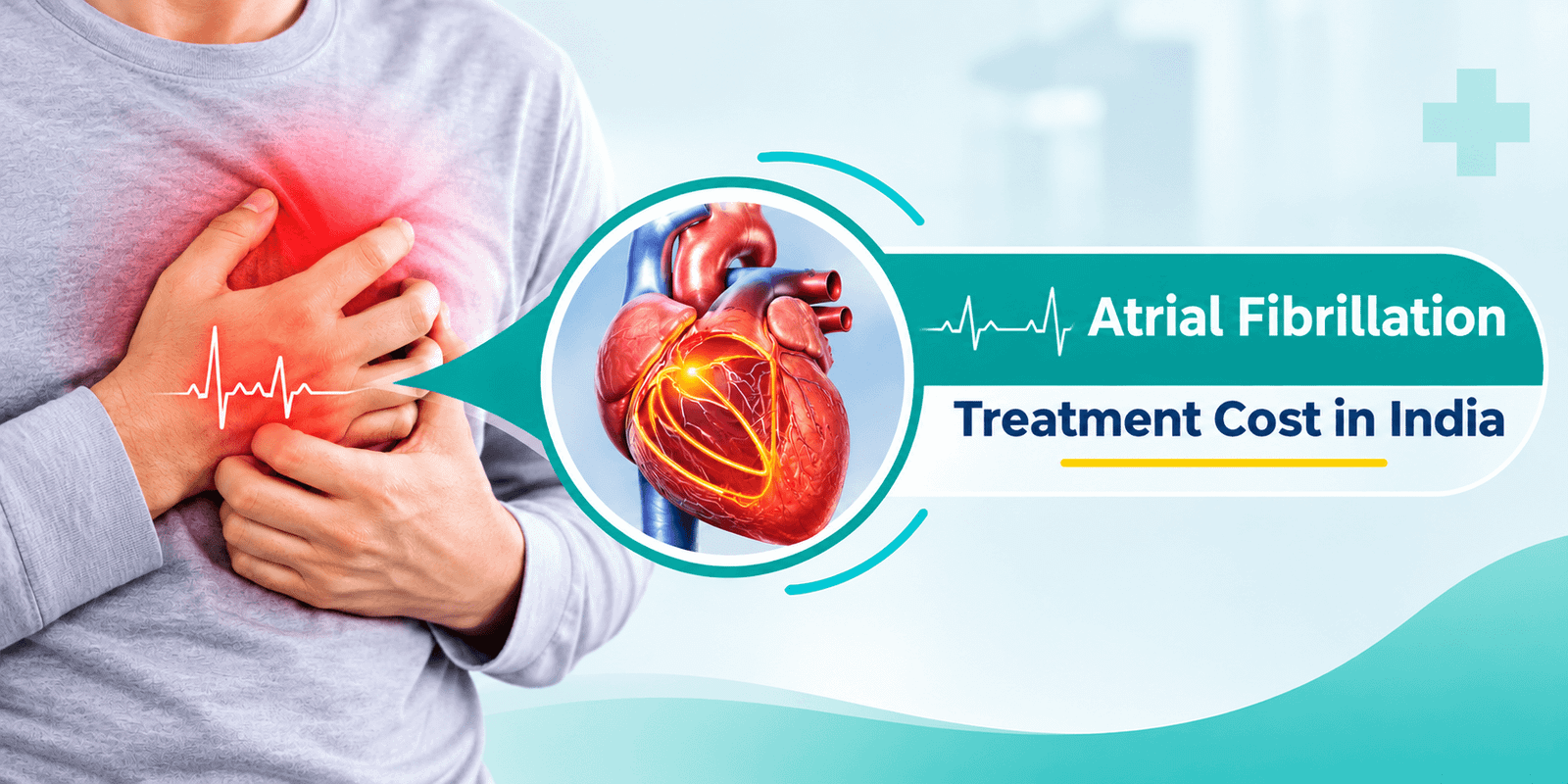
What Is Atrial Fibrillation?
Atrial fibrillation is a type of cardiac arrhythmia in which the upper chambers of the heart, called the atria, beat irregularly and often rapidly. Normally, electrical signals coordinate the heart's contractions. In AF, the electrical activity becomes disorganised, causing the atria to quiver rather than contract in a coordinated way. This can lead to:
- An irregular or rapid heartbeat
- Palpitations or a fluttering sensation in the chest
- Shortness of breath
- Fatigue and reduced exercise tolerance
- Dizziness or light-headedness
- Increased risk of blood clots and stroke
Some people experience noticeable symptoms, while others have AF without realising it. Even when symptoms are absent, medical assessment is important because AF can increase the risk of stroke and other complications. For related symptom guides, read about the warning signs of cardiovascular disease and the signs and symptoms of congestive heart disease.
Types of Atrial Fibrillation and Their Treatment
The type and duration of AF can influence the treatment approach.
1. Paroxysmal Atrial Fibrillation
Paroxysmal AF occurs in episodes that stop spontaneously or with treatment, usually within seven days. Episodes may last minutes, hours or several days. Treatment may include heart-rate control, rhythm-control medication or catheter ablation, depending on symptoms and clinical assessment.
2. Persistent Atrial Fibrillation
Persistent AF continues for more than seven days and generally requires medical intervention to restore a normal rhythm if rhythm control is planned. Treatment may include antiarrhythmic medication, electrical cardioversion or catheter ablation.
3. Long-Standing Persistent Atrial Fibrillation
This refers to continuous AF lasting more than 12 months when a rhythm-control strategy is still being pursued. Treatment can be more complex because the electrical and structural changes in the atria may make it harder to maintain a normal rhythm.
4. Permanent Atrial Fibrillation
Permanent AF describes a situation in which the patient and doctor have decided not to pursue further attempts to restore a normal heart rhythm. Treatment generally focuses on controlling the heart rate, preventing stroke and managing associated medical conditions.
Atrial Fibrillation Treatment Options and Their Costs
AF treatment is not the same for every patient. A cardiologist or electrophysiologist evaluates the rhythm, symptoms and stroke risk before recommending a treatment plan. If you are unsure, you can request a second opinion.
1. Medication for Atrial Fibrillation
Medication is often the first treatment option for managing AF. The medicines prescribed depend on whether the main goal is to control heart rate, maintain a normal rhythm or prevent blood clots.
Rate-control medicines: These medicines help control how quickly electrical signals reach the lower chambers of the heart. They may include beta-blockers or certain calcium-channel blockers.
Rhythm-control medicines: Antiarrhythmic medicines may be prescribed to help restore or maintain a normal heart rhythm. The choice depends on heart function, other medical conditions and potential side effects.
Anticoagulants: Anticoagulants reduce the risk of blood clots and stroke in patients who meet the criteria for treatment. Depending on the patient's condition, a doctor may prescribe a direct oral anticoagulant or warfarin.
Medication costs vary according to the drug, dose, brand, treatment duration and monitoring requirements. These costs are generally ongoing rather than a one-time procedure expense.
2. Electrical Cardioversion
Electrical cardioversion is a procedure used to restore a normal heart rhythm by delivering a controlled electrical shock to the heart. It is usually performed under short-acting sedation or anaesthesia in a monitored hospital setting. The procedure may be recommended for selected patients with persistent AF or an episode of AF causing significant symptoms.
Indicative cost: US$675–US$1,565 (₹65,000–₹1.5 lakh). The cost depends on hospital charges, anaesthesia, monitoring, investigations and whether the patient needs an overnight stay. Cardioversion can restore a normal rhythm, but AF may return. Stroke prevention and follow-up treatment remain important.
3. Catheter Ablation for Atrial Fibrillation
Catheter ablation is a minimally invasive procedure used to treat AF by targeting areas of abnormal electrical activity in the heart. The most common approach is pulmonary vein isolation (PVI). In many patients, abnormal electrical signals originating around the pulmonary veins trigger AF. The electrophysiologist creates controlled areas of scar tissue around these vein openings to electrically isolate them from the left atrium.
Catheter ablation may be considered for patients with symptomatic AF, particularly when medicines are ineffective, unsuitable or not preferred after discussing the benefits and risks.
Indicative cost: Published estimates vary from US$1,565–US$5,200 (₹1.5–₹5 lakh) to US$6,500–US$16,000 (approximately ₹6.24–₹15.36 lakh) at specialised centres. The final price depends on the ablation technology, mapping system, procedure duration, hospital stay and patient's condition.
4. Radiofrequency Ablation
Radiofrequency ablation uses heat energy to create controlled lesions in cardiac tissue responsible for abnormal electrical signals. The electrophysiologist guides a catheter through a blood vessel into the heart and uses electrical mapping to identify the target areas. It is an established technique for pulmonary vein isolation and other selected arrhythmias.
5. Cryoballoon Ablation
Cryoballoon ablation uses cooling energy to isolate the pulmonary veins. A balloon catheter is positioned at the opening of a pulmonary vein, where controlled freezing creates the required electrical isolation. The choice between radiofrequency and cryoballoon ablation depends on patient anatomy, clinical circumstances, technology availability and the electrophysiologist's assessment.
6. Pulsed Field Ablation (PFA)
Pulsed field ablation is a newer non-thermal technique that uses short electrical pulses to create lesions in cardiac tissue. It is designed to selectively affect heart muscle tissue and may reduce injury to some surrounding structures compared with thermal energy techniques. However, suitability, availability and cost depend on the hospital and approved technology.
Patients should ask whether PFA is available at the proposed centre and whether it is appropriate for their specific condition.
Get Your Personalised TAVR Cost Estimate
Share your echocardiogram, CT scan, ECG or previous cardiac reports and details — our cardiac care team will respond on WhatsApp within 48 hours.
By submitting, you agree to be contacted by Azzocare's care team.
Request Sent!
Our team will WhatsApp you back shortly.
Which Factors Affect Atrial Fibrillation Treatment Cost?
The total cost can vary significantly between patients because AF treatment involves different medical and procedural requirements.
Type and Duration of Atrial Fibrillation
Paroxysmal AF may require a different treatment strategy from persistent or long-standing persistent AF. More complex cases may require additional mapping, ablation or follow-up.
Ablation Technology
Radiofrequency, cryoballoon and pulsed field ablation use different equipment and consumables. The selected technology can influence the overall cost.
Electrophysiologist's Experience
AF ablation requires specialised training in cardiac electrophysiology. The experience of the treating specialist and the supporting team may influence hospital pricing.
Hospital and Catheterisation Facilities
A specialised cardiac centre with advanced mapping equipment, imaging support and dedicated electrophysiology facilities may have different charges from a general hospital.
Investigations and Monitoring
Patients may need ECG, Holter monitoring, echocardiography, blood tests, transoesophageal echocardiography or cardiac CT before treatment.
Hospital Stay and Additional Treatment
A longer stay, treatment of complications or additional cardiac procedures may increase the final bill.
Atrial Fibrillation Treatment Cost in Major Indian Cities
Patients often compare cardiac centres in Delhi, Mumbai, Chennai and Bengaluru before choosing an AF treatment centre. However, publicly available prices are not consistently reported for the same ablation technology and package inclusions. The following figures are broad planning estimates for catheter ablation, not confirmed city-specific hospital tariffs.
| City and search phrase | Approx. USD | Indicative catheter ablation planning range |
|---|---|---|
| Atrial fibrillation treatment cost in Delhi | $1,565–$16,000 | ₹1.5–15.36 lakh |
| AF ablation cost in Mumbai | $1,565–$16,000 | ₹1.5–15.36 lakh |
| Atrial fibrillation treatment cost in Chennai | $1,565–$16,000 | ₹1.5–15.36 lakh |
| AF treatment cost in Bengaluru | $1,565–$16,000 | ₹1.5–15.36 lakh |
| Atrial fibrillation treatment cost in Hyderabad | $1,565–$16,000 | ₹1.5–15.36 lakh |
| AF ablation cost in Pune | $1,565–$16,000 | ₹1.5–15.36 lakh |
| Atrial fibrillation treatment cost in Kolkata | $1,565–$16,000 | ₹1.5–15.36 lakh |
| AF treatment cost in Jaipur | $1,565–$16,000 | ₹1.5–15.36 lakh |
The wide range reflects different published estimates rather than verified local price lists. Actual costs can be outside this range. Patients should request a written quotation for the exact procedure and technology being recommended. You can browse our partner hospitals and share your reports for a personalised estimate.
Tests Required Before Atrial Fibrillation Treatment
Before selecting a treatment, the cardiologist or electrophysiologist evaluates the heart rhythm, structure, function and possible causes of AF. A routine health checkup may also pick up an irregular rhythm. Common investigations include:
1. Electrocardiogram (ECG)
An ECG records the heart's electrical activity and helps identify AF or other rhythm abnormalities.
2. Holter Monitoring
A Holter monitor records the heart rhythm continuously, commonly for 24–48 hours. Longer event monitoring may be recommended when AF episodes are intermittent.
3. Echocardiogram
An echocardiogram evaluates heart chamber size, pumping function, valve condition and other structural abnormalities.
4. Transoesophageal Echocardiography (TEE)
TEE provides detailed images of the heart, including the left atrium and left atrial appendage. It may be used to check for blood clots before cardioversion or ablation in selected patients.
5. Blood Tests
Blood tests may include thyroid function, kidney function, liver function, complete blood count, electrolytes and other investigations based on the patient's condition.
6. Cardiac CT or MRI
Advanced imaging may be used in selected patients to evaluate cardiac anatomy and support procedural planning.
Not every patient requires all these tests. The treating specialist selects investigations according to symptoms, medical history and the planned treatment.
How Is Catheter Ablation for Atrial Fibrillation Performed?
Catheter ablation is performed in a specialised electrophysiology laboratory. The procedure generally involves the following stages:
- 1. Preparation: The patient receives monitoring and anaesthesia or sedation according to the treatment plan.
- 2. Catheter insertion: Thin flexible catheters are introduced through blood vessels, commonly through the groin.
- 3. Access to the left atrium: A transseptal puncture may be performed to access the left atrium.
- 4. Electrical mapping: The electrophysiologist uses specialised mapping equipment to identify the areas responsible for abnormal electrical signals.
- 5. Pulmonary vein isolation: Radiofrequency, cryoballoon or pulsed field energy is used to isolate the pulmonary veins when appropriate.
- 6. Assessment: The specialist checks the electrical isolation and evaluates the procedural result.
- 7. Recovery: The catheters are removed, and the patient is monitored for bleeding, rhythm changes and other complications.
The procedure commonly takes a few hours, but duration varies with the type of AF, mapping requirements and additional treatment.
Recovery After Atrial Fibrillation Ablation
Recovery after catheter ablation is generally shorter than after open-heart surgery because it is performed through blood vessels rather than a large chest incision.
| Recovery stage | What patients can generally expect |
|---|---|
| Immediately after the procedure | Monitoring of heart rhythm and blood pressure |
| First few hours | Rest and observation of the catheter insertion site |
| Hospital stay | Often same-day or overnight, depending on the patient and hospital protocol |
| First few days | Gradual return to light daily activities |
| Follow-up period | ECG, rhythm monitoring and specialist review |
| Longer-term care | Medication and stroke-risk assessment as advised |
Some patients experience brief episodes of palpitations during the early recovery period. This does not necessarily mean the ablation has failed. The specialist will explain the expected recovery period and when repeat rhythm monitoring is needed. Once your doctor clears you, see our guides on exercise for heart health at home and how to improve heart health naturally.
Possible Risks and Complications of AF Treatment
Atrial fibrillation treatment can improve symptoms and reduce AF episodes, but medicines and procedures have potential risks.
Risks of Medication
Depending on the drug, possible adverse effects include:
- Low heart rate or blood pressure
- Drug interactions
- Bleeding with anticoagulants
- Kidney or liver-related concerns with certain medicines
- Rhythm disturbances with some antiarrhythmic drugs
Risks of Electrical Cardioversion
Potential complications include:
- Skin irritation or burns
- Temporary rhythm disturbances
- Blood clots and stroke, particularly if anticoagulation and clot assessment are not managed appropriately
- Sedation-related complications
Risks of Catheter Ablation
Possible complications include:
- Bleeding or vascular injury
- Cardiac tamponade due to fluid or blood around the heart
- Stroke or blood clots
- Pulmonary vein narrowing
- Injury to surrounding structures, including the oesophagus
- Phrenic nerve injury, particularly with some cryoballoon procedures
- Recurrence of atrial fibrillation
- Need for repeat ablation or additional treatment
Serious complications are uncommon, but patients should discuss the risks relevant to their medical history with the electrophysiologist.
Seek emergency medical attention for sudden chest pain, fainting, severe breathlessness or stroke symptoms such as facial drooping, arm weakness or difficulty speaking.
Can Atrial Fibrillation Be Cured Permanently?
Catheter ablation can significantly reduce AF episodes and improve symptoms in appropriately selected patients. Some patients remain free from documented AF after treatment, while others experience recurrence and may need medication or another procedure.
Ablation should not be described as a guaranteed permanent cure. Long-term outcomes depend on the type of AF, duration of the condition, heart structure, other medical conditions and individual response to treatment.
Importantly, a successful ablation does not automatically mean that anticoagulants can be stopped. The decision to continue or discontinue stroke-prevention medication depends on the patient's underlying stroke risk and the treating specialist's assessment.
Is Atrial Fibrillation Treatment Covered by Health Insurance in India?
Treatment for AF may be covered by health insurance when it meets the policy's medical necessity requirements. However, coverage depends on the procedure, policy conditions, hospital and insurer approval. Before admission, confirm:
- Whether AF catheter ablation is covered
- Whether cardioversion is covered
- Whether the hospital is part of the insurer's network
- Whether electrophysiology equipment and consumables are included
- Whether ICU and hospital room limits apply
- Whether pre-existing disease waiting periods apply
- Whether pre-authorisation is required
- Whether follow-up investigations and medicines are covered
International patients should obtain a written cost estimate and payment schedule directly from the hospital.
Why International Patients Consider India for AF Treatment
International patients may explore India for atrial fibrillation treatment because selected cardiac centres offer electrophysiology services, catheter ablation and specialist cardiac evaluation. Our guides on medical tourism in India and the India medical visa can help you plan. Before selecting a hospital, patients should consider:
- The electrophysiologist's experience with AF ablation
- Availability of radiofrequency, cryoballoon or pulsed field technology
- Access to advanced three-dimensional mapping systems
- Availability of cardiac imaging and intensive care support
- The hospital's approach to stroke prevention and anticoagulation
- Expected hospital stay and follow-up schedule
- A detailed quotation covering the procedure and required devices
Patients should share their ECGs, Holter reports, echocardiograms and previous treatment records before travelling. The treating team should assess whether the patient is fit to travel and whether the recommended procedure is available.
Get a Personalised Atrial Fibrillation Treatment Cost Estimate in India
The most suitable treatment for atrial fibrillation depends on the patient's symptoms, AF type, heart function, stroke risk and response to previous medicines. A personalised medical review is essential to determine whether medication, cardioversion or catheter ablation is appropriate.
Azzocare helps international patients explore cardiac treatment options in India and coordinate with hospitals for specialist opinions and cost estimates. To begin a medical review, share:
- Recent ECG and Holter monitoring reports
- Echocardiogram report
- Previous cardioversion or ablation records, if available
- Current medication list
- Medical history and details of other conditions
The treating cardiologist or electrophysiologist can review the records, discuss suitable treatment options and provide a hospital-specific estimate. International patients can also ask about medical visa assistance, or book an appointment directly. To see how this fits with other procedures, browse our treatment cost guides.
Frequently Asked Questions
What is the cost of atrial fibrillation treatment in India?
The cost depends on the treatment method. Medication and monitoring generally cost less, while electrical cardioversion may cost approximately US$675–US$1,565 (₹65,000–₹1.5 lakh). Published catheter ablation estimates range from ₹1.5 lakh to over ₹15 lakh, depending on the hospital and procedure.
What is the cost of AF catheter ablation in India?
Published estimates vary widely. Some Indian cost listings report approximately ₹1.5–5 lakh, while specialised international-patient planning estimates can reach US$6,500–US$16,000 (about ₹6.24–₹15.36 lakh). The exact cost depends on technology, mapping equipment, hospital and case complexity.
Is catheter ablation better than medication for AF?
Neither treatment is best for every patient. Medication can control heart rate, maintain rhythm or reduce stroke risk. Catheter ablation may be recommended for selected symptomatic patients to reduce AF episodes. The cardiologist evaluates the benefits and risks of both options.
Is atrial fibrillation a serious heart condition?
AF can be serious because it increases the risk of stroke and may contribute to heart failure or other complications. Some people have mild or no symptoms, but medical evaluation is important to assess heart rhythm and stroke risk.
How long does AF ablation take?
The procedure commonly takes a few hours. The duration depends on whether the patient has paroxysmal or persistent AF, the mapping system used and whether additional areas require treatment.
How many days does a patient stay in hospital after AF ablation?
Some patients are discharged on the same day, while others stay overnight for monitoring. The hospital determines discharge timing according to rhythm stability, access-site condition and other clinical factors.
Can atrial fibrillation return after catheter ablation?
Yes. AF can return after ablation, particularly in patients with persistent AF or other underlying heart conditions. Some patients may need medication or a repeat procedure.
Does AF ablation eliminate the need for blood thinners?
Not necessarily. Anticoagulation after ablation is based on the patient's stroke risk, not simply whether the procedure appears successful. Patients should never stop blood-thinning medication without their doctor's advice.
What is the difference between radiofrequency and cryoballoon ablation?
Radiofrequency ablation uses heat energy to create controlled lesions, while cryoballoon ablation uses cooling energy to isolate pulmonary veins. Both are established approaches for selected AF patients. The specialist chooses the technique according to anatomy, clinical factors and available technology.
Can international patients travel to India for atrial fibrillation treatment?
International patients can seek specialist assessment in India. They should share their ECG, Holter monitoring, echocardiogram, medication details and medical history before travel. The cardiologist should confirm the treatment plan and fitness to travel.
Sources and Clinical References
- Policybazaar — Atrial Fibrillation Treatment Cost in India — published estimates for consultation, diagnostic tests, cardioversion and catheter ablation.
- GAF Healthcare — Atrial Fibrillation Ablation Cost in India — updated September 2026 international-patient planning estimate for AF ablation.
- European Society of Cardiology — 2024 Atrial Fibrillation Guidelines — AF-CARE approach, stroke prevention, rate and rhythm control, and individualised reassessment.
- American College of Cardiology/American Heart Association — 2023 AF Guideline — catheter ablation and anticoagulation recommendations.
- 2024 ESC AF Guidelines — Anticoagulation Around Catheter Ablation — anticoagulation before and after ablation and assessment of thromboembolic risk.
Medical Disclaimer
This article is for educational purposes only and does not replace consultation with a qualified cardiologist or electrophysiologist. Treatment decisions must be based on individual medical assessment. Sudden chest pain, fainting, severe breathlessness or stroke symptoms such as facial drooping, arm weakness or difficulty speaking require emergency medical attention.

Mohammad Nafis Khan is an SEO and digital marketing professional with over 5 years of experience creating search-optimized, patient-focused content for healthcare and medical websites. He follows E-E-A-T principles to make complex healthcare topics clear and accessible, structuring articles around what patients actually search for.
Read full bio
Dr. Md Ehsanullah is a physician with 4+ years of clinical experience in internal and general medicine. He completed his MBBS and MD from Asian Medical University, Kyrgyzstan, and currently practices at VMMC & Safdarjung Hospital, New Delhi. He reviews Azzocare's healthcare content for clinical accuracy, ensuring medical information aligns with current best practices and E-E-A-T principles.
Read full bio