
Mitral Valve Surgery Cost in India: Repair, Replacement & Treatment Options
Open surgery price, repair vs replacement, mechanical vs biological valves, balloon valvotomy and TEER options — with a free personalised estimate within 48 hours.
Top Hospitals
for Mitral Valve Surgery
Find hospitals with experienced cardiac surgery teams, dedicated cardiac ICUs and transparent itemised packages for valve surgery.
Explore Hospitals →Top Cardiac Surgeons
for Mitral Valve Disease
Connect with cardiologists and cardiac surgeons experienced in mitral valve repair, replacement and catheter-based options.
Find Specialists →Direct answer: Mitral valve surgery is performed to treat conditions that prevent the mitral valve from opening or closing properly. In India, published estimates for open mitral valve repair or replacement commonly range from US$2,100–US$5,200 (₹2 lakh–₹5 lakh). The actual cost may be higher depending on the hospital, artificial valve, surgical technique, ICU stay, and additional procedures.
| Treatment Information | Details |
|---|---|
| Procedure | Mitral valve surgery: repair or replacement, balloon valvotomy, or catheter-based TEER |
| Purpose | Treat a narrowed (stenosis) or leaking (regurgitation) mitral valve |
| Valve Options | Mechanical valve or biological (tissue) valve |
| Related Treatments | Heart Valve Replacement, Heart Valve Repair, Aortic Valve Replacement, CABG Surgery |
| Pre-Surgery Tests | Echocardiography, TEE, ECG, blood tests, coronary angiography where needed |
| Performed By | Cardiac Surgeon & Cardiologist Team |
Mitral Valve Surgery Cost in India: At a Glance
Mitral valve surgery is performed to treat conditions that prevent the mitral valve from opening or closing properly. Patients may need mitral valve repair, mitral valve replacement, balloon mitral valvotomy, or a catheter-based treatment such as transcatheter edge-to-edge repair (TEER). These procedures are different, and their costs should not be treated as interchangeable.
| Procedure or treatment | Approx. USD | Indicative cost |
|---|---|---|
| Open mitral valve surgery (repair or replacement) | $2,100–$5,200 | ₹2–5 lakh |
| Mitral valve repair | Varies | Depends on the extent of valve damage and the specific repair technique used |
| Mechanical mitral valve replacement | Varies | Depends on the implant and hospital package |
| Biological mitral valve replacement | Varies | Depends on the tissue valve and hospital package |
| Balloon mitral valvotomy | Varies | Separate procedure; cost varies by hospital |
| Minimally invasive mitral valve surgery | Varies | May cost more than conventional surgery |
| Mitral TEER (MitraClip-type procedure) | Varies | Separate catheter-based treatment; usually requires an individual quotation |
These are indicative published estimates, not guaranteed package prices. Apollo Hospitals publishes an average range of ₹2–5 lakh for open mitral valve replacement or repair, while Credihealth lists approximately ₹2.25–4.5 lakh. Actual quotations may differ according to the procedure, implant, hospital, and patient condition.
For procedure-specific pricing, see our detailed guides on mitral valve repair cost in India and mitral valve replacement cost in India.
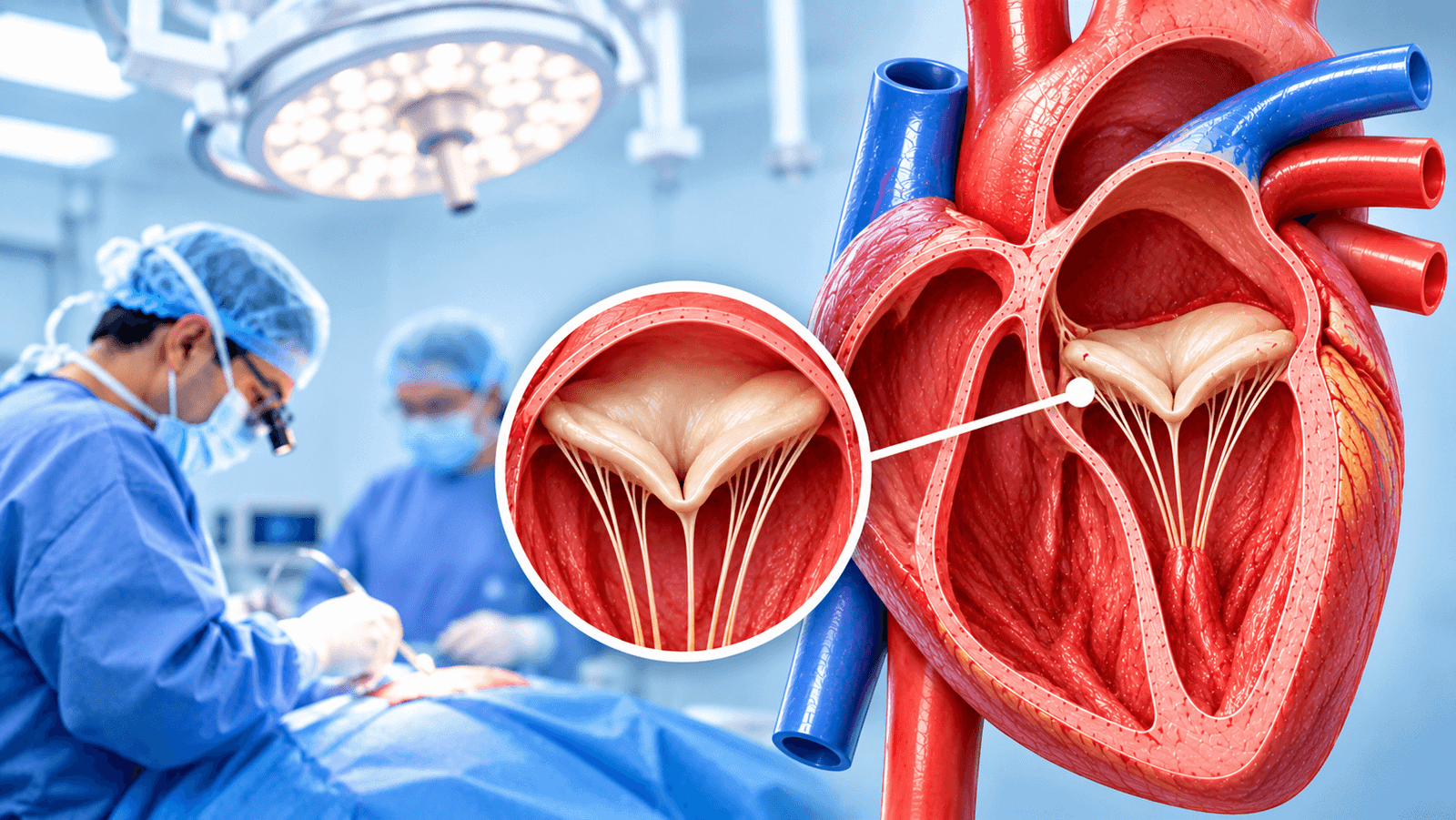
Understanding Mitral Valve Disease
The mitral valve is located between the left atrium and left ventricle. It controls blood flow from the upper-left chamber of the heart into the lower-left chamber and prevents blood from flowing backwards when the left ventricle contracts.
When the valve becomes damaged, blood flow through the heart can be affected. Over time, significant mitral valve disease may cause breathlessness, fatigue, irregular heart rhythms, pulmonary hypertension, or heart failure. For related symptom guides, read about the warning signs of cardiovascular disease and the signs and symptoms of congestive heart disease.
The two major types of mitral valve disease are:
Mitral Valve Stenosis
Mitral stenosis occurs when the valve becomes narrowed and does not open properly. This restricts blood flow from the left atrium into the left ventricle. Common causes include rheumatic heart disease and age-related valve changes. Depending on the valve anatomy and severity, treatment may involve medication, balloon mitral valvotomy, or surgery.
Mitral Valve Regurgitation
Mitral regurgitation occurs when the valve does not close completely, allowing blood to leak backwards into the left atrium. It may result from damaged valve leaflets, stretched or ruptured supporting structures, infection or changes in the heart's size and function. Severe mitral regurgitation may require valve repair, replacement, or a catheter-based intervention in selected patients.
Which Mitral Valve Treatment Do You Need?
The recommended treatment depends on whether the valve is narrowed or leaking, the cause of the disease, the valve's anatomy, and the patient's surgical risk.
| Treatment | Main purpose | When it may be considered |
|---|---|---|
| Mitral valve repair | Corrects the damaged valve while preserving the patient's own valve | Selected patients with mitral regurgitation |
| Mitral valve replacement | Replaces a severely damaged valve with an artificial valve | When durable repair is not feasible |
| Balloon mitral valvotomy | Opens a narrowed mitral valve using a balloon catheter | Selected patients with suitable rheumatic mitral stenosis |
| Minimally invasive mitral surgery | Performs repair or replacement through smaller surgical incisions | Selected patients with suitable anatomy |
| Mitral TEER | Uses a catheter-delivered clip to reduce leakage | Selected patients with significant mitral regurgitation, especially those at high surgical risk |
These procedures are not alternatives for every patient. A specialist heart team determines the most appropriate treatment after reviewing imaging, heart function, and overall health. If you are unsure, you can request a second opinion.
Get Your Personalised TAVR Cost Estimate
Share your echocardiogram, CT scan, ECG or previous cardiac reports and details — our cardiac care team will respond on WhatsApp within 48 hours.
By submitting, you agree to be contacted by Azzocare's care team.
Request Sent!
Our team will WhatsApp you back shortly.
Mitral Valve Repair Cost in India
Mitral valve repair aims to restore the function of the patient's existing valve without replacing it with an artificial prosthesis. During surgery, the surgeon may correct damaged leaflets, repair supporting structures, or use an annuloplasty ring to reshape and support the valve opening.
Repair may be preferred for selected patients with degenerative mitral regurgitation when the surgeon expects a successful and durable result. Current professional guidelines recommend repair over replacement in suitable patients with degenerative primary mitral regurgitation when a durable repair is feasible. Read more in our guide to mitral valve repair cost in India.
What affects the cost of mitral valve repair?
- Complexity and location of valve damage
- Whether an annuloplasty ring is required
- Conventional or minimally invasive surgical approach
- Surgeon's experience and hospital facilities
- ICU stay and postoperative monitoring
- Whether another cardiac procedure is required
A repair may avoid the need for a replacement valve, but it is not suitable for every patient. The surgeon should explain the expected durability and the possibility of residual or recurrent leakage.
Mitral Valve Replacement Cost in India
Mitral valve replacement is recommended when the existing valve is too damaged or unsuitable for a reliable repair. During the operation, the surgeon removes the diseased valve and implants an artificial replacement. See our detailed guide on mitral valve replacement cost in India for more. There are two main types of replacement valves.
Mechanical Mitral Valve Replacement
A mechanical valve is made from durable artificial materials and is designed for long-term use. Important considerations:
- Mechanical valves are generally highly durable.
- Patients usually require lifelong anticoagulation with a vitamin K antagonist, commonly warfarin.
- Regular INR testing is necessary.
- The patient must follow medical advice about medication, diet interactions, and procedures that may affect bleeding or clotting.
The long-term medication and monitoring requirements should be considered before choosing this valve.
Biological Mitral Valve Replacement
A biological valve is made from animal tissue or donated human tissue. Important considerations:
- It may be suitable for patients who want to avoid lifelong anticoagulation solely because of a mechanical prosthesis.
- It can deteriorate over time.
- Some patients may eventually require another valve intervention.
- Anticoagulation may still be required for other medical reasons.
The choice depends on age, life expectancy, bleeding risk, lifestyle, other health conditions, and patient preference. There is no single valve type that is best for everyone.
Mitral Valve Surgery Cost in Major Indian Cities
Patients often compare hospitals in Delhi, Mumbai, Chennai, and other major cities before choosing a cardiac center. However, published city-wise estimates are not consistently based on identical procedures or package inclusions. The following figures use the broad published national planning range rather than presenting unsupported city-specific prices.
| City and search phrase | Approx. USD | Indicative published planning range |
|---|---|---|
| Mitral valve surgery cost in Delhi | $2,100–$5,200 | ₹2–5 lakh |
| Mitral valve replacement cost in Mumbai | $2,100–$5,200 | ₹2–5 lakh |
| Mitral valve repair cost in Chennai | $2,100–$5,200 | ₹2–5 lakh |
| Mitral valve surgery cost in Bengaluru | $2,100–$5,200 | ₹2–5 lakh |
| Mitral valve replacement cost in Hyderabad | $2,100–$5,200 | ₹2–5 lakh |
| Mitral valve surgery cost in Pune | $2,100–$5,200 | ₹2–5 lakh |
| Mitral valve repair cost in Kolkata | $2,100–$5,200 | ₹2–5 lakh |
| Mitral valve surgery cost in Jaipur | $2,100–$5,200 | ₹2–5 lakh |
These are broad reference figures, not confirmed tariffs for individual hospitals in these cities. The actual cost may be higher for complex surgery, minimally invasive procedures, additional valve treatment, or longer hospitalization. Always request a written estimate from the selected hospital. You can browse our partner hospitals and share your reports for a personalised estimate.
Mitral Valve Surgery Cost in India Compared with Other Countries
India is one option for patients exploring cardiac treatment abroad. However, international cost comparisons must account for the same procedure, valve type, hospital stay, surgeon's fees, and follow-up arrangements.
| Country | Cost considerations |
|---|---|
| India | Published open surgery estimates are around ₹2–5 lakh, but hospital packages vary. |
| United States | Costs are generally higher and depend on hospital, insurance, and procedure complexity. |
| United Kingdom | Costs depend on NHS eligibility or private hospital arrangements. |
| Germany | Treatment costs vary by cardiac center, insurance, and surgical approach. |
| Thailand | Private hospital prices depend on the hospital, implant, and treatment plan. |
| United Arab Emirates | Private cardiac surgery costs vary by facility and insurance coverage. |
International patients should request itemized quotations rather than relying on broad online comparisons. Currency conversion, travel, accommodation, and post-discharge care should also be considered. Our guides on medical tourism in India and the India medical visa can help you plan.
What Is Included in a Mitral Valve Surgery Package?
A hospital may offer a package covering the operation and a defined period of hospitalization. However, inclusions differ significantly.
| Package component | Details to confirm |
|---|---|
| Cardiac surgeon's fee | Whether the operating surgeon's fee is included |
| Anesthesia | Anesthetist and anesthesia charges |
| Artificial valve | Mechanical or biological valve, if replacement is planned |
| Annuloplasty ring | Whether a ring is included in repair surgery |
| Operation theater | Surgical equipment and operating-room charges |
| Heart-lung machine | Whether its use is included |
| Cardiac ICU | Number of included ICU days |
| Hospital room | Category and permitted stay |
| Investigations | Preoperative tests and postoperative echocardiography |
| Medicines and consumables | Routine medicines, disposables, and blood products |
| Follow-up | Post-discharge consultations and rehabilitation |
Before admission, ask whether additional charges apply for prolonged ICU care, blood transfusions, complications, extra investigations, or a longer hospital stay.
Tests Required Before Mitral Valve Surgery
A complete assessment helps the cardiac team understand the type and severity of mitral valve disease and determine whether repair, replacement, or a catheter-based procedure is appropriate. For a general idea of test prices, see our guide to the cost of cardiac tests in Delhi. Common investigations include:
1. Echocardiography (ECHO)
An echocardiogram evaluates valve structure, blood flow, leakage or narrowing, chamber size, and heart function. It is one of the most important investigations for mitral valve disease.
2. Transoesophageal echocardiography (TEE)
TEE provides detailed images of the mitral valve and its supporting structures. It may be recommended when a standard echocardiogram does not provide enough information or when detailed planning is required.
3. Electrocardiogram (ECG)
An ECG records the heart's electrical activity and may help identify atrial fibrillation or other rhythm abnormalities.
4. Chest X-ray
A chest X-ray may help assess heart size and the lungs.
5. Coronary angiography or CT coronary imaging
Some patients require coronary assessment before surgery, particularly when they have risk factors or suspected coronary artery disease. See our coronary angiography cost guide.
6. Blood tests
Blood investigations may include complete blood count, kidney and liver function, blood sugar, clotting profile, and blood grouping.
7. Additional assessments
Lung function tests, dental assessments, or other specialist reviews may be needed depending on the patient's medical history and the planned operation. Not every patient requires every investigation. The treating team decides which tests are necessary.
What Happens During Mitral Valve Surgery?
The surgical approach depends on whether the patient needs valve repair or replacement and whether conventional or minimally invasive surgery is appropriate. A typical open mitral valve operation involves the following stages:
- Anesthesia: The patient receives general anesthesia and is connected to monitoring equipment.
- Surgical access: The surgeon accesses the heart through a chest incision. The approach may vary depending on the planned operation.
- Heart-lung machine support: In conventional surgery, a heart-lung machine temporarily maintains circulation and oxygenation.
- Valve treatment: The surgeon repairs the existing valve or removes it and implants a mechanical or biological replacement.
- Function assessment: The surgical team checks the valve's function and the heart's performance.
- Postoperative monitoring: The patient is transferred to the cardiac ICU for observation and recovery.
The operation may take several hours. Its duration depends on the complexity of the valve problem and whether additional procedures are performed.
Balloon Mitral Valvotomy: An Alternative for Selected Patients
Balloon mitral valvotomy, also known as percutaneous mitral balloon commissurotomy, is a catheter-based procedure used to treat selected patients with rheumatic mitral stenosis. A catheter with a balloon is guided into the heart, and the balloon is inflated across the narrowed valve to separate fused valve commissures and improve blood flow.
It may be suitable when the valve anatomy is favorable and there is no significant left atrial thrombus or more than mild mitral regurgitation. It is not a treatment for every type of mitral valve disease. The cardiologist evaluates echocardiography findings and other clinical factors before recommending this procedure.
Mitral TEER and MitraClip: Is Open Surgery Always Necessary?
Transcatheter edge-to-edge repair (TEER) is a minimally invasive treatment that uses a catheter to deliver a clip-like device to the mitral valve. The device brings parts of the valve leaflets closer together to reduce leakage. MitraClip is one device used for this treatment.
TEER may be considered for selected patients with significant mitral regurgitation who are at high or prohibitive risk for conventional surgery, depending on the type of regurgitation, valve anatomy, and expected clinical benefit. It is not suitable for every patient with mitral regurgitation. A specialist heart team must assess whether the expected benefit justifies the procedure.
Recovery After Mitral Valve Surgery
Recovery depends on the patient's health, the type of procedure, and whether complications occur. Patients undergoing open surgery generally need more recovery time than those undergoing catheter-based treatment.
| Recovery stage | What to expect |
|---|---|
| Cardiac ICU | Close monitoring immediately after surgery |
| Hospital stay | Often around 5–10 days after uncomplicated open surgery |
| Early home recovery | Gradual walking and everyday activities as advised |
| Wound care | Follow instructions for keeping the incision clean and protected |
| Cardiac rehabilitation | Supervised exercise and education when recommended |
| Long-term follow-up | Cardiology reviews and echocardiography as advised |
Patients should follow the surgeon's instructions about lifting, driving, exercise, wound care, and returning to work. Recovery time varies, and strenuous activity should not resume without medical clearance. Once your doctor clears you, see our guides on exercise for heart health at home and how to improve heart health naturally.
Long-term care after mitral valve replacement
Patients with mechanical mitral valves generally need lifelong anticoagulation and regular INR monitoring. Patients with biological valves need ongoing clinical and echocardiographic follow-up because tissue valves can deteriorate over time. Patients should not stop or change blood-thinning medicines without consulting their treating doctor.
Risks and Possible Complications
Mitral valve surgery is a major cardiac procedure. Although it can improve valve function and symptoms in appropriately selected patients, complications are possible. Potential risks include the following:
- Bleeding or need for blood transfusion
- Infection
- Irregular heart rhythms, including atrial fibrillation
- Stroke or blood clots
- Kidney or lung complications
- Residual or recurrent valve leakage
- Problems involving the artificial valve
- Need for a pacemaker in some patients
- Prolonged ICU stay or additional treatment
The risk profile depends on age, heart function, other medical conditions, and the complexity of surgery. The surgeon should explain the patient's individual risks before the procedure.
Seek emergency medical care if you experience severe chest pain, fainting, sudden breathlessness, or other urgent symptoms.
Is Mitral Valve Surgery Covered by Health Insurance in India?
Mitral valve surgery may be covered by health insurance when it is medically necessary and the policy conditions are satisfied. Coverage depends on the insurer, policy wording, waiting periods, exclusions, and pre-authorisation. Before admission, patients should confirm:
- Whether the selected hospital is in the insurer's network
- Whether mitral valve repair or replacement is covered
- Whether the artificial valve or annuloplasty ring is included
- Whether ICU and room charges have limits
- Whether pre-existing disease waiting periods apply
- Whether medicines, investigations, and blood products are covered
- Whether cashless treatment or reimbursement is available
International patients should request a written estimate and payment schedule because domestic Indian health insurance may not apply to them.
Choosing a Hospital for Mitral Valve Surgery in India
The lowest advertised price should not be the only factor when choosing a hospital. The quality of the cardiac team, availability of specialized facilities, and ability to manage complications are also important. Compare profiles on our best cardiology doctors in India page. Before selecting a hospital, consider:
- The cardiac surgeon's experience with mitral valve repair and replacement
- Whether the hospital has a dedicated cardiac ICU
- Access to advanced echocardiography and cardiac imaging
- Availability of minimally invasive surgery when clinically appropriate
- The type and brand of artificial valve proposed
- The hospital's plan for managing complications
- The expected length of stay and follow-up arrangements
- Whether international-patient coordination is available, if required
Patients should obtain a medical opinion and a written treatment estimate before making travel or admission arrangements. Cardiac centres in our partner network include Fortis Escorts Heart Institute, Medanta – The Medicity, BLK-Max Super Speciality Hospital, Indraprastha Apollo Hospitals and Artemis Hospital, Gurugram. Services and pricing differ by hospital, so request a written quotation from each.
Get a Personalized Mitral Valve Surgery Cost Estimate in India
The cost of mitral valve surgery depends on the type of valve disease, whether repair or replacement is possible, the selected implant, and the patient's overall health. A personalized medical review is the best way to understand the likely treatment plan and total cost.
Azzocare can help international patients explore mitral valve treatment options in India and coordinate with hospitals for medical opinions and cost estimates. Share your latest echocardiogram, TEE, ECG, angiography reports (if available), medication list, and medical history. The treating cardiac team can review the information and advise on suitable treatment options and an individualized estimate. International patients can also ask about medical visa assistance, or book an appointment directly. To see how this fits with other procedures, browse our treatment cost guides.
Frequently Asked Questions
What is the cost of mitral valve surgery in India?
Published estimates for open mitral valve repair or replacement commonly range from US$2,100 to US$5,200 (₹2–5 lakh). The final cost depends on the procedure, hospital, artificial valve, ICU stay, and patient condition.
Is mitral valve repair better than replacement?
For selected patients with degenerative primary mitral regurgitation, repair is generally preferred when the surgeon expects a durable result. However, replacement may be necessary when the valve is severely damaged or cannot be repaired reliably.
How much does mitral valve replacement cost in India?
The published cost of open mitral valve replacement varies by hospital. A broad planning reference is ₹2–5 lakh (approximately US$2,100–US$5,200), but the artificial valve, surgical complexity, and package inclusions can change the final quotation.
What is the difference between mechanical and biological mitral valves?
Mechanical valves are designed for long-term durability but generally require lifelong anticoagulation and INR monitoring. Biological valves are made from tissue and may deteriorate over time. The choice depends on the patient's clinical condition and preferences.
How long does mitral valve surgery take?
Open mitral valve surgery commonly takes several hours. The exact duration depends on whether the surgeon performs repair or replacement and whether additional cardiac procedures are needed.
How many days does a patient stay in the hospital after mitral valve surgery?
After uncomplicated open surgery, hospitalization may last around 5–10 days. Patients who require additional treatment or monitoring may stay longer.
Can mitral valve surgery be performed without opening the chest?
Some patients may qualify for minimally invasive surgical approaches through smaller incisions. Selected patients with mitral regurgitation may also be suitable for catheter-based TEER. Not everyone is eligible for these options.
Is balloon mitral valvotomy the same as mitral valve replacement?
No. Balloon mitral valvotomy uses a catheter and balloon to open a narrowed mitral valve. Valve replacement removes the diseased valve and implants an artificial one. Balloon valvotomy is suitable only for selected patients with mitral stenosis.
Does a patient need lifelong medication after mitral valve surgery?
Patients with mechanical mitral valves generally require lifelong anticoagulation. Patients with biological valves may not need lifelong anticoagulation solely because of the valve, but medicines may be prescribed for other medical reasons.
Can international patients travel to India for mitral valve surgery?
International patients may explore treatment in India after a specialist reviews their medical records and confirms the recommended procedure. They should receive medical advice about fitness to travel, treatment timing, hospitalization, and follow-up before booking travel.
Related Pages
Sources and Clinical References
- Apollo Hospitals — Open Mitral Valve Replacement and Repair — published cost range and procedure overview.
- Credihealth — Mitral Valve Surgery Cost in India — additional published cost estimate.
- 2025 ESC/EACTS Guidelines for Valvular Heart Disease — current recommendations for mitral valve intervention and TEER.
- ACC/AHA Valvular Heart Disease Guidelines — clinical guidance on mitral valve repair and replacement.
- National Health Mission — Model Costing for Cardiac Procedures — historical government model costing; not a current private-hospital tariff.
Medical Disclaimer
This article is for educational purposes only and does not replace advice from a qualified cardiologist or cardiac surgeon. Treatment decisions must be based on an individual medical assessment. If you experience severe chest pain, fainting, sudden breathlessness, or other urgent symptoms, seek emergency medical care.

Mohammad Nafis Khan is an SEO and digital marketing professional with over 5 years of experience creating search-optimized, patient-focused content for healthcare and medical websites. He follows E-E-A-T principles to make complex healthcare topics clear and accessible, structuring articles around what patients actually search for.
Read full bio
Dr. Md Ehsanullah is a physician with 4+ years of clinical experience in internal and general medicine. He completed his MBBS and MD from Asian Medical University, Kyrgyzstan, and currently practices at VMMC & Safdarjung Hospital, New Delhi. He reviews Azzocare's healthcare content for clinical accuracy, ensuring medical information aligns with current best practices and E-E-A-T principles.
Read full bio