
Coronary Angiography Test Cost in India
Diagnostic coronary angiography and CT coronary angiography — prices, city-wise costs, procedure, preparation and recovery, with a free personalised estimate within 48 hours.
Top Hospitals
for Coronary Angiography
Find hospitals with advanced cardiac catheterisation labs, 24/7 cardiac emergency support and transparent diagnostic packages.
Explore Hospitals →Top Cardiologists
for Diagnostic Angiography
Connect with interventional cardiologists experienced in diagnostic angiography and, when needed, follow-on angioplasty.
Find Specialists →Direct answer: The coronary angiography test cost in India generally ranges from approximately $125 to $521 (₹12,000 to ₹50,000) for a diagnostic procedure, with commonly cited averages of about $208–$260 (₹20,000–₹25,000). The final price depends on the hospital, city, cardiologist, medical investigations, and patient requirements. CT coronary angiography, a non-invasive alternative, is typically lower at about $73–$208 (₹7,000–₹20,000).
| Treatment Information | Details |
|---|---|
| Procedure | Coronary Angiography (diagnostic, catheter-based) |
| Purpose | Detect narrowing or blockage in the coronary arteries |
| Possible Follow-On Treatment | Coronary Angioplasty, Heart Stent or CABG Surgery (only if clinically needed) |
| Related Condition | Heart Blockage / Coronary Artery Disease |
| Non-Invasive Alternative | CT Coronary Angiography (selected patients) |
| Performed By | Interventional Cardiologist |
Coronary Angiography Cost in India at a Glance
Some hospitals include consultation and observation charges in their package, while others bill them separately. Patients should confirm the complete cost before scheduling the procedure.
| Cost Component | Estimated Price |
|---|---|
| Diagnostic coronary angiography (catheter-based) | $125–$521 (₹12,000–₹50,000) |
| CT coronary angiography (non-invasive alternative) | $73–$208 (₹7,000–₹20,000) |
| Cardiologist consultation | $5–$25 (₹500–₹2,400) |
| Pre-procedure tests (blood tests, kidney function, ECG) | $16–$36 (₹1,500–₹3,500) |
| Echocardiography, if required | $16–$42 (₹1,500–₹4,000) |
| Additional hospital charges | Depends on the facility |
Note: These are approximate planning estimates compiled from published hospital and provider listings (see Reference Links below), not confirmed hospital quotations or fixed national rates. Actual prices may vary.
For a wider view of what other heart investigations cost, see our guide to the cost of cardiac tests in Delhi.
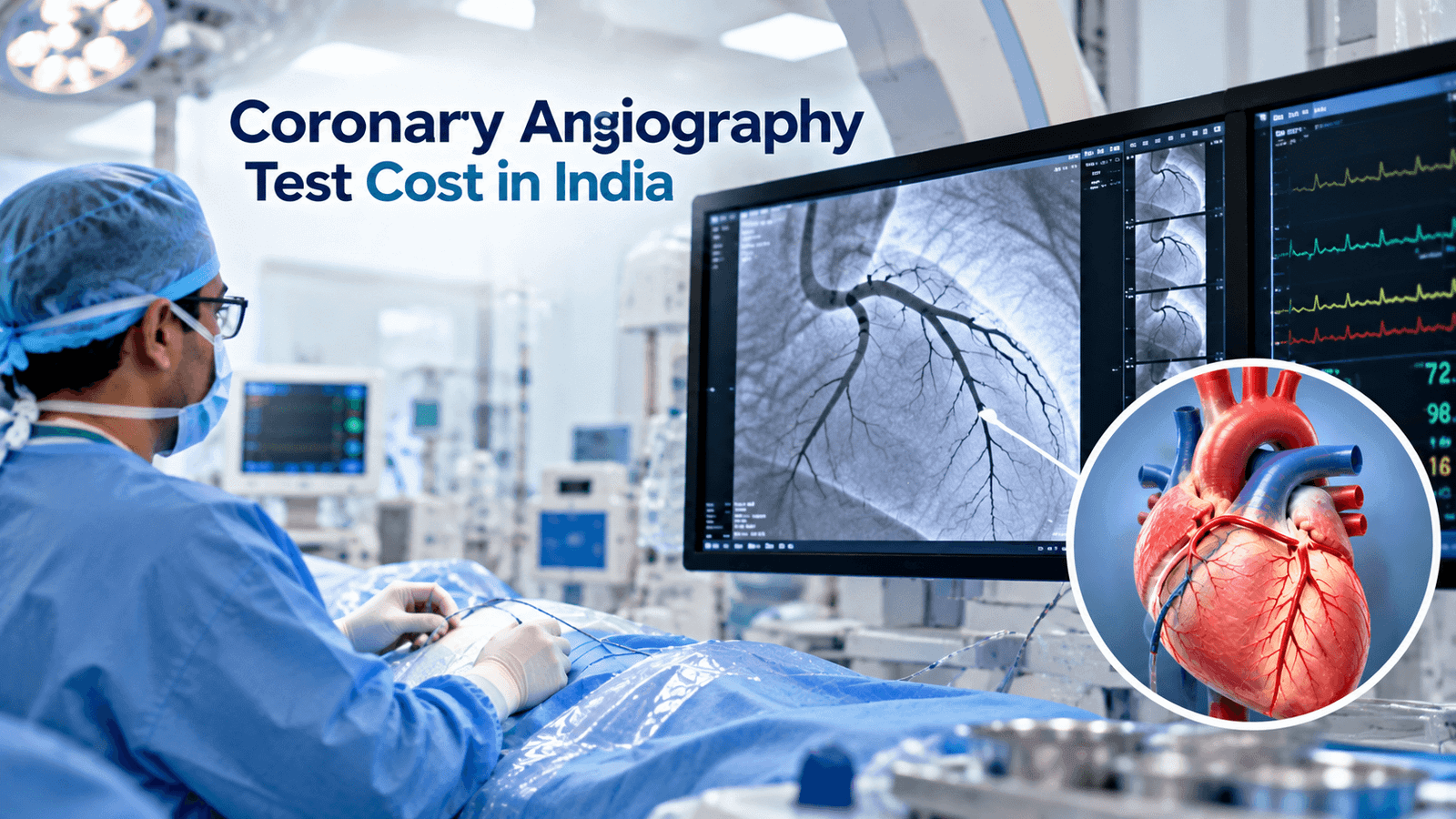
What Is a Coronary Angiography Test?
Coronary angiography is a diagnostic procedure used to examine the blood vessels that supply blood to the heart muscle.
During the procedure, a cardiologist inserts a thin, flexible tube called a catheter into a blood vessel, usually through the wrist or groin. A contrast dye is introduced through the catheter, and X-ray imaging helps the doctor identify narrowing, blockages, or other abnormalities in the coronary arteries.
The test provides detailed information about coronary blood flow and helps doctors determine whether a patient may need medication, angioplasty, coronary artery bypass surgery, or another treatment.
Coronary angiography may be recommended when a patient has:
- Chest pain or suspected angina
- Symptoms suggesting coronary artery disease
- Abnormal results from certain cardiac investigations
- Suspected significant coronary artery blockage
- A history of heart attack requiring further evaluation
- Symptoms that require assessment before selected heart procedures, such as heart valve surgery
The decision to perform angiography depends on the patient's symptoms, medical history, examination, and other test results. If you are unsure what your symptoms mean, read our guides on blockage of heart symptoms and the warning signs of cardiovascular disease.
Coronary Angiography Cost in India by City
The coronary angiography price can differ between cities because hospitals have different facilities, staffing costs, equipment, and pricing policies.
| City | Estimated Cost |
|---|---|
| Delhi | $146–$469 (₹14,000–₹45,000) |
| Mumbai | $156–$385 (₹15,000–₹37,000) |
| Chennai | $125–$229 (₹12,000–₹22,000) |
| Bengaluru | $146–$250 (₹14,000–₹24,000) |
| Hyderabad | $104–$417 (₹10,000–₹40,000) |
| Kolkata | $156–$625 (₹15,000–₹60,000) |
These city-wise prices are indicative budgeting estimates drawn from published provider and hospital price ranges, not verified current hospital tariffs. The upper limits for some cities come from a single hospital's published range. They should not be interpreted as guaranteed prices or actual hospital comparisons.
For Pune, Ahmedabad and other cities, request a written estimate rather than relying on a general range. For an accurate estimate, contact the hospital's cardiology department and ask for the complete diagnostic angiography package, including consultation, contrast dye, catheterisation charges, and post-procedure observation.
What Factors Affect Coronary Angiography Test Cost in India?
The final coronary angiography price depends on several factors. Understanding these differences can help patients compare hospitals more effectively.
1. Hospital Type and Facilities
Government hospitals, charitable cardiac centres, and private hospitals may have different pricing structures.
Government hospitals may offer lower-cost diagnostic services to eligible patients, and some listings show starting prices around $52 (₹5,000). Private hospitals may charge more depending on their facilities, clinical services, and package inclusions.
The hospital's overall reputation alone does not determine whether a particular angiography package is suitable. Patients should also consider the cardiology team's experience, emergency support, and available cardiac treatment facilities.
2. City and Hospital Location
The cost of diagnostic procedures can vary between metropolitan cities and smaller locations.
Hospitals in major cities may have different operating expenses, equipment costs, and service charges. However, a smaller city does not automatically guarantee a lower price, and a metropolitan hospital does not necessarily offer better value for every patient.
3. Type of Angiography
The procedure recommended by the cardiologist can influence the total expense.
Diagnostic coronary angiography is performed to examine the coronary arteries.
Other procedures, including coronary CT angiography and invasive coronary angiography, use different techniques and may have different pricing structures.
Patients should confirm which procedure their doctor has recommended before comparing quotations.
4. Doctor's Consultation and Medical Team
The consultation fee may depend on the cardiologist, hospital, and appointment type.
Some diagnostic packages include the initial cardiology consultation, while others charge it separately.
Patients should also clarify whether a follow-up appointment is included in the quoted price.
5. Pre-Procedure Investigations
Before angiography, doctors may recommend blood tests, an ECG, kidney function assessment, or other investigations.
These tests help evaluate the patient's condition and determine whether additional precautions are needed.
Not every patient requires the same investigations. The total cost depends on the tests recommended for the individual.
6. Hospital Admission and Observation
Some patients undergo angiography as a day-care procedure, while others may require hospital admission.
The admission decision depends on the patient's condition, medical history, procedure details, and the treating team's assessment.
Hospital room charges, nursing care, monitoring, and additional observation can increase the final bill.
7. Additional Treatment
If angiography identifies significant coronary artery narrowing, the cardiologist may discuss further treatment.
Angioplasty, stent placement, or bypass surgery is not automatically included in the diagnostic angiography cost.
These treatments have separate medical indications, procedure charges, and recovery requirements. Where several arteries are involved, the team may also discuss options covered in our guides on 3 vessel disease treatment and multiple heart blockages.
Coronary Angiography Cost vs. CT Coronary Angiography Cost
Patients sometimes confuse invasive coronary angiography with CT coronary angiography. Although both can evaluate coronary arteries, they are different procedures.
| Feature | Invasive Coronary Angiography | CT Coronary Angiography |
|---|---|---|
| Procedure | Catheter inserted into a blood vessel | CT scanner with contrast injection |
| Imaging method | X-ray fluoroscopy | CT imaging |
| Catheterisation | Required | Usually not required |
| Main purpose | Detailed assessment of coronary arteries and possible treatment planning | Non-invasive assessment of coronary anatomy |
| Treatment during test | Certain interventions may be performed if clinically appropriate | Does not perform coronary angioplasty |
| Cost | Typically $125–$521 (₹12,000–₹50,000); depends on hospital and procedure | Typically $73–$208 (₹7,000–₹20,000); depends on scanner, hospital, and imaging protocol |
The appropriate test depends on the patient's symptoms, clinical risk, and the cardiologist's recommendation.
A CT coronary angiography scan should not be considered a direct replacement for invasive angiography in every clinical situation.
Get Your Personalised Angiography Cost Estimate
Share your ECG, echocardiogram or previous cardiac reports and details — our cardiac care team will respond on WhatsApp within 48 hours.
By submitting, you agree to be contacted by Azzocare's care team.
Request Sent!
Our team will WhatsApp you back shortly.
What Happens During a Coronary Angiography Test?
Understanding the procedure can help patients prepare and know what to expect.
Step 1: Medical Assessment
The cardiologist reviews the patient's symptoms, medical history, medications, allergies, and previous investigations.
The doctor may ask about diabetes, kidney problems, bleeding disorders, and previous reactions to contrast dye.
Step 2: Preparation
The medical team provides instructions about fasting, medication adjustments, and other preparation requirements.
Patients should not stop prescribed medicines independently. Any changes to blood thinners, diabetes medicines, or other medications must be discussed with the treating doctor.
Step 3: Catheter Insertion
The procedure is usually performed in a specialised cardiac catheterisation laboratory.
The insertion area is cleaned and numbed with local anaesthesia.
A catheter is inserted through an artery, commonly in the wrist or groin, and guided toward the coronary arteries.
Step 4: Contrast Dye and Imaging
The cardiologist injects contrast dye through the catheter.
X-ray images show how the dye moves through the coronary arteries and help identify areas of narrowing or blockage.
The patient may experience a brief warm sensation when the contrast dye is injected.
Step 5: Catheter Removal
After imaging is completed, the catheter is removed.
The medical team applies pressure or a closure device to help control bleeding at the insertion site.
Step 6: Recovery and Observation
The patient is monitored for bleeding, changes in blood pressure, and other possible complications.
The discharge decision depends on the patient's condition, access site, procedure findings, and hospital protocol.
Is Coronary Angiography Painful?
Coronary angiography is generally performed using local anaesthesia at the catheter insertion site.
Patients may feel a brief sting when the local anaesthetic is injected. During catheter insertion, some people experience pressure or mild discomfort.
The contrast dye may cause a temporary warm sensation.
The procedure is not usually associated with severe pain, although individual experiences differ.
Patients should inform the medical team immediately if they experience chest pain, breathing difficulty, severe discomfort, or any unusual symptoms during the procedure.
How Long Does Coronary Angiography Take?
The diagnostic imaging portion of coronary angiography often takes approximately 15–30 minutes.
However, the total hospital visit may take several hours because patients require preparation, procedure-related monitoring, and recovery.
The duration can be longer if the procedure is technically complex or if additional treatment is required.
The treating hospital can provide a more accurate estimate based on the patient's condition and its own protocol.
Is Hospital Admission Required for Angiography?
Not every patient needs an overnight hospital stay.
Some patients can undergo diagnostic coronary angiography and return home on the same day after appropriate observation.
Others may require admission because of:
- Significant cardiac symptoms
- Recent heart attack
- Other medical conditions
- Complications or bleeding concerns
- Additional procedures
- The cardiologist's clinical recommendation
Patients should arrange transportation and follow the hospital's discharge instructions.
What Is the Difference Between Angiography and Angioplasty?
Angiography and angioplasty are related but serve different purposes.
Coronary angiography is primarily a diagnostic procedure. It helps the cardiologist identify the location and severity of coronary artery narrowing.
Coronary angioplasty is a treatment procedure used to improve blood flow through a narrowed coronary artery. It commonly involves a balloon catheter and may include placement of a stent. See our Coronary Angioplasty Cost guide for the treatment-side prices.
A patient may undergo angiography without needing angioplasty.
If angioplasty is recommended, the doctor should explain the reason for treatment, alternatives, risks, and additional costs.
Does Angiography Cost Include Stent Placement?
Usually, a diagnostic angiography package does not include coronary stent placement.
If a blockage requires treatment, the hospital may provide a separate estimate for angioplasty, stents, hospitalisation, medicines, and monitoring. You can compare these in our Heart Stent Cost guide.
In selected clinical situations, angiography and angioplasty may be performed during the same session. Whether this is appropriate depends on the patient's condition and the cardiologist's assessment.
Patients should ask whether the quoted price covers diagnostic imaging only or includes any planned intervention.
How to Prepare for Coronary Angiography
Preparation instructions vary depending on the hospital and the patient's medical condition.
Before the procedure, patients should:
- Follow the hospital's fasting instructions.
- Inform the cardiologist about all prescribed medicines.
- Report any previous reaction to contrast dye.
- Inform the doctor about kidney disease or diabetes.
- Share details of allergies and bleeding problems.
- Bring previous ECGs, cardiac reports, and relevant medical records.
- Ask whether blood tests or other investigations are required.
- Confirm whether a family member or attendant should accompany them.
Patients should not independently discontinue blood thinners, diabetes medicines, or other prescribed treatment.
The cardiologist will provide instructions based on the patient's medical history.
What Are the Risks of Coronary Angiography?
Coronary angiography is a commonly performed cardiac procedure, but it is not completely risk-free.
Potential complications include:
- Bleeding or bruising at the catheter insertion site
- Blood vessel injury
- Contrast dye-related allergic reactions
- Kidney injury associated with contrast exposure
- Abnormal heart rhythm
- Infection
- Rarely, serious complications such as heart attack, stroke, or severe vascular injury
The risk varies depending on the patient's health, existing heart disease, kidney function, and the complexity of the procedure.
Patients should discuss their individual risks with the cardiologist before giving consent.
Recovery After Coronary Angiography
Recovery depends on the catheter insertion site and the patient's condition.
After the procedure, the medical team monitors the insertion area and checks for bleeding or other complications.
Patients may receive instructions about:
- Keeping the insertion site clean and dry
- Avoiding strenuous activity for the recommended period
- Following medication instructions
- Drinking fluids if advised and medically appropriate
- Monitoring for swelling, bleeding, or unusual pain
- Attending the recommended follow-up appointment
Patients with kidney disease or fluid restrictions should follow their doctor's specific instructions rather than increasing fluid intake independently.
Seek urgent medical attention for significant bleeding, chest pain, breathing difficulty, fainting, or sudden weakness after the procedure.
Once your doctor clears you, heart-healthy habits support long-term cardiac health. See our guides on exercise for heart health at home and how to improve heart health naturally.
How to Choose a Hospital for Coronary Angiography in India
The lowest angiography price is not necessarily the best choice for every patient.
When comparing hospitals, consider:
Cardiology Expertise
Choose a hospital where the procedure is performed by a qualified cardiology team with appropriate experience in coronary angiography. You can compare profiles on our best cardiology doctors in India page.
Cardiac Catheterisation Laboratory
Confirm that the hospital has the facilities required for the recommended procedure.
Emergency Support
Ask about emergency cardiac care and the availability of additional treatment if an unexpected complication occurs.
Transparent Pricing
Request a written estimate that explains the procedure charges and additional expenses.
Patient Monitoring
Check whether the package includes recovery observation and whether additional admission charges may apply.
Follow-Up Care
Ask how the angiography results will be reviewed and whether a cardiology follow-up consultation is included.
The best hospital for a patient depends on clinical needs, accessibility, medical expertise, and the availability of appropriate facilities. Cardiac centres in our partner network include Fortis Escorts Heart Institute, Medanta – The Medicity, BLK-Max Super Speciality Hospital, Indraprastha Apollo Hospitals and Artemis Hospital, Gurugram. Browse all options on our hospitals page, or get a second opinion before you decide.
Does Health Insurance Cover Coronary Angiography in India?
Health insurance coverage for coronary angiography depends on the policy, medical indication, hospital network, and whether the procedure is performed as day-care treatment or during hospitalisation.
Some policies may cover medically necessary cardiac investigations under applicable hospitalisation or day-care benefits.
However, coverage is not guaranteed for every diagnostic procedure.
Before scheduling angiography, patients should check:
- Whether the procedure is covered under their policy
- Whether the hospital is part of the insurer's network
- Whether pre-authorisation is required
- Whether day-care treatment is covered
- Whether consultation and investigation charges are included
- Whether deductibles, co-payments, or exclusions apply
Patients should confirm coverage directly with their insurer and hospital insurance desk.
Conclusion
The coronary angiography test cost in India generally ranges from approximately $125 to $521 (₹12,000 to ₹50,000) for diagnostic procedures, depending on the hospital, city, procedure requirements, and patient's medical condition.
Additional investigations, hospital admission, or treatment can increase the total expense.
Before booking, patients should confirm the procedure type, package inclusions, insurance coverage, and any additional charges with the hospital.
Most importantly, coronary angiography should be performed when recommended by a qualified cardiologist after evaluating the patient's symptoms and medical needs. Understanding the procedure and its costs can help patients make informed decisions about their cardiac care. To see how this fits with other procedures, browse our treatment cost guides.
How Azzocare Helps International Patients
Azzocare connects international patients with verified cardiologists and cath-lab-equipped hospitals across Delhi NCR, coordinating every step at no extra cost:
- Free medical opinion and itemised cost estimate within 48 hours of sharing your ECG, echocardiogram or previous cardiac reports
- Guidance on whether invasive angiography, CT coronary angiography or another test suits your case
- Medical visa documentation and travel planning support — see also the India medical visa guide
- Airport pickup and accommodation arranged near your hospital
- Interpreter support throughout consultations and admission
- A dedicated case manager from first contact through follow-up care
For a full overview of planning treatment in India, read our guide to medical tourism in India, or book an appointment directly.
Frequently Asked Questions
What is the coronary angiography test cost in India?
The estimated cost of diagnostic coronary angiography in India is approximately $125–$521 (₹12,000–₹50,000), with commonly cited averages of about $208–$260 (₹20,000–₹25,000). Actual charges depend on the hospital, city, procedure requirements, and package inclusions. Patients should obtain a current written quotation before booking.
What is the coronary angiography cost in Delhi?
Coronary angiography in Delhi may cost approximately $146–$469 (₹14,000–₹45,000) as a planning estimate. The price varies between government and private hospitals and depends on whether consultation, investigations, and observation are included.
Is coronary angiography available in government hospitals?
Yes. Coronary angiography is available at government hospitals with cardiac catheterisation facilities. Charges and eligibility vary by institution, state, and applicable patient schemes.
Is coronary angiography a surgery?
Coronary angiography is an invasive diagnostic procedure, but it is not open-heart surgery. A catheter is inserted through a blood vessel to examine the coronary arteries. The procedure does not automatically require angioplasty or bypass surgery.
Can angiography detect heart blockages?
Yes. Coronary angiography can show narrowing or blockage in the coronary arteries. The cardiologist evaluates the findings alongside the patient's symptoms and other clinical information to determine whether treatment is required.
How many hours does a patient stay in the hospital after angiography?
Some patients are discharged on the same day after observation. Others may require overnight admission depending on their medical condition, procedure findings, and hospital protocol.
Is angiography safe for patients with kidney problems?
Patients with kidney problems may require additional assessment before angiography because contrast dye can increase the risk of kidney injury in certain situations. The cardiologist evaluates kidney function, medical history, and the necessity of the procedure before deciding on appropriate precautions.
Is angiography required before angioplasty?
Coronary angiography is commonly used to identify and evaluate coronary artery narrowing before angioplasty. In some cases, angiography and angioplasty may be performed during the same procedure. The decision depends on the clinical situation.
Does angiography always lead to stent placement?
No. Angiography is a diagnostic procedure. Depending on the findings, the cardiologist may recommend medication, further assessment, angioplasty, stent placement, bypass surgery, or another treatment. Some patients do not require an intervention.
How can I get an accurate angiography cost estimate?
Contact the hospital's cardiology department and provide the recommended procedure, relevant medical history, and any available referral. Ask for a written estimate covering the diagnostic procedure, contrast dye, consultation, investigations, hospital charges, and recovery observation.
Related Pages
Reference Links
- CARE Hospitals — Coronary Angiography Cost
- Ditto — Angiography Cost in India
- Zurich Kotak — Cost of Cardiac Angiography in India (2026)
- LogintoHealth — Angiography in India
- Bajaj Finserv Health — CT Coronary Angiogram Cost in India
- myUpchar — Coronary Angiography in India
- ManipalCigna — Angiography Cost in India
- Asian Heart Institute — Angiography Test Cost in India
- Bajaj Finserv Health — Echocardiogram Test Cost in India
Medical Disclaimer
This article provides general educational information and indicative cost estimates as of October 2026. It is not a substitute for medical advice, diagnosis, or treatment. Procedure costs and clinical recommendations vary by patient and hospital. Consult a qualified cardiologist for personalised medical guidance and obtain a current hospital quotation before proceeding.

Mohammad Nafis Khan is an SEO and digital marketing professional with over 5 years of experience creating search-optimized, patient-focused content for healthcare and medical websites. He follows E-E-A-T principles to make complex healthcare topics clear and accessible, structuring articles around what patients actually search for.
Read full bio
Dr. Md Ehsanullah is a physician with 4+ years of clinical experience in internal and general medicine. He completed his MBBS and MD from Asian Medical University, Kyrgyzstan, and currently practices at VMMC & Safdarjung Hospital, New Delhi. He reviews Azzocare's healthcare content for clinical accuracy, ensuring medical information aligns with current best practices and E-E-A-T principles.
Read full bio