
Robotic Heart Surgery Cost in India: Procedures, Benefits & Recovery
Robotic mitral valve, CABG and ASD closure costs, who is suitable, benefits, risks and recovery — with a free personalised estimate within 48 hours.
Top Hospitals
for Robotic Cardiac Surgery
Find hospitals with cardiac surgery teams, dedicated cardiac ICUs, advanced imaging and transparent itemised written estimates.
Explore Hospitals →Top Cardiac Surgeons
for Minimally Invasive Surgery
Connect with cardiologists and cardiac surgeons experienced in minimally invasive valve, bypass and congenital heart surgery.
Find Specialists →Direct answer: Robotic heart surgery is an advanced form of minimally invasive cardiac surgery in which a specially trained surgeon operates using robotic instruments and a high-definition camera. In India, the estimated cost generally ranges from US$5,200–US$14,600 (₹5 lakh–₹14 lakh) for several commonly published robotic cardiac procedure estimates. Complex operations, premium hospitals and additional procedures may cost more.
| Treatment Information | Details |
|---|---|
| Procedure | Robot-assisted minimally invasive cardiac surgery controlled by the surgeon |
| Common Operations | Mitral valve repair, mitral valve replacement, CABG, ASD closure |
| Alternatives | Conventional open-heart surgery, catheter-based procedures, medical treatment |
| Related Treatments | Heart Valve Replacement, Coronary Angioplasty, Heart Stent |
| Pre-Surgery Tests | Echocardiography, ECG, CT scan, blood tests, coronary angiography where needed |
| Performed By | Cardiac Surgeon & Cardiologist Team |
Robotic Heart Surgery Cost in India: Quick Overview
The final price depends on the type of heart surgery, robotic system, surgeon's experience, hospital facilities, ICU stay and the patient's medical condition. Robotic assistance may be used for selected mitral valve operations, coronary artery bypass procedures, atrial septal defect closure and other specialised cardiac treatments.
| Type of robotic cardiac surgery | Approx. USD | Approximate cost in India |
|---|---|---|
| Robotic mitral valve repair | $5,200–$10,400 | ₹5–10 lakh |
| Robotic mitral valve replacement | $5,200–$13,500 | ₹5–13 lakh |
| Robotic valve repair or replacement | $5,200–$13,500 | ₹5–13 lakh |
| Robotic coronary artery bypass surgery (CABG) | $5,200–$14,600 | ₹5–14 lakh |
| Robotic totally endoscopic coronary artery bypass (TECAB) | Varies | Depends on the number of vessels and surgical complexity |
| Robotic atrial septal defect (ASD) closure | $5,200–$13,500 | ₹5–13 lakh |
| Hybrid robotic coronary revascularisation | $6,250–$14,600 | ₹6–14 lakh |
These are indicative published estimates, not guaranteed hospital package prices. Yashoda Hospitals publishes procedure-specific estimates in these ranges. Apollo Hospitals separately publishes ₹5–7 lakh for robot-assisted CABG and ₹3–6 lakh for robotic mitral valve repair or replacement. Different hospitals may quote different amounts for similar procedures.
For procedure-specific pricing, see our guides on mitral valve repair, mitral valve replacement and CABG surgery.
What Is Robotic Heart Surgery?
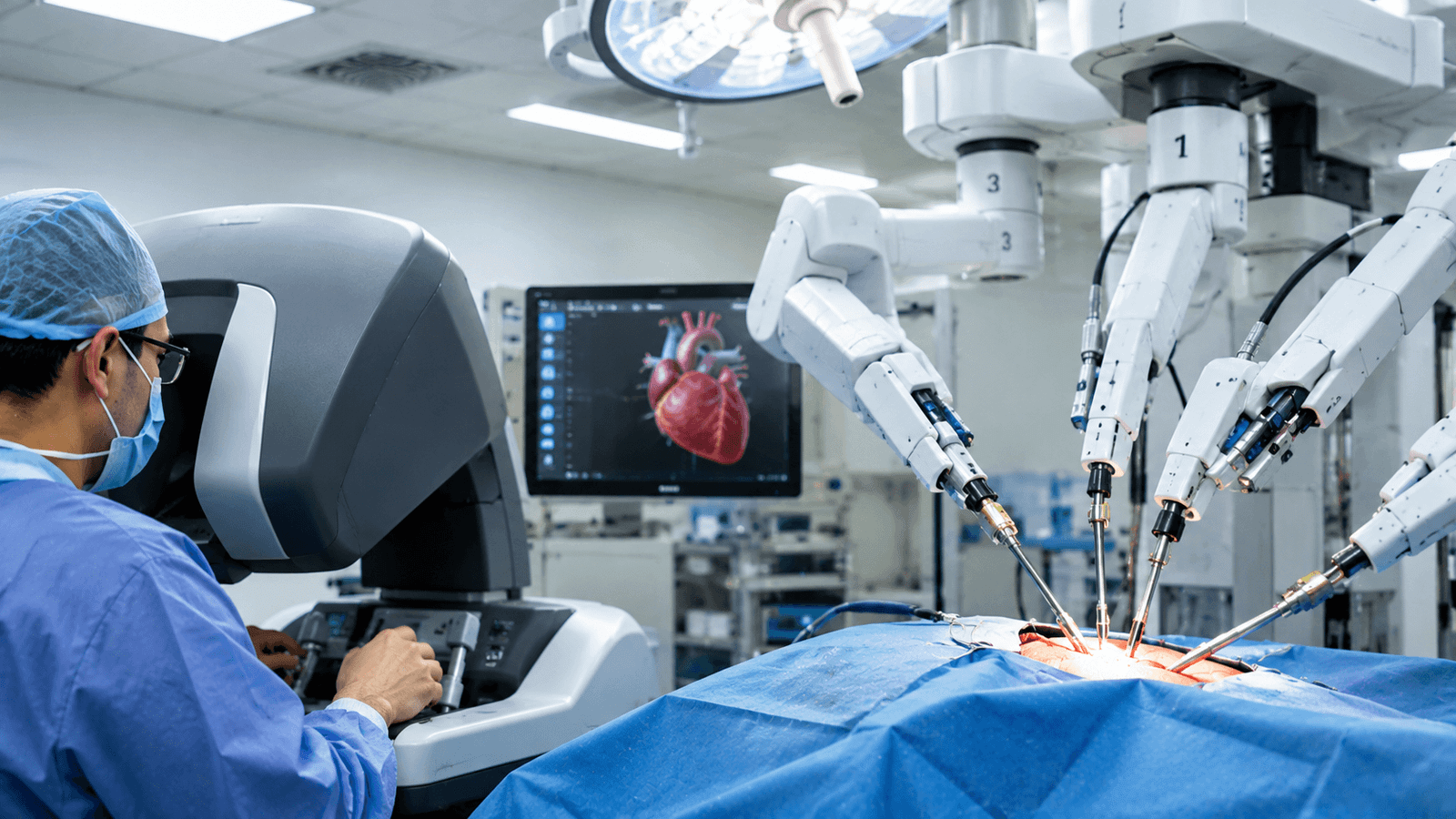
Robotic heart surgery is a minimally invasive surgical approach that allows a cardiac surgeon to perform selected operations through small openings in the chest instead of using a conventional large chest incision.
The surgeon sits at a specialised console and controls robotic instruments that enter the chest through small ports. A high-definition camera provides a magnified, three-dimensional view of the surgical area.
The robotic system translates the surgeon's hand movements into controlled instrument movements. It does not operate independently or make treatment decisions. Depending on the procedure, robotic assistance may help the surgeon perform delicate movements in areas that are difficult to access through conventional techniques.
Which Heart Conditions Can Be Treated with Robotic Surgery?
Robotic technology is used for selected cardiac operations. It is not suitable for every heart condition, and the decision depends on the patient's anatomy, diagnosis and overall health. If you are unsure, you can request a second opinion. For related symptom guides, read about the warning signs of cardiovascular disease and blockage of heart symptoms.
1. Mitral Valve Disease
Robotic mitral valve surgery may be considered for selected patients with mitral valve regurgitation or other mitral valve problems. The surgeon may repair the existing valve or replace it when repair is not suitable. Repair may involve reshaping valve leaflets or supporting the valve with an annuloplasty ring.
2. Coronary Artery Disease
Selected patients with coronary artery disease may qualify for robot-assisted coronary artery bypass grafting (CABG). The procedure creates a new route for blood to flow around a blocked coronary artery. Some patients may be suitable for totally endoscopic coronary artery bypass (TECAB), while others may need a hybrid approach or conventional coronary artery bypass surgery.
3. Atrial Septal Defect (ASD)
An atrial septal defect is an abnormal opening between the upper chambers of the heart. Selected patients may undergo robotic-assisted surgical closure, depending on the size, location and anatomy of the defect. Not all ASDs require surgery. Some can be treated through a catheter-based closure procedure, while others may only need monitoring.
4. Selected Tricuspid Valve Conditions
Robotic assistance may be considered for selected tricuspid valve repair procedures. Suitability depends on the severity of valve disease, heart function and whether other cardiac operations are required.
5. Selected Heart Rhythm Procedures
Some specialised surgical procedures for atrial fibrillation may use robotic assistance. These are different from standard catheter-based electrophysiology ablation procedures and require a separate clinical assessment.
Types of Robotic Heart Surgery and Their Costs
The overall cost varies because robotic cardiac surgery includes several different operations. The equipment, surgical steps and hospital requirements are not identical.
Robotic Mitral Valve Repair
Robotic mitral valve repair is performed to correct a damaged mitral valve while preserving the patient's own valve tissue. It may be considered for selected patients with mitral regurgitation when a durable repair is technically achievable.
Estimated cost: ₹5–10 lakh (approximately US$5,200–US$10,400). The cost may depend on the complexity of the repair, the use of an annuloplasty ring, hospital facilities and postoperative care.
Robotic Mitral Valve Replacement
If the mitral valve is too damaged to be repaired reliably, the surgeon may recommend replacement with a mechanical or biological valve. Robotic assistance may be used in selected patients, depending on the surgeon's experience and the patient's anatomy.
Estimated cost: ₹5–13 lakh (approximately US$5,200–US$13,500). The artificial valve, surgical complexity and long-term medication requirements should be discussed before treatment.
Robotic Coronary Artery Bypass Surgery
Robotic CABG is used to create a new route for blood flow around a blocked coronary artery. Depending on the surgical plan, the surgeon may use robotic assistance to harvest an internal mammary artery or perform a more extensive minimally invasive bypass procedure.
Estimated cost: ₹5–14 lakh (approximately US$5,200–US$14,600). The cost depends on the number of grafts, coronary artery anatomy, whether additional procedures are needed and the technique used. For multiple blockages, see our guides on 3 vessel disease treatment and 4 vessel heart bypass surgery.
Totally Endoscopic Coronary Artery Bypass (TECAB)
TECAB is a specialised form of bypass surgery performed through small chest ports using robotic instruments. It may be considered for carefully selected patients. Not every patient with multiple blocked coronary arteries is suitable for TECAB. The surgeon must assess the coronary anatomy, heart function and feasibility of achieving complete revascularisation.
Robotic ASD Closure
Robotic-assisted ASD closure is a surgical approach used for selected patients with an atrial septal defect. The final cost depends on the defect's location, associated cardiac abnormalities, surgical technique and hospital stay.
Get Your Personalised TAVR Cost Estimate
Share your echocardiogram, CT scan, ECG or previous cardiac reports and details — our cardiac care team will respond on WhatsApp within 48 hours.
By submitting, you agree to be contacted by Azzocare's care team.
Request Sent!
Our team will WhatsApp you back shortly.
Robotic Heart Surgery Cost in Major Indian Cities
Patients often compare cardiac hospitals in Delhi, Mumbai, Chennai, Bengaluru and Hyderabad before selecting a treatment centre. However, publicly available city-wise prices are not consistently reported for the same robotic procedure. The following figures are broad national planning estimates, not verified tariffs for individual hospitals.
| City and search phrase | Approx. USD | Indicative published planning range |
|---|---|---|
| Robotic heart surgery cost in Delhi | $5,200–$14,600 | ₹5–14 lakh |
| Robotic cardiac surgery cost in Mumbai | $5,200–$14,600 | ₹5–14 lakh |
| Robotic heart surgery cost in Chennai | $5,200–$14,600 | ₹5–14 lakh |
| Robotic cardiac surgery cost in Bengaluru | $5,200–$14,600 | ₹5–14 lakh |
| Robotic heart surgery cost in Hyderabad | $5,200–$14,600 | ₹5–14 lakh |
| Robotic cardiac surgery cost in Pune | $5,200–$14,600 | ₹5–14 lakh |
| Robotic heart surgery cost in Kolkata | $5,200–$14,600 | ₹5–14 lakh |
| Robotic cardiac surgery cost in Jaipur | $5,200–$14,600 | ₹5–14 lakh |
These estimates should not be interpreted as confirmed prices at hospitals in these cities. A hospital-specific quotation is necessary because the robotic procedure, surgeon, equipment and package inclusions can differ. You can browse our partner hospitals and share your reports for a personalised estimate.
What Factors Affect the Cost of Robotic Heart Surgery?
The final treatment cost is determined by several medical and hospital-related factors.
Type of Heart Operation
Robotic mitral valve repair, robotic CABG and robotic ASD closure involve different surgical requirements. More complex operations may require additional equipment, longer operating time and extended monitoring.
Robotic System and Instruments
The availability of a robotic surgical platform, specialised instruments, disposable components and maintenance requirements can influence the hospital's pricing.
Surgeon's Experience
Robotic cardiac surgery requires specialised training. The experience of the operating surgeon and the supporting surgical team may affect the treatment quotation.
Hospital Facilities
Hospitals with specialised cardiac operating rooms, cardiac ICUs, advanced imaging and dedicated postoperative care may have different pricing structures.
Patient's Medical Condition
Patients with diabetes, kidney disease, lung disease, previous heart surgery or other medical conditions may require additional investigations and treatment.
ICU Stay and Complications
A longer ICU stay, ventilation support, blood transfusions or treatment of complications may increase the final cost.
Robotic Heart Surgery vs Open-Heart Surgery
Both robotic and conventional open-heart surgery are used to treat cardiac conditions, but their surgical approaches are different.
| Feature | Robotic heart surgery | Conventional open-heart surgery |
|---|---|---|
| Surgical access | Usually small chest incisions or ports | Often a larger chest incision |
| Instruments | Surgeon-controlled robotic instruments | Conventional surgical instruments |
| Visualisation | Magnified, high-definition 3D view | Direct or camera-assisted surgical view |
| Surgical approach | Minimally invasive for selected operations | Established approach for many cardiac procedures |
| Chest bone | Often avoids dividing the breastbone, depending on procedure | May involve opening the breastbone |
| Recovery | May be shorter in selected patients | Recovery can take longer, depending on the operation |
| Suitability | Depends on anatomy, diagnosis and surgical expertise | Suitable for a wider range of complex operations |
Robotic surgery is not automatically better than conventional surgery. The most appropriate method is the one that provides a safe and effective treatment for the patient's specific condition. For conventional bypass pricing, see our CABG surgery cost guide.
Benefits of Robotic Heart Surgery
For appropriately selected patients, robotic-assisted surgery may offer several potential advantages.
- Smaller incisions: The procedure may be performed through small chest openings rather than a large incision.
- Magnified visualisation: The surgeon receives a detailed view of the surgical area.
- Precise instrument movement: Robotic instruments allow controlled movements in confined spaces.
- Less surgical trauma in selected procedures: Smaller access incisions may reduce injury to surrounding tissues.
- Potentially less postoperative discomfort: Some patients may experience less pain compared with conventional surgery.
- Potentially shorter recovery: Selected patients may return to normal activities sooner, depending on the operation and recovery.
These benefits are not guaranteed. Outcomes depend on the specific procedure, surgeon, patient condition and postoperative care.
Who Is Suitable for Robotic Heart Surgery?
Not every patient who needs heart surgery is a suitable candidate for a robotic approach. The cardiac surgeon considers several factors before recommending treatment:
- The type and severity of heart disease
- The location and anatomy of the affected valve or coronary arteries
- Heart pumping function
- Lung function and ability to tolerate the required anaesthesia and ventilation approach
- Previous chest or heart surgery
- Body structure and access to the surgical area
- Other medical conditions
- The experience and capabilities of the available surgical team
Patients with extensive coronary artery disease, complex anatomy or certain previous operations may be better suited to conventional surgery or another treatment approach, such as angioplasty or a heart stent. A specialist evaluation is essential before deciding on robotic surgery.
Tests Required Before Robotic Heart Surgery
Preoperative investigations help the cardiac team assess the heart condition and determine whether robotic surgery is technically appropriate. For a general idea of test prices, see our guide to the cost of cardiac tests in Delhi. Common tests may include:
1. Echocardiogram (ECHO)
An echocardiogram evaluates the heart's structure, valve function, blood flow and pumping capacity.
2. Electrocardiogram (ECG)
An ECG records the electrical activity of the heart and can identify rhythm abnormalities.
3. Coronary angiography or CT coronary angiography
These investigations help assess coronary artery blockages when CABG is being considered. See our coronary angiography guide.
4. CT scan
A CT scan may be required to assess chest anatomy, blood vessels and surgical access, depending on the planned procedure.
5. Chest X-ray
It provides information about the lungs and heart size.
6. Blood investigations
Blood tests may include complete blood count, kidney function, liver function, blood sugar, clotting profile and blood grouping.
7. Lung function tests
Some patients may require pulmonary function testing to assess whether they can tolerate the ventilation technique needed for the operation.
The exact tests depend on the planned procedure and the patient's medical history.
How Is Robotic Heart Surgery Performed?
The steps differ according to the operation, but the general process involves the following stages:
- 1. Anaesthesia: The patient receives general anaesthesia and is connected to monitoring equipment.
- 2. Small incisions: The surgeon or bedside team creates small openings in the chest for robotic instruments and a camera.
- 3. Robotic system positioning: The robotic arms are positioned and connected to the instruments.
- 4. Surgical procedure: The surgeon operates from a console, controlling the instruments while the bedside team assists.
- 5. Heart-lung machine support: Some robotic cardiac procedures require a heart-lung machine, with the method of access depending on the operation.
- 6. Completion and assessment: The surgical team checks the repair or bypass and confirms that the procedure has been completed as planned.
- 7. Postoperative monitoring: The patient is transferred to the cardiac ICU for observation and recovery.
If the surgeon cannot safely complete the operation using the planned robotic approach, conversion to a conventional incision may be necessary. This is an important safety consideration, not necessarily a surgical failure.
Recovery After Robotic Heart Surgery
Recovery depends on the underlying operation, patient's health and whether complications occur. Although robotic procedures may use smaller incisions, they are still major cardiac operations.
| Recovery stage | General expectations |
|---|---|
| Immediate postoperative period | Monitoring in the cardiac ICU |
| Hospital stay | Often several days, depending on the procedure and recovery |
| Early home recovery | Gradual walking and light daily activities |
| Wound care | Care of small incision sites according to hospital instructions |
| Cardiac rehabilitation | Supervised rehabilitation when recommended |
| Follow-up | Clinical examination and imaging as advised |
Patients should follow instructions regarding driving, lifting, exercise, wound care and returning to work. Recovery timelines are individual, and patients should not resume strenuous activities without medical clearance. Once your doctor clears you, see our guides on exercise for heart health at home and how to improve heart health naturally.
Risks and Possible Complications of Robotic Heart Surgery
Robotic heart surgery has risks similar to those associated with the underlying cardiac operation, along with potential complications related to minimally invasive access and the robotic approach. Possible complications include:
- Bleeding
- Infection
- Irregular heart rhythms
- Stroke or blood clots
- Lung-related complications
- Kidney complications
- Problems with the valve repair or bypass graft
- Injury to blood vessels during cannulation
- Need for a blood transfusion
- Conversion to conventional open surgery
- Prolonged ICU stay
The risk varies according to the patient's health, the complexity of the operation and the experience of the cardiac team. Patients should discuss individual risks with their surgeon before treatment.
Is Robotic Heart Surgery Covered by Health Insurance in India?
Robotic cardiac surgery may be covered under some health insurance policies when the procedure is medically necessary and the policy conditions are satisfied. However, coverage is not automatic for every robotic procedure. Patients should check the policy wording and obtain insurer approval before admission. Confirm the following:
- Whether robotic cardiac surgery is covered
- Whether the specific underlying procedure is included
- Whether robotic instruments or technology-related charges are covered
- Whether the hospital is part of the insurer's network
- Whether room and ICU limits apply
- Whether pre-existing disease waiting periods apply
- Whether consumables, medicines and investigations are covered
- Whether cashless treatment is available
Patients should obtain written confirmation from the insurer and hospital regarding any exclusions or additional charges.
Choosing a Hospital for Robotic Heart Surgery in India
The availability of a robotic system alone does not determine the quality of cardiac treatment. The surgeon's experience with the specific robotic operation and the hospital's ability to manage complications are equally important. Compare profiles on our best cardiology doctors in India page. Before selecting a hospital, consider:
- The surgeon's experience with the exact robotic cardiac procedure
- The number and type of procedures performed by the team, where verified
- Availability of a dedicated cardiac ICU
- Access to advanced cardiac imaging
- Availability of conventional cardiac surgery if conversion is required
- The hospital's emergency and blood-bank facilities
- The expected recovery and follow-up plan
- A detailed written cost estimate
International patients should also confirm accommodation, medical coordination, expected hospital stay and follow-up arrangements before travelling. Our guides on medical tourism in India and the India medical visa can help you plan.
Get a Personalised Robotic Heart Surgery Cost Estimate in India
Robotic heart surgery is a specialised treatment, and the correct approach depends on the patient's diagnosis, heart anatomy, overall health and the experience of the surgical team. A general cost range cannot determine whether robotic surgery is suitable for an individual patient.
Azzocare helps international patients explore cardiac treatment options in India and coordinate with hospitals for specialist opinions and personalised cost estimates. To begin a medical review, share:
- Recent echocardiogram and ECG reports
- Coronary angiography or CT reports, if available
- Previous heart surgery records
- Current medication list
- Medical history and details of existing conditions
The treating cardiac team can review the available information, discuss suitable surgical approaches and provide a hospital-specific estimate. International patients can also ask about medical visa assistance, or book an appointment directly. To see how this fits with other procedures, browse our treatment cost guides.
Frequently Asked Questions
What is the cost of robotic heart surgery in India?
The approximate cost of several robotic cardiac procedures in India ranges from ₹5 lakh to ₹14 lakh (US$5,200–US$14,600). The final amount depends on the type of operation, hospital, surgeon, robotic system and patient's medical condition.
Is robotic heart surgery available in India?
Yes. Selected cardiac centres in India offer robotic-assisted procedures such as mitral valve repair, mitral valve replacement, coronary artery bypass surgery and ASD closure. Availability varies by hospital and surgeon.
Is robotic heart surgery better than open-heart surgery?
Robotic surgery may offer smaller incisions and potentially shorter recovery for selected patients. However, it is not suitable for every condition. Conventional surgery may be more appropriate for complex cases or when it provides a safer and more complete treatment.
Does a robot perform the heart operation independently?
No. The cardiac surgeon controls the robotic instruments throughout the operation. The robotic system translates the surgeon's movements into precise instrument movements.
How long does robotic heart surgery take?
The duration depends on the type of operation, complexity of the condition and surgical approach. The surgeon can provide a more specific estimate after reviewing the patient's reports.
How many days does a patient stay in hospital after robotic heart surgery?
The hospital stay varies according to the operation and recovery. Some patients may stay for several days after an uncomplicated procedure, while complex cases may require longer monitoring.
Is robotic CABG possible for patients with multiple blockages?
Some patients with coronary artery disease may qualify for robotic or hybrid bypass surgery. However, patients with multiple or complex blockages may need conventional CABG. Coronary angiography and a cardiac surgeon's assessment are essential.
Can elderly patients undergo robotic heart surgery?
Selected elderly patients may be eligible, depending on their overall health, heart function, frailty, anatomy and the expected benefit of the operation. Age alone does not determine suitability.
Does robotic heart surgery require a heart-lung machine?
Some robotic cardiac operations require a heart-lung machine, while the technique may differ for other procedures. The surgeon will explain whether it is required for the planned operation.
Can international patients travel to India for robotic heart surgery?
International patients can explore cardiac treatment in India after a specialist reviews their medical records and confirms that the procedure is appropriate. Fitness to travel, hospitalisation and follow-up arrangements should be discussed before booking travel.
Related Pages
Sources and References
- Yashoda Hospitals — Robotic Cardiac Surgery Cost in India — procedure-specific published cost ranges for robotic mitral valve surgery, CABG, ASD closure and other procedures.
- Apollo Hospitals — Robot-Assisted CABG Surgery — published ₹5–7 lakh estimate and procedure information.
- Apollo Hospitals — Robotic Mitral Valve Replacement or Repair — published ₹3–6 lakh estimate.
- Asian Heart Institute — Robotic Heart Surgery Cost and Procedures — overview of robotic cardiac procedures and patient selection.
- GAF Healthcare — Robotic Cardiac Surgery Cost in India — higher international-patient planning estimate; not a hospital-specific tariff.
Medical Disclaimer
This article is for educational purposes only and does not replace a consultation with a qualified cardiologist or cardiac surgeon. Robotic surgery is not appropriate for every patient. Treatment decisions must be based on an individual medical assessment. Patients experiencing severe chest pain, fainting or sudden breathlessness should seek emergency medical care.

Mohammad Nafis Khan is an SEO and digital marketing professional with over 5 years of experience creating search-optimized, patient-focused content for healthcare and medical websites. He follows E-E-A-T principles to make complex healthcare topics clear and accessible, structuring articles around what patients actually search for.
Read full bio
Dr. Md Ehsanullah is a physician with 4+ years of clinical experience in internal and general medicine. He completed his MBBS and MD from Asian Medical University, Kyrgyzstan, and currently practices at VMMC & Safdarjung Hospital, New Delhi. He reviews Azzocare's healthcare content for clinical accuracy, ensuring medical information aligns with current best practices and E-E-A-T principles.
Read full bio