
Cardiac Ablation Cost in India: Types, Procedure, Benefits & Recovery
Catheter ablation costs for SVT, atrial flutter, AFib and VT, with technology, risks and recovery — and a free personalised estimate within 48 hours.
Top Hospitals
for Cardiac Ablation
Find hospitals with electrophysiology laboratories, 3D mapping systems, cardiac ICU and itemised written estimates.
Explore Hospitals →Top Electrophysiologists
for Heart Rhythm Disorders
Connect with cardiologists experienced in SVT, atrial flutter, AFib and ventricular tachycardia ablation.
Find Specialists →Direct answer: The cardiac ablation cost in India generally ranges from US$1,060–US$4,250 (₹1 lakh–₹4 lakh) for commonly published catheter ablation estimates, depending on the type of heart rhythm disorder, hospital and technology used. More complex procedures, particularly atrial fibrillation ablation, may cost more, depending on the hospital and technology. The final price depends on the electrophysiology study, mapping system, catheter equipment, hospital stay and patient's medical condition.
| Treatment Information | Details |
|---|---|
| Procedure | Cardiac (catheter) ablation for selected arrhythmias |
| Conditions Treated | SVT, atrial flutter, AFib, ventricular tachycardia, WPW syndrome |
| Energy Types | Radiofrequency, cryoablation, pulsed field ablation |
| Pre-Procedure Tests | ECG, Holter, echocardiogram, EP study, see cardiac test costs |
| Related Guide | Warning Signs of Cardiovascular Disease |
| Performed By | Electrophysiologist |
Cardiac Ablation Cost in India: Quick Overview
Cardiac ablation is a minimally invasive heart procedure used to treat certain abnormal heart rhythms, medically known as arrhythmias. An electrophysiologist uses specialised catheters to identify and treat the electrical pathways responsible for an irregular or unusually fast heartbeat.
The procedure may be recommended for selected patients with supraventricular tachycardia (SVT), atrial flutter, atrial fibrillation (AFib), ventricular tachycardia and other rhythm disorders.
| Procedure or expense | Indicative cost |
|---|---|
| General catheter ablation estimates | US$1,060–US$2,660 (₹1 lakh–₹2.5 lakh) |
| Cardiac ablation at selected hospitals | US$1,910–US$4,250 (₹1.8 lakh–₹4 lakh) |
| SVT / AVNRT ablation | US$1,910–US$3,190 (₹1.8 lakh–₹3 lakh) |
| Radiofrequency ablation (published estimate) | US$1,910–US$3,720 (₹1.8 lakh–₹3.5 lakh) |
| Cryoablation (published estimate) | US$2,130–US$4,040 (₹2 lakh–₹3.8 lakh) |
| Radiofrequency ablation with advanced mapping | Depends on the mapping system and treatment plan |
| AFib catheter ablation (published hospital listing) | US$2,660–US$4,250 (₹2.5 lakh–₹4 lakh) |
| AFib catheter ablation (international-patient planning estimate) | US$6,500–US$16,000 (approximately ₹6.11 lakh–₹15.05 lakh) |
| Electrophysiology study (EP study) | Depends on the hospital and whether it is included in the package |
| Repeat ablation | Quoted separately if clinically required |
Cost estimates are based on published hospital and medical-tourism pricing information, not guaranteed hospital tariffs. The figures are not directly comparable because providers may include different services, equipment and hospital stays. AFib ablation is a separate, more specialised cost category and should not be priced using a basic SVT ablation estimate. Published AFib figures differ widely, so confirm which technology, mapping and inclusions a quotation covers.
What Is Cardiac Ablation?
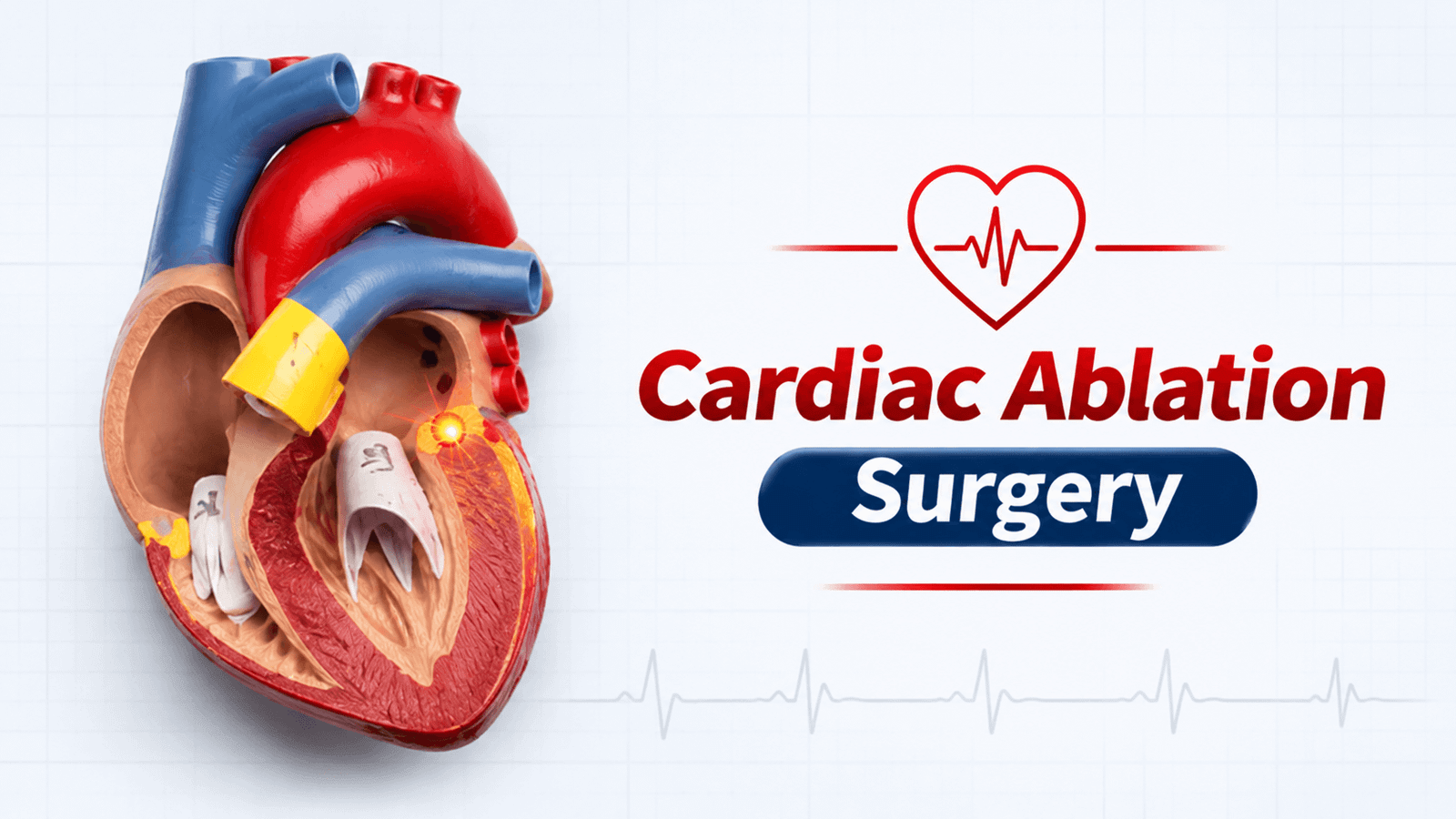
Cardiac ablation, also known as catheter ablation, is a procedure that treats selected abnormal electrical pathways in the heart.
The heart normally maintains a regular rhythm through electrical signals that coordinate its contractions. When these signals travel through abnormal pathways or originate from an unusual location, the heart may beat too quickly or irregularly. Learn about the warning signs of cardiovascular disease.
During cardiac ablation, an electrophysiologist guides thin, flexible catheters through blood vessels, usually from the groin, into the heart. Specialised energy is delivered through the catheter to create small, controlled areas of tissue damage. These areas interrupt the electrical signals responsible for the arrhythmia.
Depending on the rhythm disorder, the doctor may use radiofrequency energy, freezing technology or another specialised technique.
The main objectives of cardiac ablation may include:
- Reducing episodes of abnormal heart rhythm.
- Improving symptoms such as palpitations and dizziness.
- Improving exercise tolerance in suitable patients.
- Reducing the need for certain antiarrhythmic medicines.
- Improving quality of life.
- Treating specific arrhythmias that have not responded adequately to medication.
Cardiac ablation does not guarantee a permanent cure for every rhythm disorder. Some patients may experience recurrence or require additional treatment.
Which Heart Conditions Can Be Treated with Cardiac Ablation?
Cardiac ablation is used for several types of arrhythmias. The procedure and its complexity depend on the location and mechanism of the abnormal electrical activity.
1. Supraventricular Tachycardia (SVT)
SVT refers to a group of heart rhythm disorders that originate above the ventricles. These conditions can cause episodes of an unusually fast heartbeat.
Common forms include:
- Atrioventricular nodal re-entrant tachycardia (AVNRT).
- Atrioventricular re-entrant tachycardia (AVRT).
- Certain forms of atrial tachycardia.
Catheter ablation can target the abnormal electrical circuit or pathway responsible for the rapid heartbeat. For selected patients with recurrent symptomatic SVT, ablation may be considered as a treatment option.
2. Atrial Flutter
Atrial flutter is an abnormal rhythm in which electrical activity travels through a rapid circuit in the atria, causing the upper chambers of the heart to beat quickly.
A common form is typical atrial flutter, which may be treated by creating a controlled line of electrical block in a specific area of the right atrium. The exact procedure depends on the type of flutter and whether other rhythm disorders are also present.
3. Atrial Fibrillation (AFib)
Atrial fibrillation is an irregular heart rhythm associated with disorganised electrical activity in the atria.
AFib catheter ablation commonly involves pulmonary vein isolation, which aims to prevent abnormal electrical signals from triggering atrial fibrillation. The procedure may use:
- Radiofrequency ablation.
- Cryoballoon ablation.
- Pulsed field ablation.
AFib ablation usually requires specialised equipment and detailed electrical mapping. Its cost can therefore be higher than that of some straightforward SVT procedures, although published estimates vary widely.
4. Ventricular Tachycardia (VT)
Ventricular tachycardia is a potentially serious rhythm disorder that originates in the lower chambers of the heart, called the ventricles.
It may occur in people with previous heart attacks, cardiomyopathy, heart muscle scarring or other structural heart conditions. See the symptoms of congestive heart disease for related heart-muscle problems.
Catheter ablation may be recommended for selected patients, particularly when ventricular tachycardia recurs or is not adequately controlled with medication. VT ablation can be more complex because the electrophysiologist may need advanced mapping, specialised catheters and additional monitoring.
5. Wolff-Parkinson-White (WPW) Syndrome
WPW syndrome involves an additional electrical pathway between the atria and ventricles. This pathway can cause episodes of rapid heartbeat.
In suitable patients, catheter ablation can target the accessory pathway and interrupt the abnormal electrical connection. The procedure is planned after an electrophysiology assessment identifies the location and characteristics of the pathway.
6. Selected Atrial Tachycardias
Atrial tachycardia occurs when an abnormal electrical focus in the atria causes a faster-than-normal heart rhythm.
Ablation may be considered when symptoms are recurrent or medication does not provide adequate control. Mapping helps the electrophysiologist identify the area responsible for the abnormal rhythm.
Not every arrhythmia requires ablation. The treatment decision depends on the rhythm diagnosis, symptoms, heart structure and individual medical assessment.
Types of Cardiac Ablation Procedures
Different energy sources and techniques are used to treat abnormal electrical activity in the heart.
1. Radiofrequency Ablation (RFA)
Radiofrequency ablation uses heat energy to create controlled lesions in selected heart tissue. The electrophysiologist guides a catheter to the target area and delivers radiofrequency energy to interrupt the abnormal electrical pathway.
Important features:
- An established technique for treating several arrhythmias.
- Can target specific electrical circuits or abnormal tissue.
- May use three-dimensional mapping for complex procedures.
- Used for selected SVT, atrial flutter, AFib and ventricular arrhythmias.
2. Cryoablation
Cryoablation uses controlled freezing rather than heat to affect the target tissue. A specialised catheter delivers cooling energy to the selected area. Cryoablation is used in certain arrhythmia procedures, including selected SVT treatments and cryoballoon pulmonary vein isolation for AFib.
Important features:
- Uses freezing energy.
- Can be delivered through specialised balloon or focal catheters.
- The technique depends on the type of arrhythmia.
- Requires appropriate anatomical and clinical assessment.
3. Pulsed Field Ablation (PFA)
Pulsed field ablation uses short electrical pulses to create controlled lesions in cardiac tissue.
It is a newer non-thermal approach used for selected atrial fibrillation procedures. Its availability, approved uses and suitability depend on the device, hospital and patient's condition. PFA should not be assumed to be available for every type of cardiac arrhythmia.
4. Three-Dimensional Electroanatomical Mapping-Guided Ablation
Three-dimensional mapping is not a separate energy source. It is a technology that helps the electrophysiologist understand the heart's electrical activity and anatomical structure.
The system creates a detailed representation of the heart and helps guide catheter placement. It may be particularly useful in complex arrhythmias, repeat procedures and selected ventricular tachycardia treatments.
Get Your Personalised TAVR Cost Estimate
Share your echocardiogram, CT scan, ECG or previous cardiac reports and details — our cardiac care team will respond on WhatsApp within 48 hours.
By submitting, you agree to be contacted by Azzocare's care team.
Request Sent!
Our team will WhatsApp you back shortly.
What Factors Affect Cardiac Ablation Cost in India?
The cost of cardiac ablation varies because different arrhythmias require different procedures, equipment and levels of monitoring.
1. Type of Arrhythmia
A straightforward SVT procedure may involve a different treatment approach from AFib or ventricular tachycardia ablation. The location of the abnormal electrical pathway and the complexity of the rhythm disorder influence the procedure plan.
2. Ablation Technology
Radiofrequency, cryoablation and pulsed field ablation use different equipment and consumables. The selected technology can affect the total hospital bill.
3. Electrophysiology Mapping System
Some procedures require advanced three-dimensional mapping systems to identify the abnormal electrical pathway. Mapping requirements may increase equipment and procedure charges.
4. Electrophysiologist's Experience
Cardiac ablation requires specialised training in electrophysiology. The specialist's experience, the supporting medical team and the hospital's procedural facilities may influence treatment charges.
5. Hospital and Cardiac Facilities
The hospital's electrophysiology laboratory, cardiac ICU, imaging facilities and emergency cardiac support can affect the overall cost.
6. Diagnostic Tests and EP Study
Patients may need an electrophysiology study, ECG, echocardiogram, Holter monitoring, blood tests or additional imaging. Whether these investigations are included in the procedure package can influence the final amount. For indicative prices, see cardiac test costs in Delhi.
7. Hospital Stay
Some patients may need only short observation, while others require overnight or longer monitoring. Additional ICU care or treatment of complications may increase the total expense.
8. Repeat Ablation
Some arrhythmias may recur after the first procedure. If another ablation is clinically recommended, it may involve separate specialist, equipment and hospital charges.
Cardiac Ablation Cost in Major Indian Cities
Patients often compare hospitals in Delhi, Mumbai, Chennai, Bengaluru and other cities before selecting a cardiac electrophysiology centre.
However, publicly available city-specific prices are inconsistent. Some providers publish a general catheter ablation estimate, while others quote prices for particular arrhythmias or advanced technologies. The following table gives broad planning estimates rather than confirmed local tariffs.
| City and search phrase | General planning estimate |
|---|---|
| Cardiac ablation cost in Delhi | US$1,060–US$4,250 (₹1 lakh–₹4 lakh) |
| Cardiac ablation cost in Mumbai | US$1,060–US$4,250 (₹1 lakh–₹4 lakh) |
| Cardiac ablation cost in Chennai | US$1,060–US$4,250 (₹1 lakh–₹4 lakh) |
| Cardiac ablation cost in Bengaluru | US$1,060–US$4,250 (₹1 lakh–₹4 lakh) |
| Cardiac ablation cost in Hyderabad | US$1,060–US$4,250 (₹1 lakh–₹4 lakh) |
| Cardiac ablation cost in Pune | US$1,060–US$4,250 (₹1 lakh–₹4 lakh) |
| Cardiac ablation cost in Kolkata | US$1,060–US$4,250 (₹1 lakh–₹4 lakh) |
| Cardiac ablation cost in Jaipur | US$1,060–US$4,250 (₹1 lakh–₹4 lakh) |
These are broad national planning figures applied for comparison, not independently verified prices for hospitals in each city. Complex AFib and ventricular tachycardia procedures may fall outside this general range. Obtain a written hospital estimate before making treatment or travel arrangements.
You can also browse our hospitals to compare cardiac centres.
Cardiac Ablation Cost in India Compared with Other Countries
International patients may compare India with other destinations when planning arrhythmia treatment. However, treatment costs depend on the type of arrhythmia, hospital facilities, specialist fees, technology and package inclusions.
| Country | Cost considerations |
|---|---|
| India | Published estimates vary significantly between basic catheter procedures and complex ablation packages. |
| United States | Treatment costs are generally higher and depend on insurance, hospital and procedural complexity. |
| United Kingdom | Costs depend on NHS eligibility or private hospital arrangements. |
| Germany | Prices vary according to the cardiac centre, insurance and treatment pathway. |
| Thailand | Private hospital charges depend on the electrophysiology centre and technology. |
| United Arab Emirates | Costs vary by hospital, specialist and equipment used. |
International patients should compare itemised quotations rather than relying only on the advertised starting price. To plan your trip, read about medical tourism in India and the India medical visa.
Tests Required Before Cardiac Ablation
Before recommending cardiac ablation, the electrophysiologist evaluates the patient's heart rhythm, structure and overall medical condition. A routine health checkup can sometimes first detect an abnormal rhythm. Common investigations include:
1. Electrocardiogram (ECG)
An ECG records the electrical activity of the heart and helps identify abnormal rhythms.
2. Holter Monitoring
A Holter monitor records the heart rhythm continuously, often for 24–48 hours. Longer monitoring may be recommended for intermittent symptoms.
3. Echocardiogram
An echocardiogram uses ultrasound to assess heart chamber size, pumping function and valve condition.
4. Electrophysiology Study (EP Study)
An EP study evaluates the heart's electrical system using specialised catheters. It helps identify the location and mechanism of certain arrhythmias and may be performed before or as part of an ablation procedure.
5. Blood Tests
Blood tests may include complete blood count, kidney function, electrolytes, thyroid function and other investigations based on the patient's condition.
6. Cardiac CT or MRI
Advanced imaging may be recommended in selected patients, particularly when additional anatomical information is needed.
Not every patient requires all these investigations. The electrophysiologist decides which tests are appropriate.
How Is Cardiac Ablation Performed?
Cardiac ablation is usually performed in a specialised electrophysiology laboratory. The procedure varies according to the arrhythmia being treated, but it generally involves the following stages:
- 1. Pre-procedure preparation: The medical team reviews the patient's medical history, investigations and medication plan.
- 2. Anaesthesia or sedation: Local anaesthesia with sedation or general anaesthesia may be used, depending on the procedure.
- 3. Catheter insertion: Thin, flexible catheters are introduced through blood vessels, commonly through the groin.
- 4. Electrical assessment: The electrophysiologist evaluates the heart's electrical activity and identifies the abnormal pathway.
- 5. Mapping: Specialised mapping equipment may be used to locate the target area.
- 6. Ablation: Radiofrequency, freezing energy or another appropriate technology is used to treat the abnormal electrical tissue.
- 7. Confirmation: The specialist checks the electrical response to assess whether the intended treatment effect has been achieved.
- 8. Post-procedure monitoring: Catheters are removed, and the patient is monitored for rhythm changes, bleeding and other complications.
The procedure may take approximately 1–4 hours or longer, depending on the type and complexity of the arrhythmia.
What Is Included in a Cardiac Ablation Package?
Hospitals may offer a package covering the procedure and a defined period of hospitalisation. However, the exact inclusions differ.
| Package component | What to confirm |
|---|---|
| Electrophysiologist's fee | Whether the treating specialist's fee is included |
| EP study | Whether the diagnostic study is included |
| Mapping system | Whether three-dimensional mapping is included |
| Ablation catheter | Type and number of catheters covered |
| Energy technology | Radiofrequency, cryoablation or PFA charges |
| Anaesthesia | Sedation or general anaesthesia fees |
| Imaging | ECG, echocardiography, CT or other investigations |
| Hospital stay | Number of included inpatient days |
| ICU or monitored care | Whether specialised monitoring is included |
| Medicines and consumables | Routine medicines and procedural supplies |
| Follow-up | Specialist reviews and rhythm monitoring |
Patients should also ask about additional charges for extended hospitalisation, complications, extra equipment or repeat procedures.
Recovery After Cardiac Ablation
Recovery depends on the type of arrhythmia, the ablation technique and the patient's overall health. Many patients can return to normal light activities within a few days, subject to their doctor's instructions. More complex procedures may require longer observation and recovery.
| Recovery stage | General expectations |
|---|---|
| Immediately after the procedure | Heart rhythm and blood pressure monitoring |
| First few hours | Rest and observation of the catheter insertion site |
| Hospital stay | Same-day discharge or overnight monitoring, depending on the procedure |
| First few days | Gradual return to light activities as advised |
| Early follow-up | Specialist review and ECG if required |
| Longer-term follow-up | Rhythm monitoring and medication assessment |
Patients should follow instructions about exercise, lifting, driving, wound care and medicines. Once cleared by your doctor, you can read about exercise for heart health at home and how to improve heart health naturally.
Can Arrhythmia Return After Cardiac Ablation?
Yes. Some patients experience recurrence after ablation. The possibility of recurrence depends on the type of arrhythmia, the underlying heart condition, the location of the abnormal electrical pathway and the treatment response.
A repeat procedure may be considered in selected patients after further assessment. An early episode of an abnormal rhythm does not always mean that treatment has failed. The electrophysiologist should evaluate the timing and pattern of symptoms.
Risks and Possible Complications of Cardiac Ablation
Cardiac ablation is an established treatment for selected arrhythmias, but it is an invasive procedure and carries potential risks.
Possible complications include:
- Bleeding or bruising at the catheter insertion site.
- Blood vessel injury.
- Blood clots or stroke.
- Damage to the heart or surrounding structures.
- Fluid accumulation around the heart.
- New or worsening rhythm disturbances.
- Conduction system damage, sometimes requiring a pacemaker.
- Injury to surrounding nerves or other structures, depending on the procedure.
- Recurrence of the original arrhythmia.
- Need for repeat ablation or additional treatment.
The risks vary considerably between procedures. For example, a straightforward SVT ablation and a complex ventricular tachycardia ablation do not have the same risk profile.
The treating electrophysiologist should explain the individual risks, expected benefits and alternative treatment options before the procedure.
Seek emergency medical attention for sudden chest pain, fainting, severe breathlessness or stroke symptoms such as facial drooping, arm weakness or difficulty speaking.
Is Cardiac Ablation Covered by Health Insurance in India?
Cardiac ablation may be covered by health insurance when it is medically necessary and the policy conditions are met. Coverage depends on the insurer, policy wording, hospital network, waiting periods and pre-authorisation requirements.
Before admission, confirm:
- Whether the specific arrhythmia ablation procedure is covered.
- Whether the selected hospital is in the insurer's network.
- Whether the EP study and mapping equipment are included.
- Whether catheter and consumable charges are covered.
- Whether room and ICU limits apply.
- Whether pre-existing disease waiting periods apply.
- Whether cashless treatment or reimbursement is available.
Patients should obtain written confirmation of coverage before the procedure.
How to Choose a Hospital for Cardiac Ablation in India
Choosing an experienced electrophysiology team is an important part of treatment planning. Before selecting a cardiac centre, consider:
- The electrophysiologist's experience with the specific arrhythmia.
- Experience with the recommended ablation technique.
- Availability of an advanced electrophysiology laboratory.
- Access to three-dimensional mapping when clinically required.
- Availability of cardiac imaging and anaesthesia support.
- Cardiac ICU and emergency cardiac support.
- The hospital's rhythm-monitoring and follow-up programme.
- A clear explanation of treatment risks and alternatives.
- An itemised written cost estimate.
For international patients, confirm whether the hospital can review medical records before travel and coordinate follow-up after discharge. You can request a second opinion before deciding.
Get a Personalised Cardiac Ablation Cost Estimate in India
The cost and suitability of cardiac ablation depend on the type of arrhythmia, the recommended technique, the hospital and the patient's overall health. A specialist assessment is necessary to determine the appropriate procedure and obtain an accurate hospital quotation.
Azzocare helps international patients explore cardiac arrhythmia treatment options in India and coordinate with hospitals for specialist opinions and personalised cost estimates. To begin a medical review, share:
- Recent ECG reports.
- Holter or event-monitoring reports.
- Echocardiogram results.
- EP study or imaging reports, if available.
- Previous ablation or cardiac treatment records.
- Current medication list and medical history.
The electrophysiologist can review the available reports, discuss suitable treatment options and provide a hospital-specific estimate. You can also book an appointment, ask about visa assistance or see our treatment costs guides.
Frequently Asked Questions
What is the cost of cardiac ablation in India?
Published general catheter ablation estimates range from approximately US$1,060–US$4,250 (₹1 lakh–₹4 lakh), depending on the hospital and procedure. Complex procedures, particularly AFib ablation, can cost more, and published AFib estimates vary widely.
Is cardiac ablation a major surgery?
Cardiac ablation is generally a minimally invasive catheter-based procedure rather than conventional open-heart surgery. Catheters are guided through blood vessels to the heart to treat selected abnormal electrical pathways.
Which heart conditions can be treated with cardiac ablation?
Cardiac ablation may be used for selected cases of SVT, AVNRT, AVRT, atrial flutter, atrial fibrillation, ventricular tachycardia, WPW syndrome and certain atrial tachycardias.
How long does cardiac ablation take?
The procedure may take approximately 1–4 hours or longer. Its duration depends on the type of arrhythmia, mapping requirements and procedural complexity.
Is cardiac ablation painful?
The procedure is generally performed using local anaesthesia with sedation or general anaesthesia. Patients may experience temporary soreness or bruising around the catheter insertion site after treatment.
How many days does a patient stay in hospital?
Some patients are discharged on the same day, while others require overnight or longer monitoring. The duration depends on the procedure, recovery and medical condition.
Can cardiac ablation permanently cure arrhythmia?
Ablation can successfully control or eliminate certain abnormal electrical pathways, but it does not guarantee permanent freedom from every arrhythmia. Outcomes depend on the specific rhythm disorder and the patient's condition.
Is cardiac ablation safe?
Cardiac ablation is an established procedure for selected arrhythmias, but it carries risks such as bleeding, blood vessel injury, stroke and damage to surrounding structures. Individual risk assessment is important.
Can arrhythmia return after cardiac ablation?
Yes. Some patients experience recurrent arrhythmia and may require medication, further monitoring or repeat ablation.
Is AFib ablation more expensive than SVT ablation?
AFib ablation can be more expensive because it may require pulmonary vein isolation, advanced mapping and specialised catheters. Published estimates vary widely, from about ₹2.5–₹4 lakh in one hospital listing to US$6,500–US$16,000 in an international-patient planning estimate, so its price should be estimated separately from a straightforward SVT procedure.
Can international patients travel to India for cardiac ablation?
International patients may explore treatment in India after a qualified electrophysiologist reviews their medical history, ECG, rhythm-monitoring reports and other investigations. Fitness to travel and the timing of the journey should be assessed by the treating team.
Main Cost Sources
- Apollo Hospitals — Catheter Ablation Cost in India — published estimate: ₹1 lakh–₹2.5 lakh.
- Medicover Hospitals — Cardiac Ablation Cost in India — published estimate: ₹1.8 lakh–₹4 lakh overall. SVT/AVNRT ablation: ₹1.8 lakh–₹3 lakh; radiofrequency ablation: ₹1.8 lakh–₹3.5 lakh; cryoablation: ₹2 lakh–₹3.8 lakh; AFib ablation: ₹2.5 lakh–₹4 lakh.
- GAF Healthcare — Atrial Fibrillation Ablation Cost in India — AFib-specific international-patient planning estimate: US$6,500–US$16,000, with procedure, technology and typical 1–3 night hospital stay.
Additional Reference
- GAF Healthcare — Hospitals for AFib Ablation in India — hospital and specialist information for AFib ablation.
Medical Disclaimer
This article is for educational purposes only and does not replace consultation with a qualified cardiologist or electrophysiologist. Cardiac ablation is an invasive procedure and may not be suitable for every patient. Treatment decisions must be based on individual medical assessment. Sudden chest pain, fainting, severe breathlessness or stroke symptoms such as facial drooping, arm weakness or difficulty speaking require emergency medical attention.

Mohammad Nafis Khan is an SEO and digital marketing professional with over 5 years of experience creating search-optimized, patient-focused content for healthcare and medical websites. He follows E-E-A-T principles to make complex healthcare topics clear and accessible, structuring articles around what patients actually search for.
Read full bio
Dr. Md Ehsanullah is a physician with 4+ years of clinical experience in internal and general medicine. He completed his MBBS and MD from Asian Medical University, Kyrgyzstan, and currently practices at VMMC & Safdarjung Hospital, New Delhi. He reviews Azzocare's healthcare content for clinical accuracy, ensuring medical information aligns with current best practices and E-E-A-T principles.
Read full bio