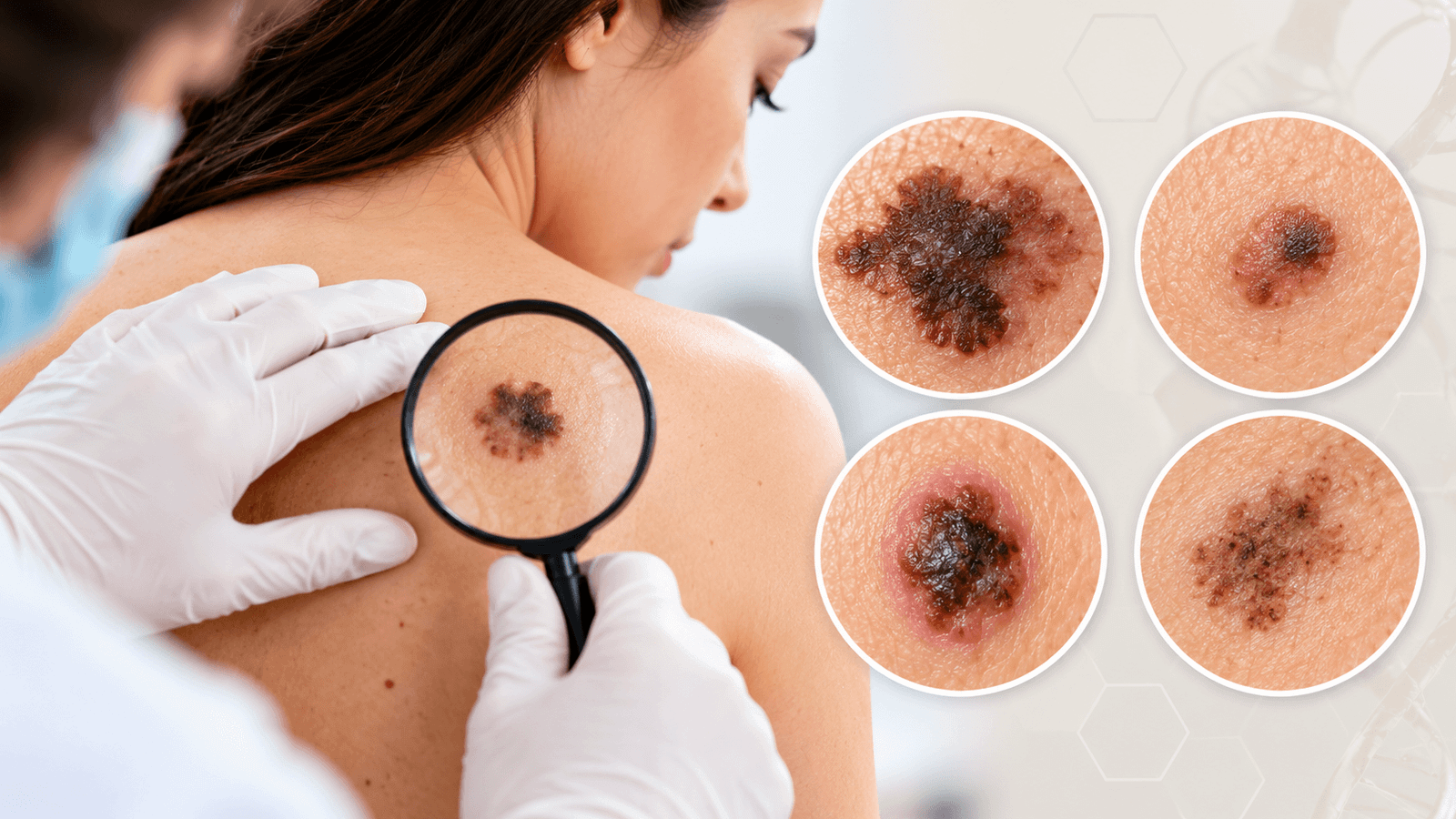
Don’t ignore a new or changing spot on your skin. What looks like an ordinary mole or harmless mark can sometimes be an early sign of melanoma, a serious form of skin cancer. Because melanoma can progress and spread, recognizing suspicious changes and getting them checked promptly is important.
A mole that suddenly changes in size, shape, or color, develops an irregular border, starts bleeding, or looks noticeably different from your other moles should not be dismissed. These changes do not necessarily mean you have melanoma, but they are reasons to seek professional medical advice rather than waiting to see if they disappear.
In this guide, we’ll explain the signs and symptoms of melanoma skin cancer, the ABCDE warning signs, where melanoma can develop, important risk factors, and when you should see a doctor.
Key Warning Signs of Melanoma at a Glance
The most common signs and symptoms of melanoma skin cancer include a new or changing mole or skin spot, an asymmetrical shape, irregular or uneven borders, multiple colors within the same spot, increasing size, or noticeable changes over time. Other possible warning signs include itching, tenderness, bleeding, crusting, or a spot that looks different from your other moles. The ABCDE rule—Asymmetry, Border, Color, Diameter, and Evolving—can help identify skin changes that should be evaluated by a healthcare professional.
If you notice a new or changing skin lesion, especially one that continues to evolve, it is important to have it checked by a dermatologist or qualified healthcare professional.
What Is Melanoma Skin Cancer?
Melanoma is a type of skin cancer that develops in melanocytes, the cells responsible for producing melanin, the pigment that gives skin its color. It occurs when these cells begin to grow abnormally and uncontrollably.
Melanoma can develop anywhere on the skin. It may begin in an existing mole or appear as a new spot. Although melanoma is less common than some other types of skin cancer, it can be more serious because it may spread to other parts of the body if it is not detected and treated.
Understanding what melanoma can look like and knowing which changes to watch for can help you recognize when a skin lesion needs professional evaluation.
What Are the Signs and Symptoms of Melanoma?
Melanoma can look different from person to person. In some cases, it may resemble an ordinary mole at first. The key is to pay attention to new spots and changes in existing moles.
Common signs and symptoms may include:
- A new mole or unusual-looking spot on the skin
- A mole that changes in size, shape, or color
- An asymmetrical appearance
- An irregular, jagged, or poorly defined border
- Multiple colors within one spot
- A mole that becomes larger or raised
- Persistent itching or tenderness
- Bleeding, crusting, or oozing
- A spot that looks different from your other moles
- A skin lesion that continues to change over time
Not every unusual mole is melanoma. Many harmless moles and skin conditions can have unusual characteristics. However, a new or changing lesion should be assessed by a qualified healthcare professional if it concerns you.
The ABCDE Rule for Melanoma
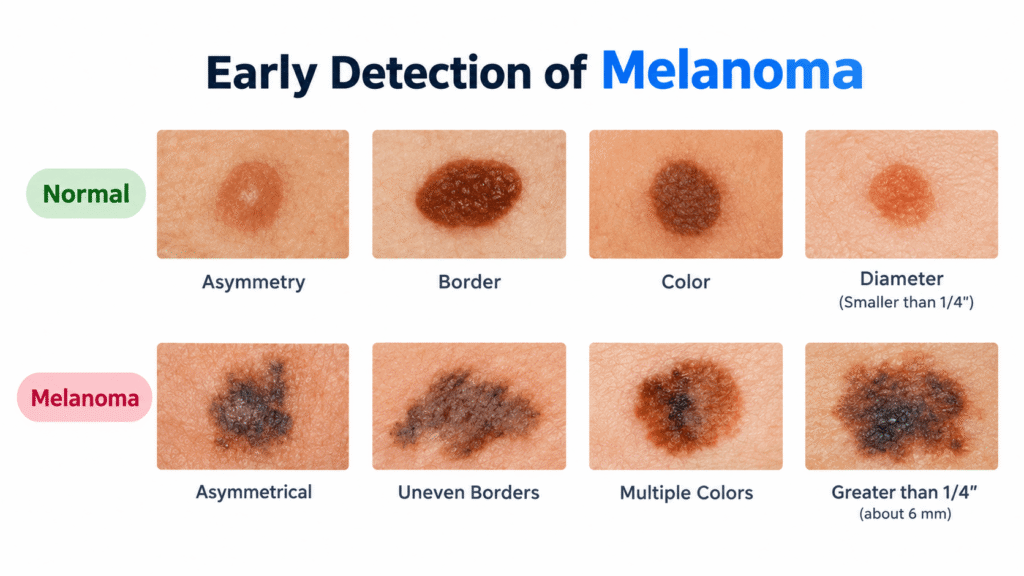
The ABCDE rule is a commonly used guide for remembering some of the warning signs associated with melanoma. Trusted health organizations such as the American Cancer Society also explain these warning signs in detail, which can be helpful if you want to read more.
A – Asymmetry
A mole may be considered asymmetrical when one half does not look similar to the other half. If you imagine drawing a line through the middle of the spot and the two sides appear noticeably different, it may warrant closer examination.
B – Border
Look at the edges of the mole. A suspicious lesion may have an irregular, jagged, uneven, blurred, or poorly defined border instead of a smooth and clearly defined edge.
C – Color
Changes in color can be another warning sign. A melanoma may contain several different shades within the same lesion, including brown, black, red, blue, gray, or white.
A mole that develops a new or unusual color should be evaluated by a healthcare professional.
D – Diameter
Diameter refers to the size of the lesion. Melanomas can be larger than ordinary moles, and a spot measuring more than approximately 6 millimeters may deserve closer evaluation.
However, melanoma can also be smaller than this, so size alone should not be used to determine whether a mole is cancerous.
E – Evolving
Evolving means that a mole or skin lesion is changing. Changes may involve its size, shape, color, texture, elevation, or symptoms.
A changing spot deserves attention even if it does not have all of the other ABCDE characteristics.
What Is the Ugly Duckling Sign?
The “ugly duckling” sign is another way of identifying a potentially unusual mole. It refers to a spot that looks noticeably different from the other moles on your skin.
For example, if most of your moles are similar in size, shape, and color but one looks significantly darker, larger, or otherwise different, that spot may deserve professional evaluation.
Knowing what your skin normally looks like can make it easier to recognize changes.
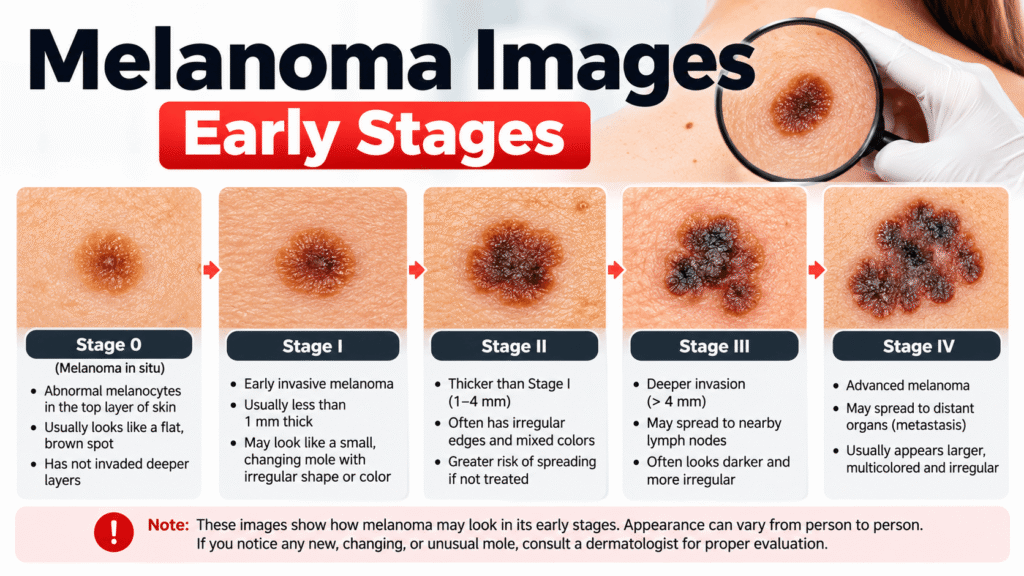
Melanoma Images Early Stages
Where Can Melanoma Develop?
Melanoma can develop almost anywhere on the body. It is often found on areas that receive regular sun exposure, but it can also occur on areas that receive little or no direct sunlight.
Melanoma may develop on:
- Face and neck
- Arms and hands
- Chest and back
- Legs and feet
- Scalp
- Fingernails and toenails
- Palms of the hands
- Soles of the feet
For this reason, checking only the areas that are frequently exposed to the sun may not be enough. Pay attention to changes across the entire skin surface.
Can Melanoma Develop in an Existing Mole?
Yes. Melanoma can develop in an existing mole, although it can also appear as a completely new skin lesion.
If an existing mole starts to change, it should not automatically be assumed to be harmless. Changes may include growth, a change in shape or color, an irregular border, bleeding, or new symptoms such as itching or tenderness.
When Should You See a Doctor?
Consider seeing a dermatologist or qualified healthcare professional if you notice a new or changing skin lesion that concerns you. If you are looking for a specialist, you can browse verified dermatologists and oncologists on Azzocare and compare their experience, qualifications, and hospital affiliations before booking a consultation.
It is particularly important to seek medical advice if a spot:
- Changes noticeably over time
- Grows in size
- Develops several colors
- Becomes darker or changes color
- Develops an irregular border
- Starts bleeding or crusting
- Becomes persistently itchy or tender
- Looks significantly different from your other moles
- Does not appear to heal normally
These signs do not automatically mean that you have melanoma. A medical examination is needed to determine what is causing the change.
How Is Melanoma Diagnosed?
A healthcare professional will usually examine the suspicious area and ask about any changes you have noticed.
A dermatologist may use a dermatoscope, a specialized device that provides a magnified view of the skin and can help them assess the characteristics of a lesion.
If melanoma is suspected, a skin biopsy may be recommended. During a biopsy, some or all of the suspicious tissue is removed and examined under a microscope.
If melanoma is confirmed, additional tests may be performed depending on the characteristics and stage of the cancer. Many patients also choose to get a second opinion before finalizing their treatment plan, and Azzocare helps patients connect with experienced specialists and super-speciality hospitals across India for this purpose.
What Causes Melanoma?
Melanoma develops when melanocytes undergo abnormal changes that cause them to grow and multiply uncontrollably.
Exposure to ultraviolet (UV) radiation is an important risk factor. UV radiation can come from sunlight as well as artificial sources such as tanning beds.
However, melanoma does not occur only in areas that receive sunlight. It can develop in different locations and can affect people with different skin types.
Risk Factors for Melanoma
Several factors may increase a person’s risk of developing melanoma, including:
- Frequent or intense exposure to UV radiation
- A history of repeated sunburns
- Use of tanning beds or other artificial tanning devices
- Having many moles
- Having atypical or unusual-looking moles
- A personal history of melanoma
- A family history of melanoma
- Skin that burns easily
- Having a weakened immune system
Having one or more risk factors does not mean that a person will develop melanoma. Likewise, melanoma can occur in someone without obvious risk factors.
How Can You Reduce Your Risk of Melanoma?
Reducing unnecessary UV exposure is an important part of protecting your skin. Simple protective habits can help reduce exposure to ultraviolet radiation.
Protect Your Skin From the Sun
When outdoors, seek shade when appropriate, particularly during periods of strong sunlight. Wearing protective clothing, a wide-brimmed hat, and sunglasses can also help reduce direct sun exposure.
Use Sunscreen
Apply a broad-spectrum sunscreen as directed. Reapply it when appropriate, especially during prolonged outdoor activities, swimming, or sweating.
Sunscreen should be part of a broader approach to sun protection rather than the only protective measure.
Avoid Indoor Tanning
Indoor tanning devices expose the skin to UV radiation. Avoiding artificial tanning can help reduce unnecessary UV exposure.
Check Your Skin Regularly
Become familiar with your normal moles, freckles, and other skin markings. Regularly observing your skin can make it easier to notice new or changing spots.
If you notice a concerning change, arrange an examination with a healthcare professional rather than attempting to diagnose the lesion yourself.
Melanoma in People With Different Skin Tones
Melanoma can affect people of all skin tones. In people with darker skin, melanoma may sometimes develop in areas such as the palms of the hands, soles of the feet, or underneath the nails.
This is why everyone should pay attention to changes across the entire body rather than checking only areas that receive frequent sun exposure.
Frequently Asked Questions About Melanoma
What does early melanoma look like?
Early melanoma can appear as a new or changing mole or skin lesion. It may have an unusual shape, irregular border, multiple colors, or other characteristics that make it look different from surrounding moles. However, appearance alone cannot confirm melanoma.
Is an itchy mole always a sign of melanoma?
No. Itching can have many causes and does not automatically mean that a mole is melanoma. However, persistent itching combined with changes in a mole, bleeding, growth, or other unusual features should be evaluated by a healthcare professional.
Can melanoma appear suddenly?
Melanoma can appear as a new skin lesion. Therefore, a new or unusual spot should not automatically be assumed to be harmless. A dermatologist can examine the lesion and determine whether further evaluation is necessary.
Can melanoma be treated?
Yes. Melanoma treatment depends on factors such as the stage, location, and characteristics of the cancer. Treatment may include surgery and, depending on the individual situation, other therapies such as immunotherapy or targeted therapy. If you want to understand the available options and expected expenses in more detail, you can read about Melanoma Treatment in India. Patients travelling from abroad for cancer care can also get help with medical visa assistance for treatment in India, including hospital invitation letters and documentation guidance.
Is every unusual mole melanoma?
No. Many unusual-looking moles are benign. The purpose of checking your skin is not to diagnose melanoma yourself, but to recognize changes that should be assessed by a healthcare professional.
Conclusion
Recognizing the signs and symptoms of melanoma skin cancer can help you identify skin changes that deserve medical attention. Pay particular attention to new or evolving moles, changes in shape or color, irregular borders, unusual growth, bleeding, or a spot that looks noticeably different from your other moles.
The ABCDE rule can be a useful tool for remembering common warning signs, but it should not replace professional medical evaluation.
If you notice a suspicious or changing skin lesion, speak with a dermatologist or qualified healthcare professional promptly. When it comes to a changing spot on your skin, getting it checked is safer than simply ignoring it.