

Table of Contents
ToggleSigns of Multiple Myeloma
The signs of multiple myeloma commonly include persistent bone pain, fatigue, frequent infections, anemia, kidney problems, unexplained fractures, and high calcium levels. These symptoms develop when abnormal plasma cells build up in the bone marrow, affecting healthy blood cells, weakening bones, and damaging vital organs such as the kidneys. Early diagnosis and treatment can help prevent serious complications and improve long-term outcomes.
Multiple myeloma is a rare but serious type of blood cancer that develops in plasma cells, a type of white blood cell found in the bone marrow. These cells normally produce antibodies that help the immune system fight infections. In multiple myeloma, abnormal plasma cells multiply uncontrollably, crowd out healthy blood cells, and produce abnormal proteins that can weaken bones, damage the kidneys, reduce immunity, and affect other organs.
One of the biggest challenges with this disease is that its symptoms often develop gradually and may be mistaken for aging, arthritis, or general fatigue. Recognizing the signs of multiple myeloma early is essential because timely diagnosis and personalized treatment can help slow disease progression, reduce complications, and improve quality of life.
In this comprehensive guide, you’ll learn what is multiple myeloma, what is the first sign of multiple myeloma, causes of multiple myeloma, stages of multiple myeloma, multiple myeloma treatment, multiple myeloma prognosis, whether multiple myeloma is hereditary, and when you should seek medical attention.
What Is Multiple Myeloma?
Multiple myeloma is a cancer that begins in plasma cells located in the bone marrow. Healthy plasma cells produce antibodies that protect the body against infections. When these cells become cancerous, they multiply rapidly and produce abnormal proteins known as M proteins.
These abnormal proteins do not fight infections. Instead, they build up in the blood and can damage the kidneys, weaken the bones, reduce the production of healthy blood cells, and increase the risk of infections. As these complications develop, many of the signs of multiple myeloma—such as persistent bone pain, fatigue, anemia, kidney problems, and frequent infections—begin to appear and may gradually worsen without timely diagnosis and treatment.
Unlike many other cancers, multiple myeloma usually affects several areas of the bone marrow at the same time, which is why it is called “multiple” myeloma.

What Is the First Sign of Multiple Myeloma?
One of the most common questions people ask is, what is the first sign of multiple myeloma?
There is no single symptom that appears in every patient. However, persistent bone pain is often the earliest warning sign. The pain usually affects the back, ribs, hips, or shoulders and may worsen with movement or at night.
Other early symptoms may include:
- Persistent fatigue
- Weakness
- Frequent infections
- Unexplained weight loss
- Mild anemia
- Tingling or numbness
- Increased thirst
- Frequent urination
Some individuals have no symptoms at all during the early stages. In such cases, the disease may be discovered during routine blood tests that show abnormal protein levels or anemia.
Early Signs of Multiple Myeloma
1. Persistent Bone Pain
Bone pain is the most common symptom of multiple myeloma. Unlike muscle soreness, this pain does not improve with rest and often becomes worse over time.
Common areas include:
- Spine
- Lower back
- Ribs
- Pelvis
- Shoulders
- Hips
The pain occurs because cancer cells weaken the bones, making them more fragile.
2. Fatigue and Weakness
As abnormal plasma cells replace healthy bone marrow, fewer red blood cells are produced. This leads to anemia, which causes:
- Constant tiredness
- Weakness
- Dizziness
- Shortness of breath
- Difficulty performing daily activities
Many people assume they are simply overworked or aging, delaying medical evaluation.
3. Frequent Infections
Healthy plasma cells produce antibodies that protect the body from bacteria and viruses. Cancerous plasma cells cannot perform this function properly, increasing the risk of:
- Pneumonia
- Sinus infections
- Urinary tract infections
- Influenza
- COVID-19 complications
- Skin infections
If you experience repeated infections within a short period, consult a healthcare provider.
4. Bone Fractures
Multiple myeloma weakens bones by activating cells that break down bone tissue. Even minor injuries may result in fractures.
Common fracture sites include:
- Spine
- Hip
- Ribs
- Arms
Some patients discover they have multiple myeloma only after suffering an unexpected fracture.
5. Kidney Problems
Abnormal proteins produced by myeloma cells can damage the kidneys over time.
Symptoms may include:
- Swollen legs
- Reduced urine output
- Foamy urine
- Fatigue
- Elevated creatinine levels
Kidney damage can become severe if left untreated.
6. High Calcium Levels
When bones break down, calcium is released into the bloodstream.
High calcium levels (hypercalcemia) can cause:
- Extreme thirst
- Frequent urination
- Nausea
- Constipation
- Confusion
- Drowsiness
- Loss of appetite
Hypercalcemia requires immediate medical treatment.
7. Weight Loss
Unexpected weight loss is another warning sign of many cancers, including multiple myeloma.
Patients may notice:
- Reduced appetite
- Muscle loss
- Fatigue
- Low energy levels
8. Numbness and Tingling
Collapsed vertebrae may compress spinal nerves.
Symptoms include:
- Tingling in the legs
- Weakness
- Difficulty walking
- Loss of sensation
This may indicate spinal cord compression and requires urgent evaluation.
Common Symptoms of Multiple Myeloma
Doctors often use the CRAB criteria to identify organ damage caused by multiple myeloma.
C – Calcium Elevated
High calcium due to bone destruction.
R – Renal Failure
Kidney damage caused by abnormal proteins.
A – Anemia
Reduced production of healthy red blood cells.
B – Bone Disease
Bone pain, fractures, and osteoporosis.
CRAB Symptoms and Warning Signs of Multiple Myeloma
Doctors often use the CRAB acronym to identify the major signs of organ damage caused by multiple myeloma. If one or more of these features are present, they may indicate that the disease is active and requires prompt medical evaluation and treatment.
| CRAB Feature | What It Means | Common Symptoms |
|---|---|---|
| C – High Calcium (Hypercalcemia) | Bone destruction releases excess calcium into the bloodstream. | Excessive thirst, frequent urination, nausea, constipation, confusion, and fatigue. |
| R – Renal Problems (Kidney Damage) | Abnormal proteins produced by myeloma cells can damage the kidneys. | Swelling in the legs, reduced urine output, elevated creatinine levels, and kidney failure. |
| A – Anemia | Cancer cells reduce the production of healthy red blood cells in the bone marrow. | Persistent fatigue, weakness, dizziness, shortness of breath, and pale skin. |
| B – Bone Lesions (Bone Disease) | Myeloma weakens bones, making them fragile and more likely to fracture. | Bone pain, osteoporosis, spinal compression, loss of height, and unexpected fractures. |
Why the CRAB Criteria Matters:
The CRAB criteria help doctors recognize when multiple myeloma is causing significant organ damage. Identifying these warning signs early allows healthcare providers to begin appropriate treatment, reduce complications, and improve patient outcomes.
Causes of Multiple Myeloma
The exact causes of multiple myeloma remain unknown. Scientists believe the disease develops due to genetic changes within plasma cells, but several factors may increase the risk.
These include:
- Age over 60 years
- Male gender
- African ancestry
- Family history
- Obesity
- Radiation exposure
- Exposure to certain industrial chemicals
- History of MGUS (Monoclonal Gammopathy of Undetermined Significance)
Most people diagnosed with multiple myeloma have no obvious cause.
Is Multiple Myeloma Hereditary?
Many patients wonder, is multiple myeloma hereditary?
In most cases, the answer is no. Multiple myeloma is generally not inherited from parents.
However, having a close relative with multiple myeloma or MGUS may slightly increase the risk. Researchers believe genetics play a role, but environmental and lifestyle factors are also involved.
Routine genetic screening is not recommended unless advised by a specialist.
Who Is Most at Risk?
Several factors may increase the risk of developing multiple myeloma and experiencing the signs of multiple myeloma, including:
- Older adults
- Men
- African ancestry
- Obesity
- Family history
- MGUS
- Radiation exposure
- Chemical exposure
Having one or more risk factors does not necessarily mean someone will develop the disease.
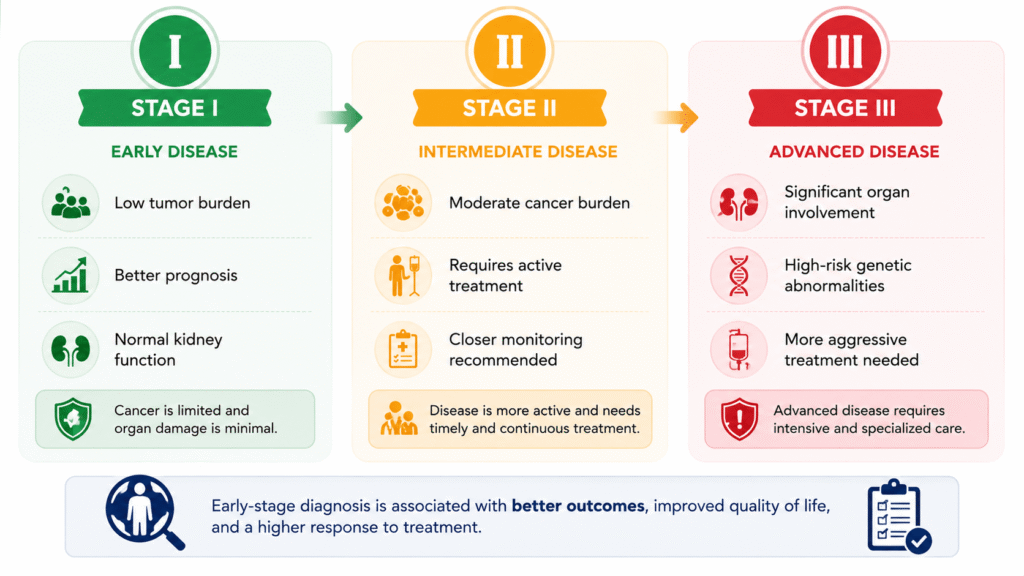
Stages of Multiple Myeloma
The stages of multiple myeloma are determined using the Revised International Staging System (R-ISS).
Stage I
- Early disease
- Low tumor burden
- Better prognosis
- Normal kidney function
Stage II
- Intermediate disease
- Moderate cancer burden
- Requires active treatment
Stage III
- Advanced disease
- Significant organ involvement
- High-risk genetic abnormalities
- More aggressive treatment needed
Early-stage diagnosis is associated with better outcomes.
How Multiple Myeloma Is Diagnosed
Doctors diagnose multiple myeloma using several tests after evaluating the signs of multiple myeloma, including persistent bone pain, fatigue, frequent infections, anemia, kidney problems, or abnormal blood test results. Early recognition of the signs of multiple myeloma allows doctors to perform the appropriate diagnostic tests and begin timely treatment. A combination of laboratory tests, imaging studies, and a bone marrow biopsy helps confirm the diagnosis, determine the stage of the disease, and guide the most appropriate treatment plan.
Blood Tests
- Complete Blood Count (CBC)
- Serum Protein Electrophoresis (SPEP)
- Immunofixation
- Serum Free Light Chain Test
- Calcium
- Creatinine
Urine Tests
Doctors check for abnormal proteins called Bence Jones proteins.
Bone Marrow Biopsy
A sample of bone marrow confirms the presence of abnormal plasma cells.
Imaging Tests
Imaging helps detect bone damage.
Tests may include:
- MRI
- PET Scan
- CT Scan
- X-rays
How Do Doctors Diagnose Multiple Myeloma?
Diagnosing multiple myeloma involves a combination of physical examination, medical history, laboratory tests, imaging studies, and a bone marrow biopsy. Since the symptoms can resemble those of other conditions, doctors use several tests to confirm the diagnosis and determine the stage of the disease.
Medical History and Physical Examination
The diagnostic process usually begins with a discussion of your symptoms, medical history, and family history. Your doctor may also perform a physical examination to check for bone tenderness, signs of anemia, kidney problems, or other complications.
Blood Tests
Blood tests help identify abnormal proteins and evaluate how multiple myeloma is affecting the body. Common blood tests include:
- Complete Blood Count (CBC) to check for anemia.
- Serum Protein Electrophoresis (SPEP) to detect abnormal M proteins.
- Serum Free Light Chain (FLC) Assay to measure abnormal antibody fragments.
- Blood calcium levels to detect hypercalcemia.
- Kidney function tests (creatinine and BUN).
- Beta-2 Microglobulin and Albumin levels, which help determine the stage and prognosis.
Urine Tests
Urine tests look for abnormal proteins known as Bence Jones proteins, which may indicate kidney involvement. A 24-hour urine collection may also be recommended to measure protein levels.
Bone Marrow Biopsy
A bone marrow biopsy is the most important test for confirming multiple myeloma. During this procedure, a small sample of bone marrow is collected—usually from the hip bone—and examined under a microscope to identify abnormal plasma cells.
Imaging Tests
Imaging scans help detect bone damage and assess the extent of the disease. Your doctor may recommend:
- X-rays (Skeletal Survey)
- Low-Dose Whole-Body CT Scan
- MRI (Magnetic Resonance Imaging)
- PET-CT Scan
These imaging tests can reveal bone lesions, fractures, or areas where myeloma has spread.
Genetic and Cytogenetic Testing
Doctors may perform specialized genetic tests such as FISH (Fluorescence In Situ Hybridization) or cytogenetic analysis on bone marrow samples. These tests identify high-risk genetic abnormalities and help determine the most appropriate treatment plan.
Diagnostic Criteria for Multiple Myeloma
A diagnosis of multiple myeloma is typically confirmed when abnormal plasma cells are found in the bone marrow along with evidence of organ damage or specific biomarkers associated with the disease. Your healthcare team combines the results of blood tests, urine tests, imaging studies, and biopsy findings to make an accurate diagnosis and develop a personalized treatment plan.
Multiple Myeloma Treatment
The goal of multiple myeloma treatment is to control the disease, relieve symptoms, and improve quality of life.
Treatment depends on:
- Stage
- Age
- Kidney function
- Overall health
- Genetic risk
Common treatment options include:
Chemotherapy
Chemotherapy kills rapidly growing cancer cells and is often combined with other medications.
Targeted Therapy
These medicines specifically attack proteins that help myeloma cells survive.
Immunotherapy
Immunotherapy helps the body’s immune system recognize and destroy cancer cells.
Stem Cell Transplant
Autologous stem cell transplantation is commonly recommended for eligible patients after initial treatment.
Radiation Therapy
Radiation is used to relieve pain or treat localized bone lesions.
Bisphosphonates
These medications strengthen bones and reduce fracture risk.
Supportive Care
Supportive treatment may include:
- Blood transfusions
- Pain management
- Infection prevention
- Kidney protection
- Nutritional counseling
- Physical therapy
How Does Multiple Myeloma Kill You?
Many people ask, how does multiple myeloma kill you?
Multiple myeloma usually becomes life-threatening because of its complications rather than the cancer itself, making it essential to recognize the signs of multiple myeloma early so that timely diagnosis and treatment can help prevent severe complications.
These complications include:
- Kidney failure
- Severe infections
- Bone marrow failure
- High calcium levels
- Spinal cord compression
- Severe anemia
- Bleeding disorders
- Organ failure
Modern treatments have significantly improved survival rates, especially when the signs of multiple myeloma are recognized early and the disease is diagnosed promptly. Early detection allows doctors to begin personalized treatment sooner, helping improve treatment outcomes, reduce complications, and enhance the patient’s quality of life.
Multiple Myeloma Prognosis
The multiple myeloma prognosis depends on several factors:
- Stage at diagnosis
- Age
- Kidney function
- Overall health
- Response to treatment
- Genetic abnormalities
Although there is currently no permanent cure, advances in targeted therapy, immunotherapy, and stem cell transplantation have allowed many patients to live longer with a good quality of life.
Regular follow-up and adherence to treatment are essential for achieving the best possible outcome.
Can Multiple Myeloma Be Prevented?
There is no guaranteed way to prevent multiple myeloma. However, maintaining a healthy lifestyle may reduce the overall risk of cancer and support better health.
Healthy habits include:
- Eating a balanced diet
- Staying physically active
- Maintaining a healthy weight
- Avoiding tobacco products
- Limiting alcohol intake
- Attending regular health check-ups
- Managing chronic medical conditions
When Should You See a Doctor?
If you notice the signs of multiple myeloma or experience any of the following symptoms, consult a healthcare provider promptly for a proper evaluation and diagnosis:
- Persistent back or bone pain
- Frequent infections
- Unexplained fatigue
- Sudden fractures
- Weight loss
- Numbness or tingling
- High calcium levels
- Kidney problems
Early diagnosis can help prevent serious complications and improve treatment success.
Frequently Asked Questions (FAQs)
What is the first sign of multiple myeloma?
Persistent bone pain, particularly in the back or ribs, is often the earliest symptom. Some people first notice fatigue, anemia, or frequent infections before developing significant bone pain.
How does multiple myeloma kill you?
Multiple myeloma can become life-threatening by causing kidney failure, severe infections, bone marrow failure, spinal cord compression, high calcium levels, and organ damage. Timely treatment can reduce these risks.
What is the prognosis for multiple myeloma?
The prognosis varies depending on the disease stage, age, kidney function, genetic factors, and response to treatment. Many patients now live for years due to advances in modern therapies.
What is multiple myeloma?
Multiple myeloma is a cancer of plasma cells in the bone marrow. It weakens the bones, suppresses the immune system, damages the kidneys, and produces abnormal proteins.
What are the treatment options for multiple myeloma?
Treatment may include chemotherapy, targeted therapy, immunotherapy, stem cell transplantation, radiation therapy, corticosteroids, bisphosphonates, and supportive care based on the patient’s condition.
What are the stages of multiple myeloma?
Multiple myeloma is classified into Stage I, Stage II, and Stage III using the Revised International Staging System (R-ISS), which evaluates blood tests, genetic abnormalities, and disease burden.
Is multiple myeloma hereditary?
Most cases are not hereditary. However, having a close family member with multiple myeloma or MGUS may slightly increase the risk.
What causes multiple myeloma?
The exact cause is unknown, but risk factors include older age, obesity, family history, exposure to radiation or chemicals, African ancestry, and a history of MGUS.
Seeking a Second Opinion in India for Multiple Myeloma
For international patients experiencing the signs of multiple myeloma, getting a second opinion in India can provide greater clarity about the diagnosis, disease stage, and available treatment options. Many patients choose to seek expert opinions before starting treatment, especially after noticing persistent symptoms, receiving abnormal blood test results, imaging findings, bone marrow biopsy reports, or a confirmed diagnosis of multiple myeloma. Seeking a second opinion can help patients better understand their condition, explore personalized treatment options, and make informed healthcare decisions.
To help specialists review your case accurately, keep the following medical records ready:
- Complete Blood Count (CBC) report
- Serum calcium and kidney function test results
- Serum Protein Electrophoresis (SPEP) report
- Immunofixation Electrophoresis (IFE) report
- Serum Free Light Chain (FLC) assay results
- 24-hour urine protein or Bence Jones protein test report
- Bone marrow biopsy and pathology report
- Flow cytometry, cytogenetic analysis, or FISH test reports (if available)
- X-ray, MRI, CT scan, or PET-CT scan images and reports
- Previous treatment records, current medications, and discharge summaries
When Should You Seek Immediate Medical Care?
Patients experiencing the signs of multiple myeloma, especially any of the following symptoms, should seek immediate medical attention at their nearest hospital before planning international travel:
- Severe or worsening back pain
- Sudden weakness or numbness in the legs
- Difficulty walking or loss of bladder or bowel control
- High fever or signs of a serious infection
- Confusion, excessive drowsiness, or altered mental status
- Reduced urine output or symptoms of kidney failure
- Sudden bone fractures or severe bone pain
- Rapidly worsening fatigue, shortness of breath, or other concerning symptoms
How Azzocare Can Help International Patients
Azzocare assists international patients by connecting them with experienced hematologists and hemato-oncologists at leading hospitals in India. Our patient care team can help coordinate specialist consultations, hospital appointments, estimated treatment cost guidance, medical visa assistance, travel planning, language interpreter support, accommodation assistance, and follow-up coordination throughout your treatment journey.
Disclaimer: Azzocare acts as a medical facilitation platform that helps patients access healthcare services in India. We do not diagnose medical conditions, prescribe treatments, provide emergency medical care, or guarantee treatment outcomes. Final medical decisions are always made by the treating specialist based on the patient’s individual condition.
Conclusion
Recognizing the signs of multiple myeloma is essential for early diagnosis and timely treatment. The signs of multiple myeloma, such as persistent bone pain, fatigue, frequent infections, kidney problems, unexplained fractures, and anemia, should never be ignored. Although multiple myeloma is a complex blood cancer, you can find evidence-based information about multiple myeloma from trusted medical organizations. Significant advances in chemotherapy, targeted therapy, immunotherapy, and stem cell transplantation have improved survival rates and quality of life for many patients. If you experience persistent symptoms or have concerns about your risk, consult a hematologist or oncologist promptly. Early medical evaluation, an accurate diagnosis, and a personalized treatment plan remain the most effective approach to managing multiple myeloma and preventing serious complications.