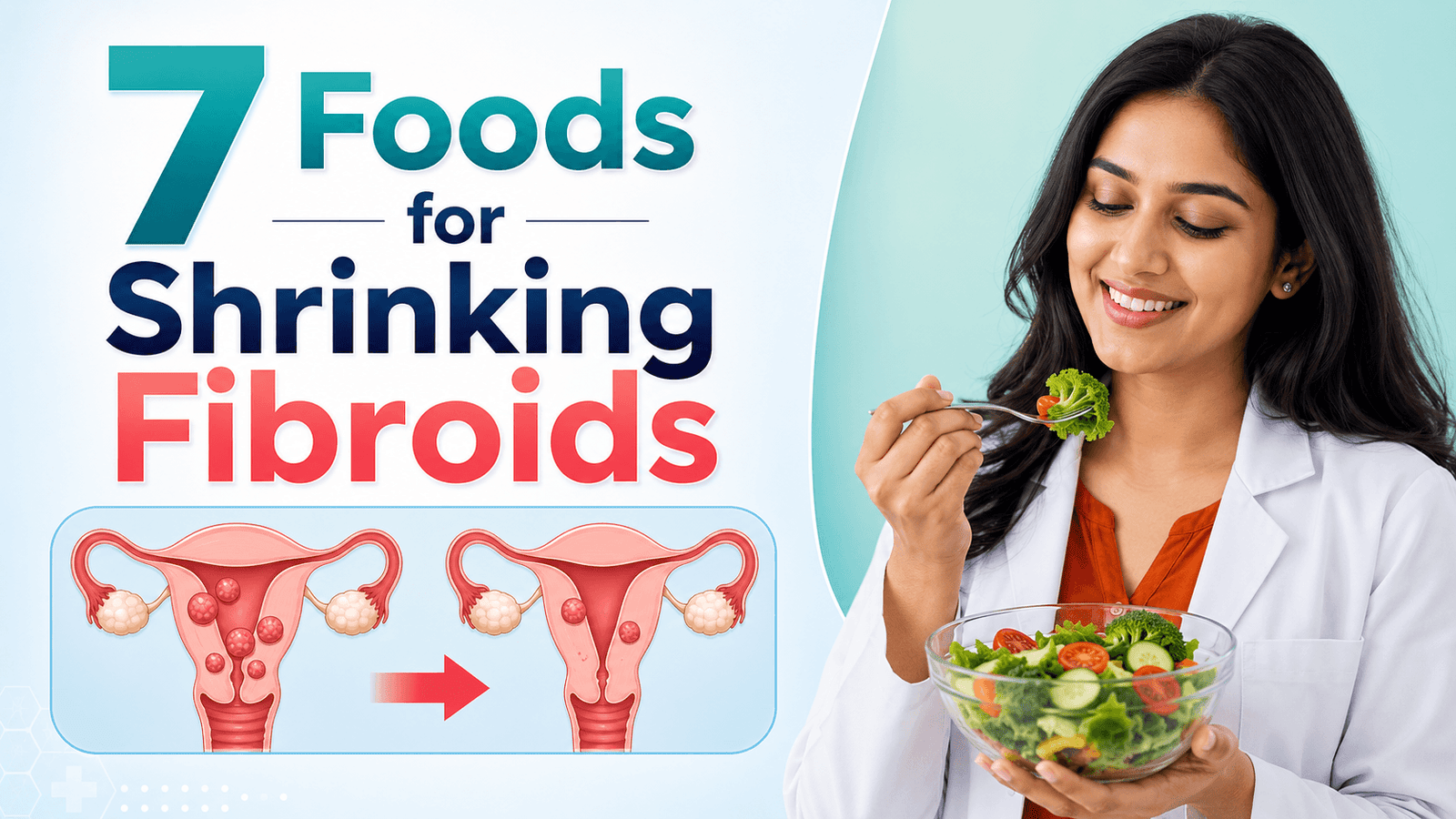
7 Best Foods for Fibroids
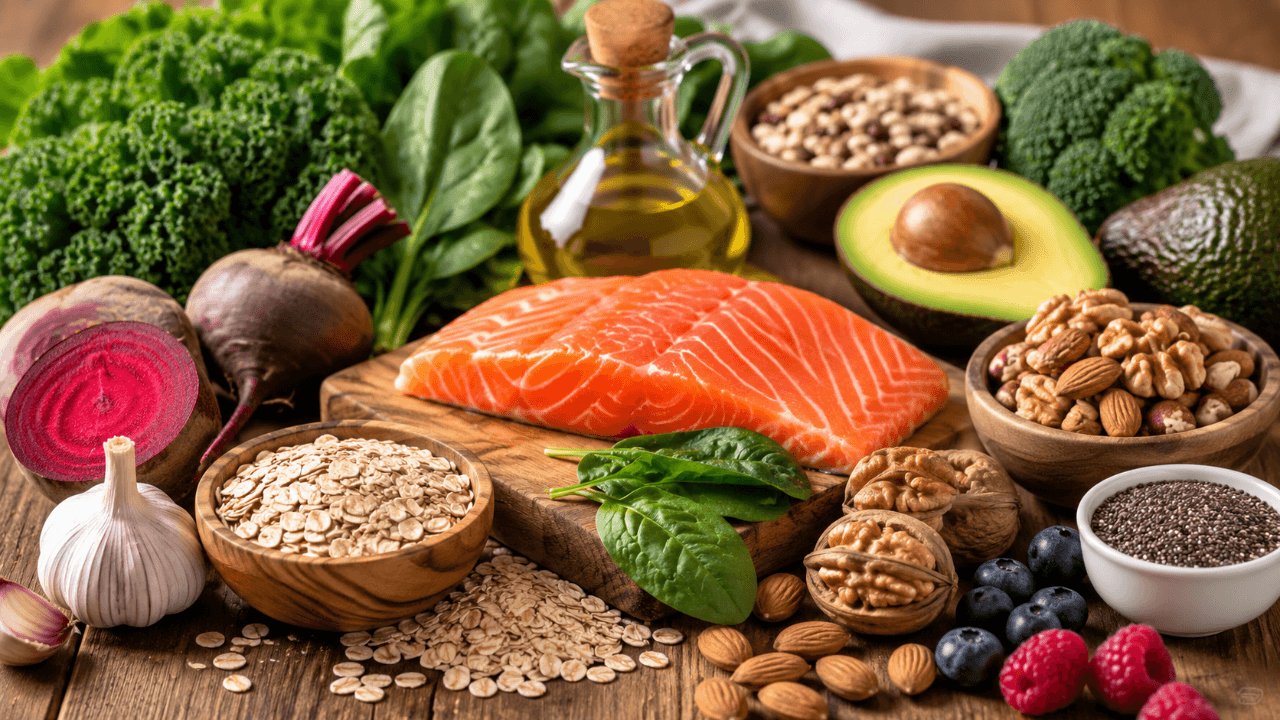
7 Foods for Shrinking Fibroids may support overall health and help manage some fibroid-related symptoms when included as part of a balanced diet. These include cruciferous vegetables, citrus fruits, iron-rich leafy greens, whole grains, omega-3 fatty fish, flaxseeds, and beans or lentils. While no specific food has been proven to shrink existing fibroids on its own, nutrient-rich foods may support healthy hormone balance, reduce inflammation, help manage fatigue related to heavy bleeding, and support a healthy weight. Diet works best alongside proper medical evaluation and should not replace recommended medical care.
Medically reviewed guide | 11 min read | Last updated: July 2026
If you’ve been diagnosed with uterine fibroids, you’ve probably already searched for 7 foods for shrinking fibroids at 1 a.m., hoping there’s a simple dietary fix. It’s a natural thing to look for — heavy periods, bloating, pelvic pressure, and fatigue can make you want a solution that doesn’t involve surgery or hormone therapy.
Here’s the honest truth: no food, juice, tea, or supplement has been clinically proven to make an existing fibroid shrink or disappear. But that doesn’t mean diet is useless. What you eat can influence estrogen metabolism, inflammation, iron levels, and body weight — all of which play a role in how fibroids behave and how severe your symptoms feel. That’s why understanding the right fibroid-friendly foods is genuinely worth your time, even if it’s not a magic cure.
In this guide, we’ll walk through what fibroids actually are, what the science really says about food and fibroid growth, the specific 7 foods for shrinking fibroids worth adding to your plate, which foods to limit, and when it’s time to stop relying on diet alone and see a specialist.
What Are Uterine Fibroids?
According to the Mayo Clinic, uterine fibroids are non-cancerous (benign) growths that develop in or around the uterus, most commonly during the reproductive years. They’re made of muscle and fibrous tissue, and their size can range from a tiny seed to a mass large enough to change the shape of the uterus.
Many women have fibroids without ever knowing it — they’re often discovered by chance during a routine pelvic exam or pregnancy ultrasound. Others experience symptoms such as:
- Heavy or prolonged menstrual bleeding
- Pelvic pain or pressure
- Frequent urination
- Lower back pain
- Pain during intercourse
- Fatigue or anemia from blood loss
- Difficulty conceiving, in some cases
Fibroids are influenced heavily by estrogen and progesterone levels, which is exactly why diet — something that can subtly affect hormone metabolism — keeps coming up in fibroid management conversations.
Can Food Really Shrink Fibroids?
This is the question most people asking about fibroid diets actually want answered directly: no, food cannot reliably shrink an existing fibroid. Current medical research does not support the idea that any specific food, diet, or natural remedy can make a fibroid smaller or make it disappear.
What research does support is that a nutrient-dense, balanced diet may:
- Help regulate estrogen levels (excess estrogen is linked to fibroid growth)
- Reduce systemic inflammation, which may worsen symptoms
- Support healthy body weight (fat tissue produces additional estrogen)
- Replenish iron and folate lost through heavy bleeding
- Improve energy levels and reduce fibroid-related fatigue
So while the foods listed below won’t erase a fibroid from an ultrasound report, they can genuinely make living with fibroids more manageable — and in some cases may support a slower rate of growth by improving the hormonal and inflammatory environment in your body.
7 Fibroid-Friendly Foods to Add to Your Diet
Here’s a closer, more practical look at the foods that come up most often in fibroid nutrition research — along with how to actually fit them into an Indian or South Asian diet, since portion sizes and ingredient access matter more than generic advice.
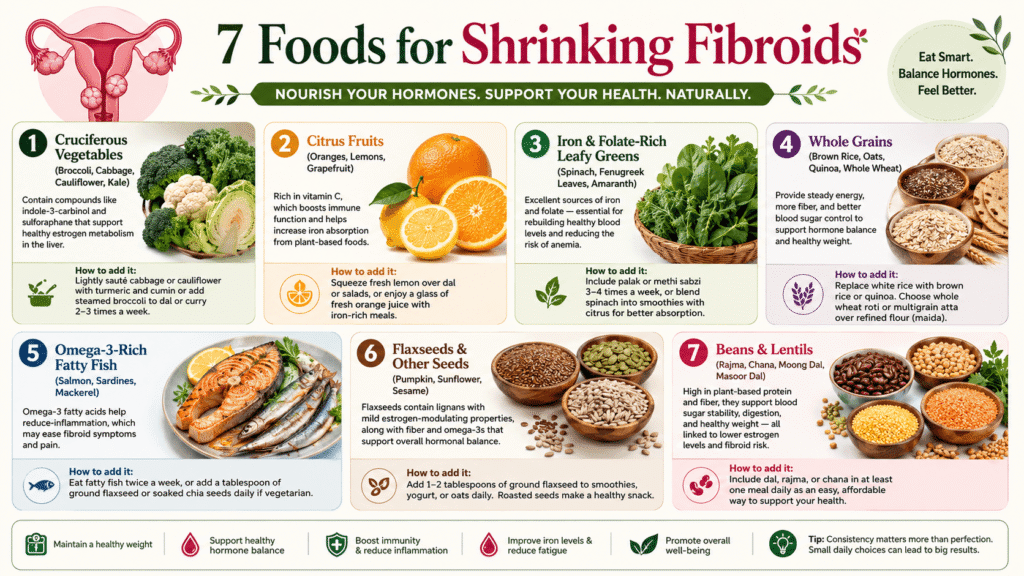
1. Cruciferous Vegetables (Broccoli, Cabbage, Cauliflower, Kale)
Cruciferous vegetables contain compounds called indole-3-carbinol and sulforaphane, which are believed to support healthy estrogen metabolism in the liver. Since estrogen dominance is linked to fibroid growth, keeping this hormone pathway functioning well is one reason cruciferous vegetables top most 7 foods for shrinking fibroids lists.
How to add it: Lightly sauté cabbage or cauliflower with turmeric and cumin as a side dish, or add steamed broccoli to dal or vegetable curry two to three times a week.
2. Citrus Fruits (Oranges, Lemons, Grapefruit)
Citrus fruits are rich in vitamin C, which supports collagen production, immune function, and — importantly for women with heavy periods — iron absorption from plant-based foods. Pairing citrus with iron-rich meals can meaningfully improve how much iron your body actually absorbs.
How to add it: Squeeze fresh lemon over dal or salads, or finish a spinach-based meal with a glass of fresh orange juice to boost iron uptake.
3. Iron and Folate-Rich Leafy Greens (Spinach, Fenugreek Leaves, Amaranth)
Heavy menstrual bleeding from fibroids is one of the most common causes of iron-deficiency anemia in women. Leafy greens like spinach (palak) and fenugreek leaves (methi) are excellent plant-based sources of iron and folate, both essential for rebuilding healthy blood levels.
How to add it: Include palak or methi sabzi 3–4 times a week, or blend spinach into a fruit smoothie with citrus for better absorption.
4. Whole Grains (Brown Rice, Oats, Quinoa, Whole Wheat)
Refined carbohydrates can spike blood sugar and insulin, which indirectly influences hormone balance. Swapping refined grains for whole grains provides steady energy, more fiber, and better blood sugar control — all supportive factors when managing fibroid-related fatigue and weight.
How to add it: Replace white rice with brown rice or quinoa a few times a week, and choose whole wheat roti or multigrain atta over refined flour (maida) products.
5. Omega-3-Rich Fatty Fish (Salmon, Sardines, Mackerel)
Omega-3 fatty acids have well-documented anti-inflammatory properties. Since inflammation is thought to play a role in fibroid symptoms and pain, incorporating omega-3-rich fish is a practical addition to your fibroid-friendly diet. If you don’t eat fish, walnuts, flaxseeds, and chia seeds offer plant-based omega-3s.
How to add it: Aim for fatty fish twice a week, or add a tablespoon of ground flaxseed or soaked chia seeds to your daily meals if you’re vegetarian.
6. Flaxseeds and Other Seeds (Pumpkin, Sunflower, Sesame)
Flaxseeds contain lignans, plant compounds with mild estrogen-modulating properties, along with fiber and omega-3s. While their direct effect on fibroid size isn’t clearly established in research, they’re commonly recommended for general hormonal and metabolic support.
How to add it: Add one to two tablespoons of ground flaxseed to smoothies, yogurt, or oats daily. Roasted pumpkin and sunflower seeds also make an easy snack.
7. Beans and Lentils (Rajma, Chana, Moong Dal, Masoor Dal)
Beans and lentils are a staple across Indian households and are naturally high in plant-based protein and fiber. They support blood sugar stability, digestive regularity, and satiety — all useful for maintaining a healthy weight, which is directly linked to estrogen levels and fibroid risk.
How to add it: Include a portion of dal, rajma, or chana in at least one meal daily as an easy, affordable way to round out this fibroid-friendly diet.
Important note: None of these foods have been clinically proven to shrink an existing fibroid on their own. They work best as part of a broader, balanced diet alongside medical care — not as a replacement for it, especially if you’re experiencing heavy bleeding, anemia, or pelvic pain.
Foods to Avoid or Limit With Fibroids
Alongside adding fibroid-friendly foods, it helps to know what to cut back on:
- Red and processed meat – Some studies associate high intake with increased fibroid risk, and processed meats often contain additives that may affect hormone balance.
- Refined grains and maida-based products – White bread, pastries, and refined flour offer little fiber and can spike blood sugar.
- Ultra-processed and packaged foods – Often high in sodium, added sugar, and unhealthy trans fats.
- Alcohol – Can affect liver function, which plays a key role in metabolizing excess estrogen.
- Excess sugar and sugary drinks – Linked to insulin resistance and weight gain, both of which can worsen hormone imbalance.
Lifestyle Habits That Support Fibroid Management
Diet works better when paired with everyday lifestyle habits:
- Maintain a healthy body weight, since fat tissue can produce additional estrogen
- Exercise regularly — even brisk walking 4–5 times a week helps
- Limit salt and sodium intake to support blood pressure
- Stay well-hydrated
- Manage stress, which can influence hormone regulation
- Avoid smoking and limit alcohol
- Track your menstrual symptoms so you can flag changes to your doctor early
When Should You See a Doctor?
Diet and lifestyle changes are supportive, not curative. You should consult a gynecologist if you experience:
- Heavy or prolonged periods (soaking through a pad/tampon every hour)
- Bleeding between periods
- Pelvic pain or pressure that doesn’t improve
- Frequent urination or constipation
- Pain during intercourse
- Difficulty getting pregnant
- Signs of anemia — fatigue, dizziness, shortness of breath
Seek urgent medical care if bleeding is extremely heavy, pain is sudden or severe, or you feel faint — these can indicate complications that need immediate attention.
Fibroid Treatment Options Beyond Diet
If fibroids are significantly affecting your quality of life, your doctor may recommend treatment beyond dietary changes:
Medications:
- Iron supplements to manage anemia
- Hormonal birth control to help control heavy bleeding
- GnRH agonists to temporarily shrink fibroids before surgery
- Pain management medication
Minimally Invasive & Surgical Options:
- Uterine Fibroid Embolization (UFE) – Cuts off blood supply to fibroids, causing them to shrink
- Myomectomy – Removes fibroids while preserving the uterus, often the preferred option for women who want to conceive later
- Laparoscopic surgery – Minimally invasive removal using small incisions
- Hysterectomy – Complete removal of the uterus, typically considered when fibroids are severe or other treatments haven’t worked
Many international patients travel to India for fibroid treatment because of the combination of experienced gynecologists, advanced minimally invasive options like UFE and laparoscopic myomectomy, and treatment costs that are significantly lower than in the US, UK, or Gulf countries — often at a fraction of the price with comparable success rates.
Frequently Asked Questions
What are the best foods for fibroids?
The best foods for fibroids include cruciferous vegetables, citrus fruits, iron-rich leafy greens, whole grains, omega-3-rich fatty fish, flaxseeds, and beans or lentils.
Can Diet Help With Fibroids?
No. No food has been scientifically proven to shrink fibroids completely. A balanced diet can support hormone balance, reduce inflammation, and ease symptoms like heavy bleeding and fatigue, but it isn’t a standalone cure.
Which foods should I avoid if I have fibroids?
Limit red and processed meat, refined grains, ultra-processed packaged foods, alcohol, and foods high in added sugar, as these may contribute to inflammation and hormone imbalance.
How long does it take for diet changes to help with fibroid symptoms?
Diet changes don’t shrink fibroids quickly, and results vary by person. It typically takes several weeks to a few months of consistent dietary changes to notice improvements in energy, bloating, or overall well-being.
Can losing weight help with fibroid symptoms?
Yes. Since fat tissue produces additional estrogen, maintaining a healthy weight may help lower excess estrogen levels, which can support symptom management and potentially slow fibroid growth.
Is green tea helpful for fibroids?
Green tea contains antioxidants (like EGCG) that may help reduce inflammation, and some early research suggests a possible role in fibroid management. However, evidence isn’t strong enough to call it a treatment.
Can I manage fibroids with diet alone?
No. Diet can support symptom management, but it cannot replace medical treatment. If you have heavy bleeding, severe pain, or fertility concerns, consult a gynecologist for proper evaluation.
Are fruits generally safe for someone with fibroids?
Yes. Most fruits — especially citrus fruits and berries — are rich in antioxidants and vitamin C, and are a safe, beneficial part of a fibroid-friendly diet.
Clinical Takeaway
Searching for the 7 foods for shrinking fibroids is a good instinct — it means you’re taking an active role in managing your health. Just go in with realistic expectations: cruciferous vegetables, citrus fruits, leafy greens, whole grains, fatty fish, flaxseeds, and beans/lentils won’t erase a fibroid, but they can meaningfully support your hormone balance, energy levels, and overall symptom management when paired with proper medical care.
If your symptoms are affecting your daily life — heavy bleeding, pain, fatigue, or fertility concerns — don’t rely on diet alone. Speak with a gynecologist to understand your fibroid size, number, and location, and to explore whether medication, minimally invasive procedures, or surgery is the right next step for you.
This article is for general educational and informational purposes only and is not a substitute for professional medical advice, diagnosis, or treatment. Always consult a qualified healthcare provider regarding your specific condition.