Your father gets up three times a night to pass urine. A forwarded message says “stop all dairy.” A relative says red meat causes prostate cancer. By the end of the week the kitchen has more rules than recipes.
If you have been searching for the ten worst foods for prostate health, you will find plenty of confident lists. What most of them skip is how strong the evidence behind each item really is. For some foods, such as caffeine and alcohol, the advice on urinary symptoms is practical and fairly consistent. For others, such as dairy and red meat, the research on cancer risk is mixed.
This guide ranks ten foods and drinks worth limiting, says what each is actually linked to, gives Indian examples and practical swaps, and explains when a symptom needs a doctor and not a diet change. No food on this list has been proven to cause prostate cancer.
Quick Answer: Ten Worst Foods for Prostate Health
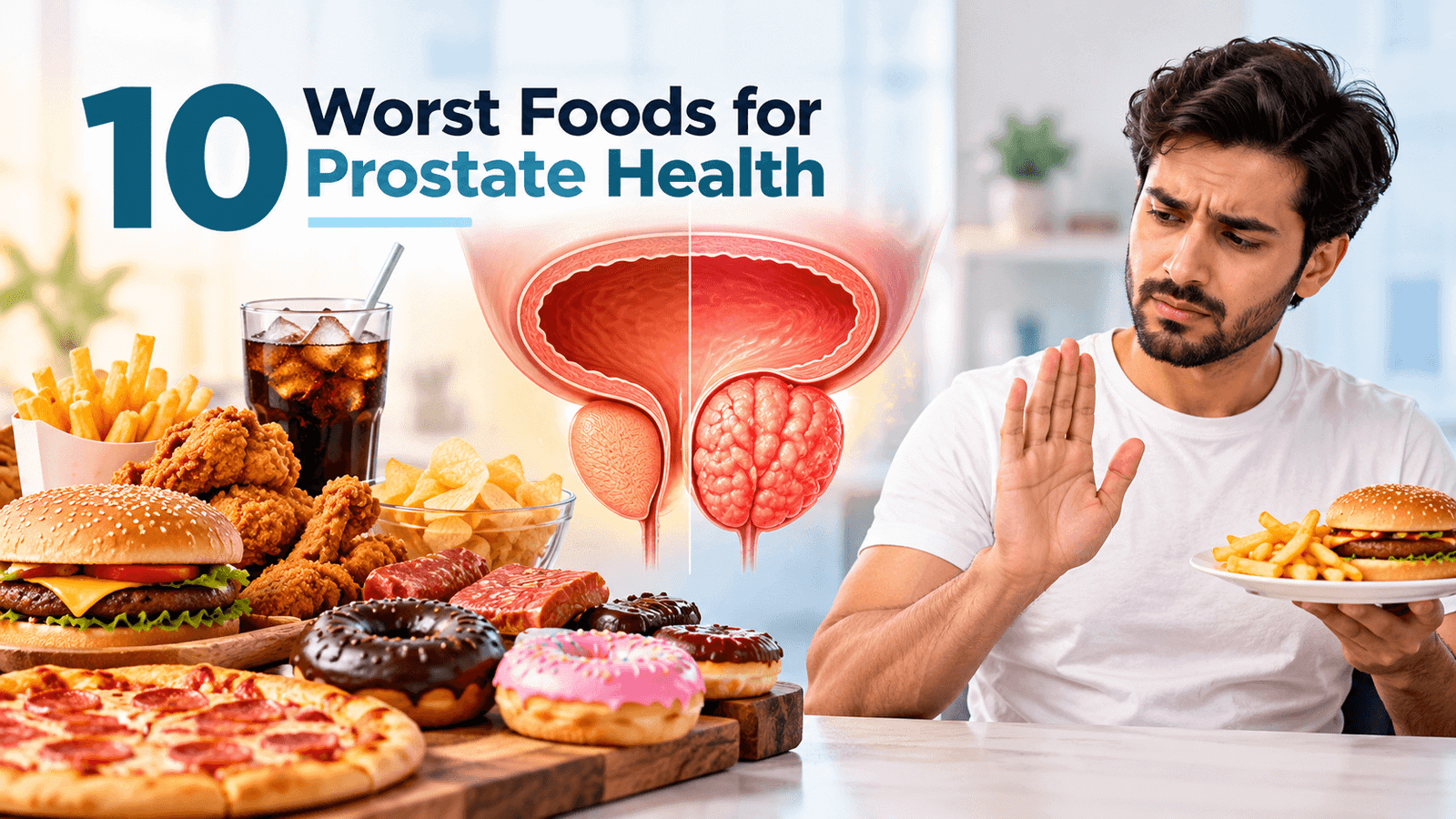
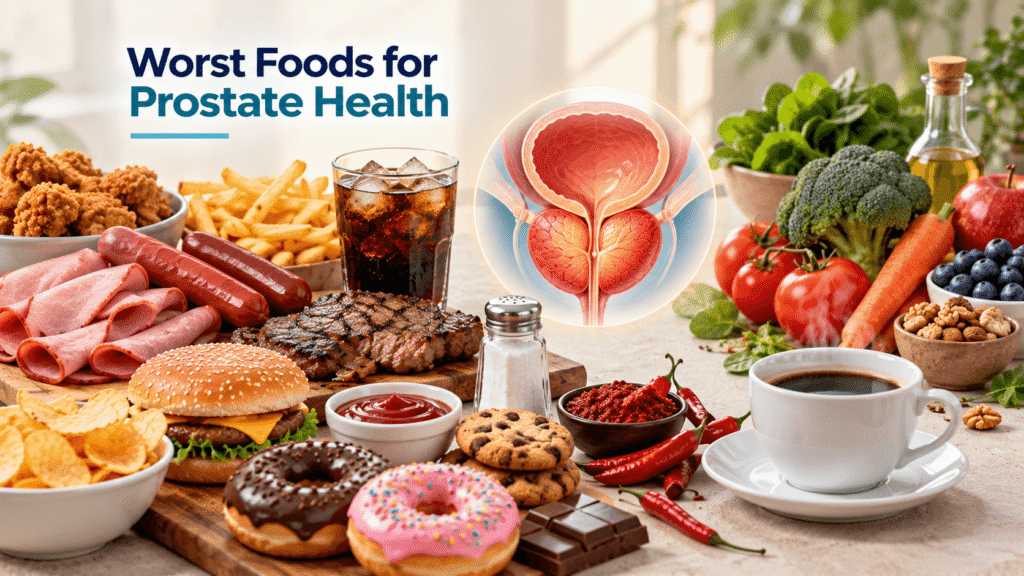
The foods and drinks most worth limiting are caffeine-heavy drinks and alcohol, which can worsen urinary symptoms; processed meats and large amounts of red or charred meat, dairy eaten in very high amounts, deep-fried and high-fat foods, sugary drinks and sweets, very salty processed foods, and very spicy foods if they trigger your symptoms. Evidence is most practical for caffeine and alcohol and urinary symptoms. For prostate cancer risk it is limited or mixed, and your overall weight and eating pattern appear to matter more than any single food. See a doctor for symptoms, not a diet.
Key Takeaways
- “Prostate problems” means three different conditions: an enlarged prostate (BPH), prostatitis and prostate cancer. Diet affects each differently.
- For urinary symptoms, the most practical advice is to cut back on caffeine and alcohol, especially in the evening.
- Evidence linking specific foods to prostate cancer is limited and mixed, so be wary of lists that state it as fact.
- Body weight, an overall plant-rich diet and regular activity matter more than avoiding one food.
- Spicy food is a personal trigger for some men, not a proven cause of prostate disease.
- Early prostate cancer often has no symptoms, so talk to a doctor about screening instead of relying on diet.
First, Which Prostate Problem Are You Worried About?
The prostate is a small gland below the bladder that helps make semen. Three conditions get lumped together, and the diet advice differs for each.
| Condition | What it is | What diet can and can’t do |
|---|---|---|
| Enlarged prostate (BPH) | A non-cancerous enlargement that is more common with age. Mayo Clinic notes that by age 50, half of men show signs of it, such as urgency and needing to urinate often | Some drinks affect symptoms. Diet does not shrink the prostate, and there is “no magic bullet” |
| Prostatitis | Inflammation or pain in the prostate area. The chronic form is common and not well understood | Some men notice food triggers, which differ from person to person |
| Prostate cancer | Cancer of the prostate gland. The American Cancer Society says early prostate cancer usually has no specific symptoms | Evidence on individual foods is limited and mixed. Weight and overall diet matter more |
Knowing which problem you are dealing with is the first step. If you are not sure, a doctor can tell you.
How We Ranked These Foods
The list below is ordered by how practical and consistent the evidence is, starting with the strongest. Each item has a note on what it is actually linked to: urinary symptoms, cancer risk or general health. Where the research disagrees, we say so. A “worst” food here means one worth limiting, not one you must never eat.
Ten Worst Foods for Prostate Health: The Full List
1. Caffeine-heavy drinks
Linked to: urinary frequency and urgency.
Mayo Clinic’s dietitians advise limiting caffeine and alcohol if you have BPH, because both may stimulate the urge to urinate. Coffee and tea were also among the drinks men with chronic prostatitis most often said aggravated their symptoms in a survey.
In an Indian household, this means strong chai and filter coffee, cola, and energy drinks. Caffeine does not cause BPH. It can make existing symptoms more annoying.
Try instead: have caffeine earlier in the day, cut down gradually, and choose decaf, weaker tea or herbal teas in the evening.
2. Alcohol
Linked to: urinary symptoms; general cancer risk.
Mayo Clinic groups alcohol with caffeine as something to limit for BPH symptoms. In the prostatitis survey, alcoholic drinks were also a common aggravator. For general cancer prevention, the Tufts Health & Nutrition Letter advises limiting alcohol to two drinks a day or fewer for men.
The link between alcohol and prostate cancer specifically is less clear than the link with urinary symptoms. If a drink after dinner sends you to the toilet all night, it is worth skipping it, whatever the cancer evidence says.
Try instead: keep alcohol out of the evening, or avoid it altogether. Ask your doctor if you take regular medicines.
3. Processed meats
Linked to: possible cancer risk (suggestive, not proven).
In a World Cancer Research Fund (WCRF) summary, of the meat groups examined, suggestive evidence of an association with prostate cancer applied only to processed meat. Tufts’ dietitians also advise limiting red and processed meats.
Think sausages, bacon, salami, ham, hot dogs and packaged ready-to-eat meats.
Try instead: freshly cooked chicken or fish, eggs, dal and other legumes.
4. Red meat in large amounts
Linked to: possible cancer risk and BPH (mixed evidence).
This is where the research disagrees most. A review in Nutrition & Metabolism notes that one meta-analysis of prospective studies, covering 15 studies on red meat and 11 on processed meat, found no association with prostate cancer. A larger WCRF-funded study found modestly higher risks of advanced prostate cancer with higher unprocessed red meat and processed meat intake. For BPH, Mayo Clinic notes that some studies found a higher risk of an enlarged prostate with more red meat, while others found a lower risk with higher protein intake, especially leaner protein such as fish.
The fair summary: large, regular portions of red meat are not a clear win for the prostate, but there is no basis for banning mutton or beef outright.
Try instead: smaller portions, and more fish, chicken and legumes through the week.
5. Charred, grilled and well-done meat
Linked to: possible cancer risk (mixed evidence).
Cooking meat at high heat can form compounds called heterocyclic amines. One meta-analysis found a positive association between these compounds and prostate cancer, but the same review notes that another study found no association with advanced prostate cancer or with strongly browned meat.
Tandoori, kebabs and barbecue are the usual examples. You don’t need to give them up. Cook meat gently, don’t eat blackened edges, and make charred food an occasional treat.
6. Very high dairy intake, especially full-fat
Linked to: possible cancer risk (limited and disputed evidence).
This is the most debated item on the list. The WCRF and American Institute for Cancer Research reported that diets high in calcium probably increase prostate cancer risk, but later described the evidence for dairy and calcium as suggestive but limited. A large cohort of Seventh-day Adventists found higher risk with higher dairy intake, but not with calcium from non-dairy sources. A UNSW analysis, though, concluded that inconsistent results across studies add up to very limited evidence of a link.
In Indian diets, dairy appears as milk, curd, paneer, lassi, ghee and mithai. The practical message from Tufts is to stick to the recommended three servings a day. If you take calcium supplements, ask your doctor whether you need them, because high calcium intake is the part of the story with the most support.
Try instead: moderate portions, lower-fat versions, and calcium from non-dairy foods such as leafy greens and legumes.
7. Deep-fried foods and trans or saturated fats
Linked to: BPH symptoms and general health; some cancer risk signals.
The Nutrition & Metabolism review concludes that red meat, dietary fat and milk intake appear to raise prostate cancer risk and should be minimised. Mayo Clinic lists a low-fat diet among measures that may lessen BPH symptoms. Neither source proves that frying causes prostate disease, but a high-fat diet is not a good bet.
Samosas, pakoras, puris, bhature and bakery items are common sources. Check labels for partially hydrogenated oils.
Try instead: baking, steaming, roasting or air-frying, and keeping fried snacks for special occasions.
8. Sugary drinks, sweets and refined carbs
Linked to: weight gain, which is the stronger concern.
No clear evidence shows that sugar itself harms the prostate. The concern is weight. The AICR’s vice president of research has said the strongest modifiable risk factor for prostate cancer is obesity, not any single food. Tufts’ dietitians also advise avoiding added sugars as part of a general cancer-prevention pattern.
Sweetened chai, cold drinks, packaged juices, mithai, white bread and maida-based snacks add calories quickly.
Try instead: water, unsweetened tea, whole fruit, and whole grains such as atta, brown rice, ragi or jowar.
9. Very salty and ultra-processed foods
Linked to: general health; direct prostate evidence is limited.
Tufts’ dietitians advise avoiding added sugars, excess sodium and highly processed foods as part of general cancer prevention. I found no strong evidence that salt specifically harms the prostate, so this is a general-health recommendation rather than a prostate-specific one.
Pickles, papad, namkeen, instant noodles and packaged snacks are the usual sources.
Try instead: home-cooked meals, fresh or dry-roasted snacks, and seasoning with lemon, ginger, garlic and spices in place of extra salt.
10. Very spicy foods, if they trigger your symptoms
Linked to: prostatitis and bladder irritation (weak, personal evidence).
In a survey of men with chronic prostatitis, 47.4% of the 95 respondents said certain foods made their symptoms worse, most often spicy foods, coffee, hot peppers, alcohol, tea and chili. It was a small survey with a low response rate, so treat it as a clue and not a rule. A medical review of chronic pelvic pain also notes that addressing urinary symptoms often begins with avoiding spicy foods, caffeine and alcohol, but another study found no significant differences in how men responded to different foods.
I found no evidence that chilli causes BPH or prostate cancer. If spicy food flares your symptoms, cut back. If it doesn’t, there is no reason to give it up.
Try instead: keep a short food and symptom diary for two weeks to find your own triggers.
Quick comparison
| Food or drink | Main concern | How strong is the evidence? |
|---|---|---|
| Caffeine-heavy drinks | Urinary frequency and urgency | Practical guidance from Mayo Clinic |
| Alcohol | Urinary symptoms; general cancer risk | Practical guidance for symptoms; less clear for cancer |
| Processed meats | Cancer risk | Suggestive, not proven |
| Red meat | Cancer risk; BPH | Mixed |
| Charred or well-done meat | Cancer risk | Mixed |
| Very high dairy | Cancer risk | Limited and disputed |
| Fried and high-fat foods | BPH symptoms; general health | Limited |
| Sugary drinks and sweets | Weight gain | Indirect, through weight |
| Salty, ultra-processed foods | General health | Indirect |
| Very spicy foods | Prostatitis symptoms | Weak, personal |
What to Eat Instead
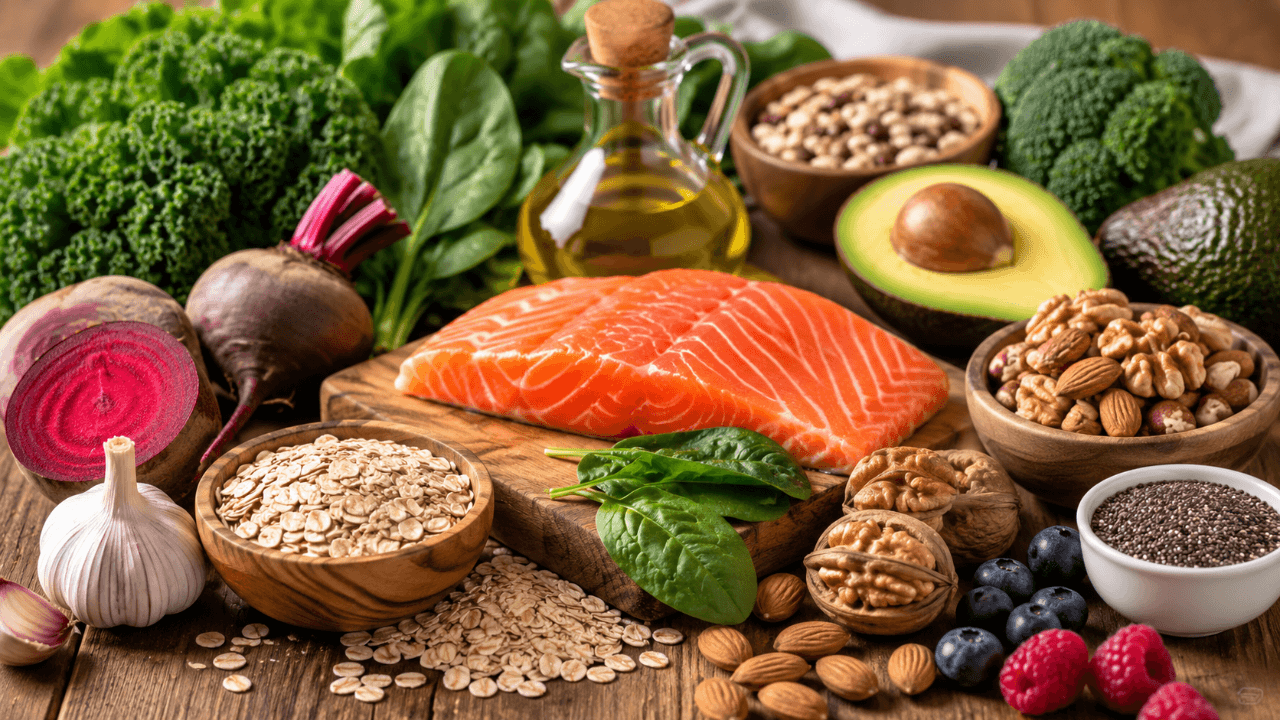
Avoiding the ten worst foods for prostate health works best when you replace them with something, not just cut them out. Mayo Clinic’s dietitians suggest eating a large variety of vegetables each day, a few servings of fruit daily including citrus, a low-fat diet, moderate to vigorous activity most days, and a healthy weight. They also note that leaner proteins, such as fish, are a better choice than a lot of red meat.
In practice, that can mean:
- Dal, rajma or chana with vegetables at most meals
- Fish, eggs or chicken instead of daily red meat
- A fruit, including an orange or a lemon-based drink without sugar, each day
- Whole grains instead of refined ones
- Nuts or roasted chana as a snack, not fried namkeen
Habits That Matter More Than Any Single Food
According to the AICR’s vice president of research, obesity is the strongest modifiable risk factor for prostate cancer, ahead of individual foods. That makes these habits worth more than any single swap:
- Keep a healthy weight. Small, steady changes work better than crash diets.
- Stay active. Mayo Clinic recommends moderate to vigorous activity most days, and Tufts’ dietitians suggest at least 150 minutes a week.
- Time your fluids. Mayo Clinic advises avoiding liquids for a few hours before bedtime or before going out, if urinary frequency is a problem. Don’t cut back on fluids during the day.
Supplements and “Prostate Support” Products
Mayo Clinic notes that studies of supplements and herbal therapies for BPH, such as saw palmetto, lycopene and beta-sitosterol, have had mixed results. High calcium intake is the part of the dairy story with the most support, so don’t take extra calcium without a reason. Tell your doctor about everything you take, because some supplements can interact with medicines.
When to See a Doctor
Diet can ease some urinary symptoms, but it can’t tell you what is causing them.
Get medical help urgently if you:
- Cannot pass urine
- See blood in your urine
- Have fever or chills with pain or burning on urination
Make an appointment soon if you notice:
- A weak or interrupted stream, or trouble starting to urinate
- Getting up often at night to urinate
- Pain or burning when urinating
- Blood in the semen
- A nagging pain in the back, hips or pelvis
The American Cancer Society lists these as symptoms that can be caused by prostate cancer, and they may also have other causes. Early prostate cancer usually causes no symptoms, so ask a doctor about screening, including the PSA blood test, and decide together based on the benefits and risks for you. A urologist is usually the specialist who assesses prostate and urinary symptoms. You can also browse hospitals to find a centre near you for an assessment.
If you or a family member is diagnosed with prostate cancer, a free second opinion can help you review your options. You can also compare oncology specialists before you decide.
Frequently Asked Questions
Does dairy cause prostate cancer?
The evidence is mixed and limited. Some large studies have found a higher risk with high dairy intake, while a WCRF summary describes the evidence as suggestive but limited and another analysis calls it very limited. You don’t need to give up dairy. Keep portions moderate, and ask your doctor before taking extra calcium supplements.
Is red meat bad for the prostate?
The research disagrees. Some studies link large amounts of red or processed meat to a higher risk, while a meta-analysis found no association. Processed meat has the most suggestive evidence. Eating moderate portions, and swapping some meals for fish, chicken or legumes, is a sensible compromise.
Does coffee affect an enlarged prostate?
Caffeine does not cause BPH, but Mayo Clinic notes it may stimulate the urge to urinate. If frequency or urgency bothers you, cut back gradually, especially in the afternoon and evening.
Does alcohol make BPH worse?
It can. Mayo Clinic advises limiting alcohol along with caffeine because both may stimulate the urge to urinate. Avoid drinking in the evening if you are getting up at night, and tell your doctor if you take regular medicines.
Do spicy foods cause prostatitis?
I found no evidence that spicy foods cause prostatitis. They may aggravate symptoms in some men who already have it. A small survey of men with chronic prostatitis found spicy foods among the most commonly reported triggers. A food diary helps you decide whether they affect you.
Are paneer and ghee bad for the prostate?
No study I found singles out paneer or ghee. They are dairy and saturated fat foods, so they fall under the advice to keep dairy moderate and to follow a lower-fat diet, as Mayo Clinic suggests for BPH. Small portions are easier to fit into a prostate-friendly diet than large ones.
Can diet shrink an enlarged prostate?
No. Mayo Clinic is clear that there is no magic bullet. Healthy changes may ease symptoms such as urgency and frequency, but BPH that causes problems is treated by a doctor with medicines or procedures.
Do tomatoes or saw palmetto help?
Studies of lycopene and saw palmetto for BPH have had mixed results, according to Mayo Clinic. Eating tomatoes as part of a vegetable-rich diet is fine, but they are not a proven treatment. Tell your doctor before starting any supplement.
How much water should I drink with BPH?
Don’t restrict fluids during the day. Mayo Clinic suggests avoiding liquids for a few hours before bedtime or before going out, so you are not woken up or caught short. Ask your doctor about the right amount for you, especially if you have heart or kidney conditions.
When should I get a PSA test?
It is an individual decision. The American Cancer Society recommends that men talk with a doctor and decide based on the benefits and risks, and some guidance suggests the discussion could start at 45 or 50 depending on risk. PSA can also rise with an enlarged prostate or an infection, so a result needs interpretation. Mention it if prostate cancer runs in your family.
Conclusion: Limit the Obvious, Look at the Bigger Picture
The ten worst foods for prostate health are less a list of villains than a list of things to moderate: caffeine and alcohol if you have urinary symptoms, processed and charred meat, high-fat and fried food, sugary drinks and very salty snacks, and dairy in very large amounts. None of these is proven to cause prostate cancer. A healthy weight, an eating pattern built around vegetables, fruit, legumes and fish, and regular activity are likely to do more for you than banning any one food.
If you have urinary symptoms or a family history of prostate problems, don’t wait. Azzocare offers a free medical opinion and cost estimate from specialists, usually within 48 hours, plus help with medical visas and travel for international patients. You can book a free consultation on Azzocare or read about medical travel to India.
This article is for informational purposes only. Always consult a qualified healthcare professional for medical advice.
Sources
- Mayo Clinic: can diet help with symptoms of an enlarged prostate?
- World Cancer Research Fund: dairy and plant foods, and advanced prostate cancer
- Nutrition & Metabolism: prostate cancer and the influence of dietary factors
- UNSW: does eating dairy foods increase your risk of prostate cancer?
- Dairy, calcium and prostate cancer risk in a large North American cohort
- Tufts Health & Nutrition Letter: what you need to know about prostate cancer
- Urology (2013): effects of foods and beverages on chronic prostatitis symptoms
- Male chronic pelvic pain: an update
- American Cancer Society: signs and symptoms of prostate cancer
- Fortune: the best diet to lower your risk of prostate cancer, according to experts