Search for “how I knew I had colon cancer” and you will find stories that begin in very ordinary ways. A little blood after a bowel movement. A stomach that never quite settles. Tiredness that sleep doesn’t fix. Many people say they put it down to piles, acidity or stress, sometimes for months.
This article is not one person’s story. It brings together what medical sources say people commonly notice, why those signs are so easy to explain away, and what to do about them. It also looks at why this matters for young adults in India, where doctors report that rectal bleeding is often assumed to be piles and the diagnosis often comes late.
Nothing here can tell you whether you have cancer. Most of these symptoms have common, harmless causes. But they deserve a proper check, and the sooner you get one, the more options you are likely to have.
How Do People Know They Have Colon Cancer?
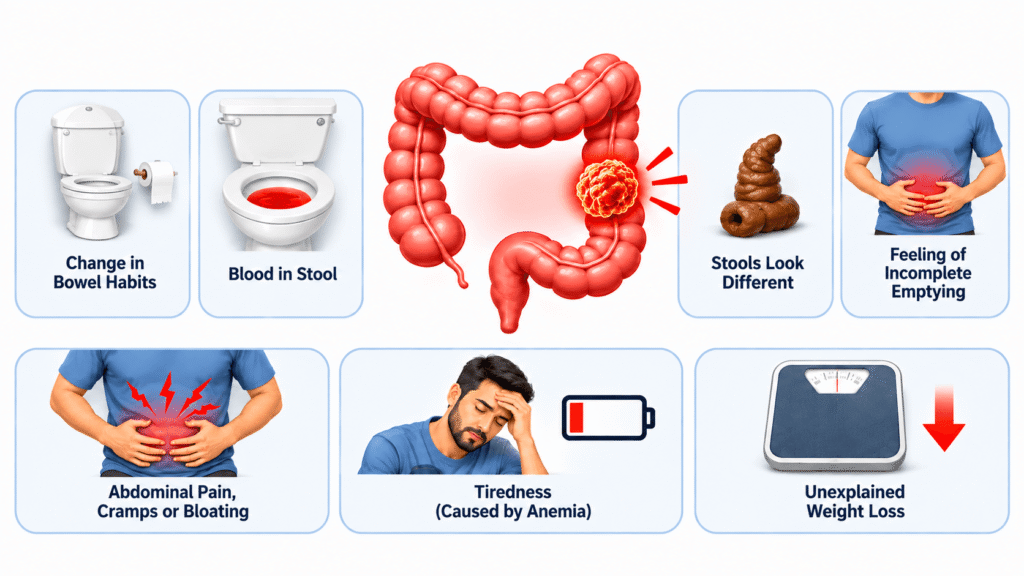
People most often notice a change in bowel habits that lasts more than a few days, bright red blood from the rectum, a feeling that the bowel hasn’t emptied, abdominal pain, tiredness caused by anemia, or unexplained weight loss. Early colon cancer can also cause no symptoms at all, which is why screening matters. Most of these signs have harmless causes such as piles or irritable bowel syndrome, but you should not assume that. If a symptom keeps coming back, lasts for weeks, or involves blood, see a doctor and ask whether a colonoscopy is needed.
Key Takeaways
- Early colon cancer may cause no symptoms, so waiting for symptoms is not a screening plan.
- Common signs are a lasting change in bowel habits, rectal bleeding, abdominal pain, tiredness from anemia and unexplained weight loss.
- Most of these signs are far more often caused by piles, infection or irritable bowel syndrome, but blood or a symptom that lingers should never be assumed to be “just piles.”
- Doctors in India report that young adults are often diagnosed late because nobody suspects cancer at their age.
- Diagnosis is confirmed by a biopsy, usually taken during a colonoscopy. Blood tests and stool tests cannot diagnose colon cancer on their own.
- If you have symptoms, family history or are 45 or older, talk to a doctor about testing.
Why Colon Cancer Is Easy to Miss
The American Cancer Society says colorectal cancer might not cause symptoms right away. Most people who have polyps, the small growths that can turn into cancer, do not have symptoms either. When symptoms do appear, many are caused by conditions other than cancer, such as infection, hemorrhoids or irritable bowel syndrome.
That overlap is the problem. A symptom that could be a minor issue is easy to explain away, especially if it comes and goes. A hospital summary of early-onset research notes that when warning signs show up separately or intermittently, they can easily be brushed off as less urgent.
In India there are extra hurdles. A doctor quoted in an IANS report says the country has no organised screening programme, many people lack easy access to testing, and red-flag symptoms such as bleeding are often ignored or misdiagnosed as piles. The same report says most people in India are diagnosed at a later stage.
How I Knew I Had Colon Cancer: What Patients Commonly Describe
Not everyone has all of these signs, and some people have none. These are the signs that medical sources most often list, and that people with colon cancer commonly say they noticed.
1. A change in bowel habits that lasts
The American Cancer Society lists diarrhea, constipation or narrower stools that last for more than a few days. People often describe it as their bowels “not being normal” for weeks. Because the change may come and go, it is easy to blame food, travel or stress.
2. Blood in the stool or rectal bleeding
Bright red blood from the rectum is one of the best-known signs. It is also the one most often blamed on piles. A Northwestern Medicine specialist stresses that rectal bleeding should not be ignored, whatever the amount. Piles and fissures are much more common causes, but they are still something to confirm with an examination instead of assuming.
3. Stools that look different
The American Cancer Society also lists a change in stool colour, either red or black, and stools that become narrow. Black stools can mean bleeding higher up in the digestive tract, so mention them to your doctor.
4. A feeling that the bowel hasn’t emptied
Some people feel they still need to go even after a bowel movement. Northwestern Medicine notes that rectal cancer in particular is more likely to cause a feeling of incomplete emptying or changes in stool shape.
5. Abdominal pain, cramps or bloating
In a study of early-onset colorectal cancer, abdominal pain was one of four red-flag symptoms, along with rectal bleeding, diarrhea and iron-deficiency anemia. The study found these can appear up to two years before diagnosis. Pain that persists or keeps returning should be looked into, even if it feels like gas or acidity.
6. Tiredness caused by anemia
Slow bleeding from a tumour can cause low iron and low red blood cell counts, which leads to tiredness, weakness and breathlessness. Northwestern Medicine notes that cancers on the right side of the colon may cause anemia without any visible bleeding. This is why a blood test can sometimes be the first clue. If you have unexplained tiredness or have been told you are anemic, ask your doctor why.
7. Unexplained weight loss
Unintentional weight loss, persistent abdominal pain or ongoing changes in bowel habits deserve attention at any age, according to Northwestern Medicine. Losing weight without trying is a reason to see a doctor, whatever the cause turns out to be.
Piles, IBS or Something More Serious?
This table is not a way to diagnose yourself. It shows why a common explanation should be confirmed and not just assumed.
| Sign | A common harmless explanation | Why it still needs a check |
|---|---|---|
| Bright red blood | Piles or anal fissures | Blood should not be assumed to be piles without an examination, especially if it lasts or comes with other symptoms |
| Change in bowel habits | Infection, diet, irritable bowel syndrome | Changes that last more than a few days, or keep returning, can have other causes |
| Tiredness | Busy life, poor sleep | Slow bleeding can cause iron-deficiency anemia |
| Abdominal pain or bloating | Gas, acidity | Pain that persists or worsens needs investigation |
| Weight loss | Stress, diet changes | Losing weight without trying is a red flag |
Why Young Adults Are Often Diagnosed Late
Colon cancer is often thought of as a disease of older people. That belief is part of the problem.
- A 2023 study by the Delhi State Cancer Institute, as reported by IANS, suggests colon cancer is increasingly shifting from people over 50 to young adults aged 31 to 40.
- A surgeon writing in The Week says that roughly a third of colorectal cancer patients at Indian cancer centres are under 40, and that young patients are often diagnosed later because rectal bleeding gets called piles and age is used as a reason to rule cancer out.
- Global estimates from GLOBOCAN 2022 place colorectal cancer as the fourth most common cancer in India, with an estimated 64,863 new cases and 38,367 deaths, as reported by The South First.
These figures come from news reports and a surgeon’s commentary and should be read as indicators, not exact counts. The practical message is the same: age is not a diagnosis. If you are in your twenties or thirties with bleeding, lasting bowel changes or persistent pain, ask for a proper examination, and if you have been treated for piles without improvement, ask whether a colonoscopy is needed.
Who Is at Higher Risk?
Anyone can develop colon cancer, but some things raise the risk:
- A family history of colon cancer
- A personal history of colorectal polyps
- Inflammatory bowel disease, such as ulcerative colitis or Crohn’s disease
- Inherited syndromes linked to colon cancer
- Smoking, alcohol, obesity and lack of exercise
For people with additional risk factors, the American Cancer Society notes that a doctor may recommend screening earlier than usual. If a close relative had colon cancer, tell your doctor and ask when you should start.
What Happens When You See a Doctor
A gastroenterologist or your family doctor will usually begin with your history and an examination. Other steps may include:
- Blood tests. Mayo Clinic explains that blood tests aren’t used to diagnose colon cancer, but they can show a low red blood cell count.
- A stool test. A faecal test looks for hidden blood. It cannot diagnose cancer, but a positive result usually means you need a colonoscopy.
- A colonoscopy with biopsy. A thin flexible tube with a camera is used to look inside the colon, and a tissue sample is taken for examination. Mayo Clinic says the sample is often collected during a colonoscopy, and a biopsy is what confirms the diagnosis.
- Scans, if cancer is found. A CT scan is the main imaging test used to see whether cancer has spread, and other tests such as MRI may be added. Colon cancer stages range from 0 to 4.
Roswell Park Cancer Institute adds that genetic testing or counselling may be suggested if you were diagnosed before 60 or have a family history of colon, stomach or uterine cancer. You can find a gastroenterologist to arrange a colonoscopy and discuss your symptoms.
Screening: Don’t Wait for Symptoms
The American Cancer Society recommends that adults at average risk start regular colorectal cancer screening at 45. Screening can find polyps before they turn cancerous and cancer at an earlier stage, when it is usually easier to treat. India does not have a nationwide organised screening programme, so you may need to ask for it, for example through a health checkup. Talk to your doctor about which test suits you and when to start, especially if you have a family history. You can browse hospitals to find a centre where you can have this discussion.
When to See a Doctor
Get urgent medical help if you have:
- Heavy or ongoing rectal bleeding
- Severe abdominal pain, repeated vomiting, or you are unable to pass stool or wind
Make an appointment soon if you notice:
- Any rectal bleeding, even a small amount
- A bowel habit change that lasts more than a few days or keeps coming back
- Black stools or stools that are persistently narrow
- Abdominal pain or bloating that won’t settle
- Tiredness, or a blood test showing anemia without a clear cause
- Weight loss you can’t explain
A lasting change in bowel habits or bleeding that continues for more than about three weeks is a point many specialists use to ask for a colonoscopy instead of just trying another treatment for piles.
If You Are Diagnosed with Colon Cancer
A diagnosis is frightening, but you do not have to make decisions in a hurry or alone. Mayo Clinic notes that treatment usually involves surgery, and that the stage of the cancer guides what else may be needed. A free second opinion can help you review the plan, and you can compare oncology specialists before deciding where to be treated. Ask your care team to explain the stage, the treatment options and what the next steps are.
Frequently Asked Questions
Can colon cancer have no symptoms?
Yes. The American Cancer Society says colorectal cancer might not cause symptoms right away, and most people with polyps have no symptoms. That is why screening matters, even when you feel well.
Is blood in the stool always piles?
No. Piles and fissures are the most common causes of rectal bleeding, but bleeding should not be assumed to be piles without an examination. See a doctor if bleeding lasts, comes back or comes with other symptoms such as a change in bowel habits, pain, tiredness or weight loss.
What does colon cancer stool look like?
It can look normal. When there are changes, they can include bright red blood, dark or black stools, or stools that become narrower. Stool appearance alone cannot tell you whether you have cancer, so any lasting change is worth checking.
Can you get colon cancer in your 20s or 30s?
Yes. Colon cancer is being seen more often in younger adults, and Indian doctors report that these patients are often diagnosed late because cancer is not suspected at their age. Don’t let your age be a reason to stop asking questions about symptoms that persist.
How long can you have colon cancer without knowing?
There is no fixed answer. Early colon cancer may cause no symptoms. In a study of early-onset cases, red-flag symptoms such as abdominal pain, rectal bleeding, diarrhea and iron-deficiency anemia appeared up to two years before diagnosis.
What are the first signs of colon cancer in women and men?
The signs are similar in both: a lasting change in bowel habits, rectal bleeding, abdominal pain, tiredness from anemia and weight loss. Anemia without an obvious cause is worth investigating in anyone, so ask your doctor to look for the reason.
Does colon cancer pain feel like gas?
It can. Abdominal pain from colon cancer may feel like cramps, bloating or gas, which is why it is so often put down to acidity. Pain that persists, returns or comes with other signs such as bleeding or weight loss should be checked.
When should I get a colonoscopy?
Your doctor will decide based on your symptoms, family history and age. For adults at average risk, the American Cancer Society recommends starting screening at 45. If you have symptoms such as rectal bleeding or lasting bowel changes, a colonoscopy may be recommended sooner.
Is a stool test enough to rule out colon cancer?
A faecal test looks for hidden blood. It cannot diagnose cancer, but it may show that you need a colonoscopy. If you have ongoing symptoms, ask your doctor whether a colonoscopy is more appropriate than relying on a stool test alone.
What if I’ve been treated for piles for months?
Go back and ask whether piles were confirmed by an examination, and whether a colonoscopy is needed. A free second opinion can also help if you feel your symptoms are not being taken seriously.
Conclusion: Notice the Pattern and Ask for the Test
How I knew I had colon cancer is, for many people, not a single dramatic moment. It is a pattern: blood that kept appearing, bowels that stayed different, a tiredness that never lifted, or pain that wouldn’t settle. The common thread is that the signs were easy to explain away.
If any of this sounds familiar, don’t wait for it to get worse. Ask for an examination and a colonoscopy if your doctor advises it. Azzocare offers a free medical opinion and cost estimate from specialists, usually within 48 hours, plus help with medical visas and travel for international patients. You can book a free consultation on Azzocare or read about medical travel to India.
This article is for informational purposes only. Always consult a qualified healthcare professional for medical advice.
Sources
- American Cancer Society: colorectal cancer signs and symptoms
- Northwestern Medicine: colorectal cancer risk factors, early signs and screening
- Sharp HealthCare: colon cancer in young people rises, age for screening drops
- GW Hospital: the screening is simple, colorectal cancer isn’t
- IANS via DT Next: why are young people more prone to colon cancer in India?
- The Week: too young for colon cancer? This dangerous myth is delaying diagnosis
- The South First: doctors sound alarm as preventable colorectal cancer claims thousands of lives
- Mayo Clinic: colon cancer diagnosis and treatment
- Roswell Park Comprehensive Cancer Center: colorectal cancer diagnosis
- Mount Elizabeth Hospitals: colon cancer and colonoscopy