
Heart Bypass Surgery Cost in India
Heart bypass surgery cost in India generally ranges from ₹2,00,000 to ₹7,00,000 (approximately USD 2,400 to USD 8,500), depending on the hospital, city, type of bypass, and the patient’s medical condition. Private hospitals in metro cities like Delhi, Mumbai, and Chennai typically charge between ₹3,50,000 and ₹7,00,000, while government hospitals such as AIIMS may offer the procedure for ₹1,00,000 to ₹2,50,000. Internationally, the same surgery costs over USD 1,00,000 in the United States — making India one of the most cost-effective destinations for high-quality cardiac care in the world. Most top Indian hospitals are NABH and JCI accredited, with bypass surgery success rates of 95–99%.
Key Takeaways
- Heart bypass surgery (CABG) in India costs ₹2–7 lakh depending on hospital type, city, and complexity.
- Private hospitals offer advanced technology and faster scheduling; government hospitals offer significantly lower costs.
- India’s bypass surgery cost is 60–90% lower than in the USA, UK, or Singapore.
- Top hospitals like Apollo, Fortis Escorts, Medanta, and Narayana Health have success rates of 95–99%.
- Most health insurance policies in India cover bypass surgery as a critical illness or major surgery benefit.
- Ayushman Bharat (PM-JAY) covers heart bypass surgery for eligible patients under its government scheme.
- Recovery typically takes 6–12 weeks, with most patients returning to light activity within 4–6 weeks.
What Is Heart Bypass Surgery (CABG)?
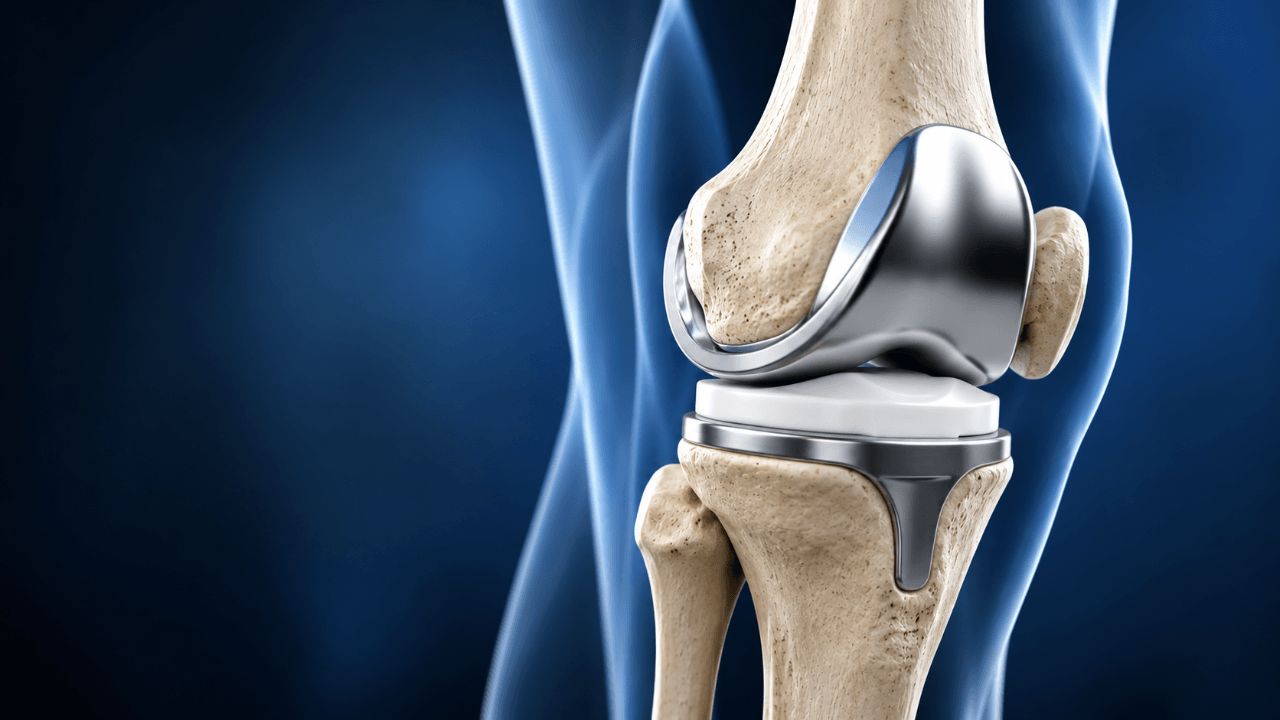
Heart bypass surgery, medically known as Coronary Artery Bypass Grafting (CABG), is one of the most commonly performed cardiac surgeries in the world. It is a procedure designed to restore normal blood flow to the heart when one or more coronary arteries become blocked or severely narrowed — a condition that significantly increases the risk of a heart attack.
During the surgery, a cardiac surgeon takes a healthy blood vessel — usually from the chest wall (internal mammary artery), leg (saphenous vein), or arm (radial artery) — and uses it to create a detour around the blocked artery. This new route, or “bypass,” allows oxygen-rich blood to reach the heart muscle again.
According to the Cleveland Clinic, CABG is recommended when coronary arteries are severely blocked and other treatments like angioplasty or stenting are not sufficient.
How Does the Procedure Work?
In a conventional bypass surgery, the patient is placed on a heart-lung machine that temporarily takes over the function of the heart and lungs. The surgeon then stops the heart, performs the grafting, and restarts the heart after the procedure is complete. The surgery typically lasts 3 to 6 hours and requires general anaesthesia.
More advanced options like off-pump (beating heart) CABG and minimally invasive CABG have reduced complications and recovery time significantly in recent years.
When Does a Doctor Recommend Bypass Surgery?
Your cardiologist or cardiac surgeon may recommend CABG when:
- One or more coronary arteries are blocked or severely narrowed
- You have persistent chest pain (angina) that does not respond to medication
- You have had a heart attack and the arteries remain at high risk
- Angioplasty or stenting is not suitable for your anatomy
- You have diabetes and multiple vessel disease
It is important to understand that CABG does not cure the underlying cause of coronary artery disease (such as atherosclerosis) — it treats the blockage and improves blood flow. Recognising the warning signs of cardiovascular disease early can help you seek treatment before the condition worsens to the point where bypass surgery becomes necessary.
Types of Heart Bypass Surgery in India
Indian hospitals perform all major types of CABG:
| Type | Description | Relative Cost |
|---|---|---|
| Single Bypass | One artery bypassed | Lowest |
| Double Bypass | Two arteries bypassed | Moderate |
| Triple Bypass | Three arteries bypassed | Higher |
| Quadruple Bypass | Four arteries bypassed | Highest |
| Off-Pump CABG | Heart kept beating; no heart-lung machine | Slightly higher than conventional |
| Minimally Invasive CABG | Small incisions; faster recovery | Higher |
| Robotic-Assisted CABG | Robot-guided precision surgery | Premium pricing |
Heart Bypass Surgery Cost in India — At a Glance
Overall Cost Range (INR & USD)
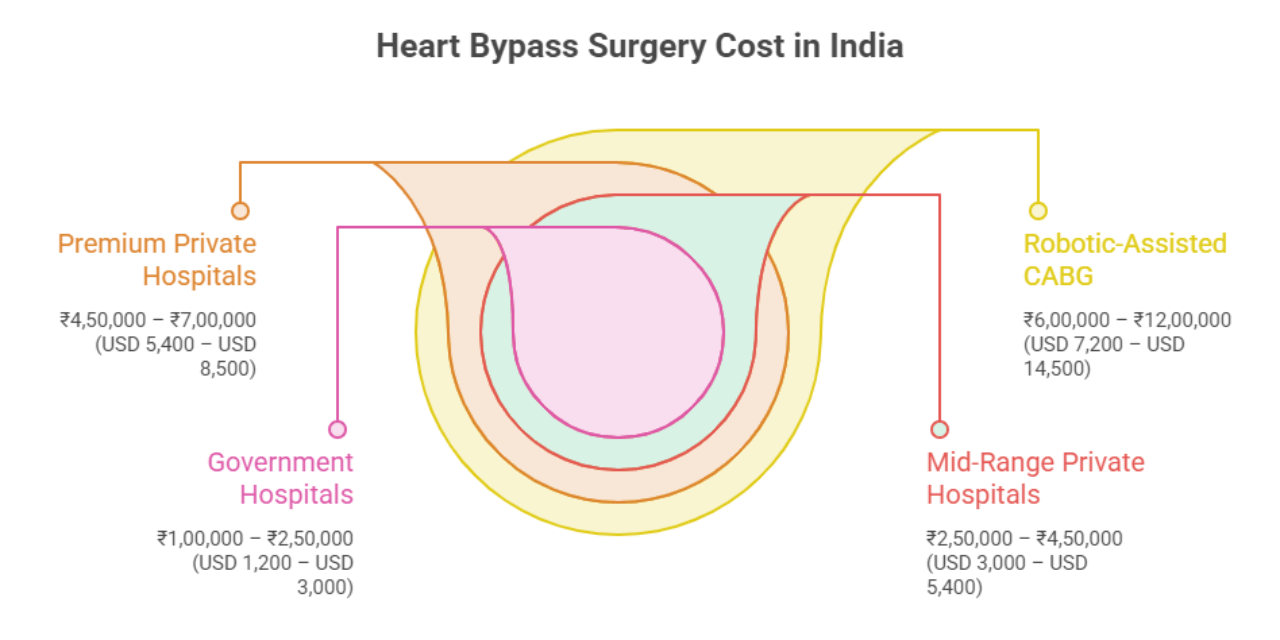
The average heart bypass surgery cost in India in 2025–2026 ranges from:
- Government hospitals: ₹1,00,000 – ₹2,50,000 (USD 1,200 – USD 3,000)
- Mid-range private hospitals: ₹2,50,000 – ₹4,50,000 (USD 3,000 – USD 5,400)
- Premium private hospitals: ₹4,50,000 – ₹7,00,000 (USD 5,400 – USD 8,500)
- Robotic-assisted CABG: ₹6,00,000 – ₹12,00,000 (USD 7,200 – USD 14,500)
For a detailed breakdown specifically focused on average costs across different hospital categories, you can also read our dedicated guide on the average cost of heart bypass surgery in India.
Cost Breakdown: What Does the Price Actually Include?
One of the most common points of confusion for patients is understanding what is — and isn’t — included in the quoted surgery cost. Here is a typical breakdown:
| Cost Component | Approximate Range (INR) |
|---|---|
| Pre-operative diagnostic tests (ECG, echo, angiography, blood tests) | ₹10,000 – ₹25,000 |
| Surgeon’s fees | ₹50,000 – ₹1,50,000 |
| Anaesthesiologist fees | ₹15,000 – ₹40,000 |
| ICU charges (3–5 days) | ₹30,000 – ₹1,00,000 |
| Hospital room charges (5–7 days post-ICU) | ₹25,000 – ₹80,000 |
| Surgical consumables, graft material, hardware | ₹30,000 – ₹80,000 |
| Medicines during hospitalisation | ₹15,000 – ₹40,000 |
| Cardiac rehabilitation (initial sessions) | ₹10,000 – ₹30,000 |
| Total Estimated | ₹2,00,000 – ₹7,00,000 |
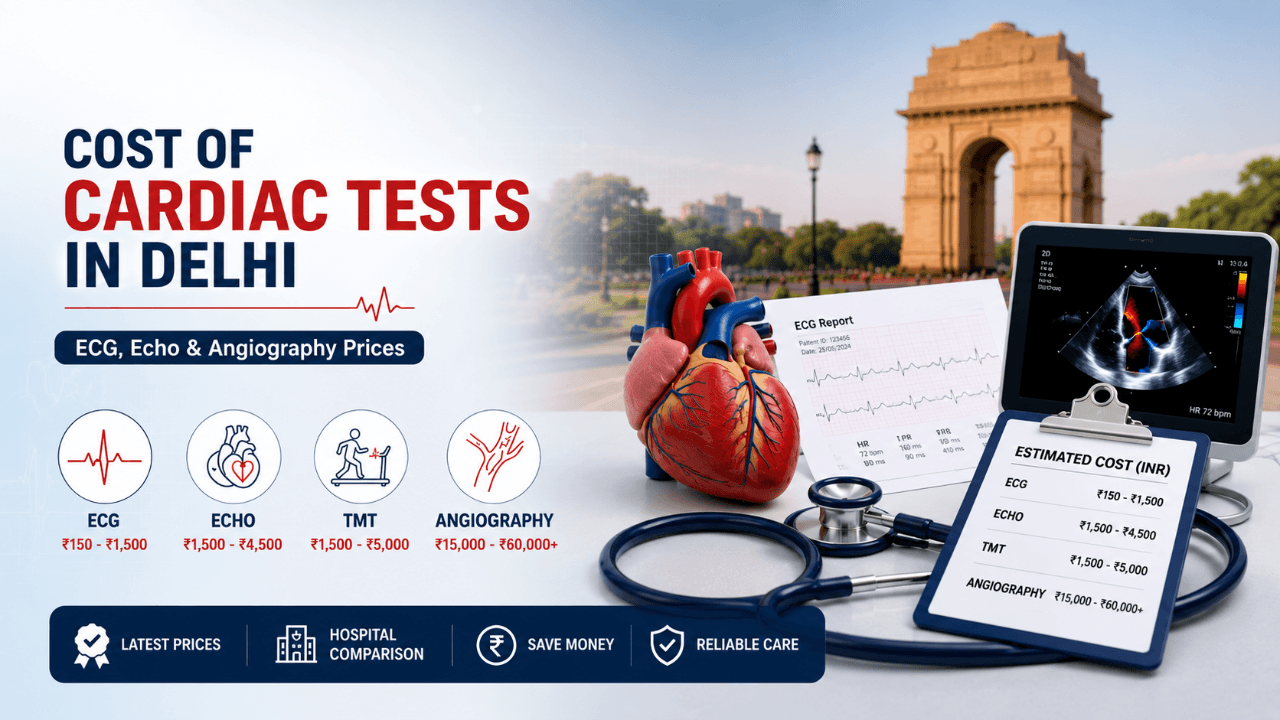
Important: Always ask the hospital for an itemised cost estimate. Some hospitals provide “package pricing” that includes most of the above, while others bill separately for each component. Complications, extended ICU stays, or additional procedures may increase the final bill. If you are in Delhi, you can also check the cost of cardiac tests in Delhi to budget your pre-operative workup separately.
Government Hospital vs. Private Hospital — Cost Comparison
| Hospital Type | Cost Range | Wait Time | Attention |
|---|---|---|---|
| Government | ₹1L–₹2.5L | Long | Moderate |
| Mid-tier Private | ₹2.5L–₹4.5L | Short | High |
| Premium Private | ₹4.5L–₹7L | Minimal | Excellent |
Heart Bypass Surgery Cost by City in India
The city you choose for your bypass surgery has a significant impact on the total cost. Tier-1 cities like Delhi, Mumbai, and Bengaluru tend to be more expensive due to higher operating costs, JCI/NABH accredited hospitals, and a larger concentration of senior cardiac surgeons.
Cost in Delhi / NCR
Delhi-NCR hosts some of India’s most respected cardiac centres, including Fortis Escorts Heart Institute, AIIMS, Medanta (Gurgaon), and BLK-Max Super Speciality Hospital.
- Cost range: ₹3,50,000 – ₹7,00,000 (private)
- Government (AIIMS): ₹1,00,000 – ₹2,00,000
Cost in Mumbai
Mumbai’s leading cardiac hospitals include Kokilaben Dhirubhai Ambani Hospital, Hinduja Hospital, Lilavati Hospital, and Wockhardt.
- Cost range: ₹3,00,000 – ₹6,50,000
Cost in Chennai & Bengaluru
Apollo Hospitals Chennai and Narayana Health Bengaluru are among the most celebrated cardiac centres in Asia.
- Chennai cost range: ₹2,50,000 – ₹6,00,000
- Bengaluru cost range: ₹2,50,000 – ₹5,50,000
Cost in Hyderabad, Kolkata & Other Cities
Hyderabad (CARE Hospitals, Apollo Jubilee), Kolkata (Medica Superspecialty, Fortis), and Pune (Ruby Hall, Sahyadri) offer excellent cardiac care at comparatively lower costs.
- Hyderabad: ₹2,50,000 – ₹5,50,000
- Kolkata: ₹2,00,000 – ₹4,50,000
- Pune: ₹2,00,000 – ₹4,50,000
City-Wise Cost Summary Table
| City | Government Hospital (INR) | Private Hospital (INR) |
|---|---|---|
| Delhi / NCR | ₹1,00,000 – ₹2,00,000 | ₹3,50,000 – ₹7,00,000 |
| Mumbai | ₹1,50,000 – ₹2,50,000 | ₹3,00,000 – ₹6,50,000 |
| Chennai | ₹1,00,000 – ₹2,00,000 | ₹2,50,000 – ₹6,00,000 |
| Bengaluru | ₹1,00,000 – ₹2,00,000 | ₹2,50,000 – ₹5,50,000 |
| Hyderabad | ₹1,00,000 – ₹2,00,000 | ₹2,50,000 – ₹5,50,000 |
| Kolkata | ₹80,000 – ₹1,80,000 | ₹2,00,000 – ₹4,50,000 |
| Pune | ₹80,000 – ₹1,80,000 | ₹2,00,000 – ₹4,50,000 |
| Ahmedabad | ₹80,000 – ₹1,50,000 | ₹2,00,000 – ₹4,00,000 |
Factors That Affect the Cost of Bypass Surgery in India
No two bypass surgeries cost exactly the same. Here are the key variables that determine your final bill:
Type of Surgery: Single, Double, Triple, or Quadruple Bypass
The number of arteries that need bypassing directly affects the cost, complexity, and duration of surgery. A single bypass involves the least grafting work, while a quadruple bypass requires significantly more surgical time, consumables, and ICU care.
- Single bypass: ₹2,00,000 – ₹3,50,000
- Double bypass: ₹2,50,000 – ₹4,50,000
- Triple bypass: ₹3,00,000 – ₹5,50,000
- Quadruple bypass: ₹3,50,000 – ₹7,00,000
Surgeon’s Experience and Hospital Tier
A senior cardiac surgeon with 20+ years of experience and a high-volume practice commands higher fees — but also brings a significantly better safety profile. You can find and compare experienced cardiac doctors on Azzocare to review qualifications, experience, and patient feedback before making a decision. Senior surgeons at premier hospitals typically charge 30–50% more than at a general private hospital, but the outcomes data often justifies the premium.
Technology Used: Conventional vs. Off-Pump vs. Robotic CABG
- Conventional on-pump CABG is the most affordable and widely available.
- Off-pump (beating heart) CABG avoids the heart-lung machine and may reduce complications, particularly in older or high-risk patients. Costs 10–20% more.
- Minimally invasive CABG uses smaller incisions, reducing recovery time. Costs 20–30% more.
- Robotic-assisted CABG offers the greatest precision but costs ₹6,00,000 – ₹12,00,000 — still significantly lower than the USD 30,000–50,000 charged in the USA for the same procedure.
Patient’s Overall Health and Complexity
Patients with comorbidities such as diabetes, kidney disease, or obesity may require longer ICU stays, additional monitoring, or supplementary procedures — all of which increase costs. If you or your family member has been experiencing signs and symptoms of congestive heart disease alongside coronary artery blockages, the surgical complexity — and therefore the cost — may be higher. Emergency bypass surgeries following a heart attack also tend to cost more than planned (elective) procedures.
Length of Hospital Stay and ICU Days
Standard CABG in India requires:
- ICU stay: 3–5 days
- Hospital ward stay: 5–7 days after ICU
- Total hospitalisation: 7–12 days
Any extension of the ICU stay due to complications can add ₹10,000 – ₹25,000 per day to the bill.
Best Hospitals for Heart Bypass Surgery in India
India is home to some of the world’s finest cardiac care centres. Here is an overview of the top hospitals trusted by both domestic patients and international medical tourists.
Apollo Hospitals
Apollo is one of India’s largest and most respected hospital chains, with dedicated Heart Institutes across Chennai, Delhi, Hyderabad, and Kolkata. Apollo has reported a 99.6% bypass surgery success rate and has performed over 1,70,000 heart surgeries. Its hospitals are JCI and NABH accredited. Apollo also leads in robotic-assisted and minimally invasive cardiac procedures.
Fortis Escorts Heart Institute (Delhi)
Widely regarded as Asia’s leading heart hospital, Fortis Escorts in Okhla, New Delhi has performed over 80,000 adult cardiac surgeries. It maintains a 99% success rate in bypass surgeries. The hospital is equipped with cutting-edge technology including dual CT scan, hybrid operating theatres, and 24/7 cardiac emergency services.
Medanta — The Medicity (Gurugram)
Medanta houses one of India’s most advanced Cardiac Sciences departments, led by globally recognised surgeons. It is particularly popular with patients from the Middle East, Africa, and Central Asia. Medanta offers comprehensive cardiac packages that include pre-operative evaluation, surgery, and post-operative rehabilitation.
Narayana Health (Bengaluru)
Founded by renowned cardiac surgeon Dr. Devi Shetty, Narayana Health is celebrated worldwide for delivering world-class cardiac surgery at exceptional value. Its Bengaluru facility handles one of the highest volumes of CABG procedures in India and is frequently cited for its cost-effectiveness without compromising clinical outcomes.
BLK-Max Super Speciality Hospital (Delhi)
BLK-Max Super Speciality Hospital in New Delhi is one of North India’s premier multi-speciality hospitals with a dedicated Centre for Cardiac Sciences. It offers advanced CABG procedures including off-pump and minimally invasive options, performed by a highly experienced cardiac surgery team.
AIIMS Delhi (Government Option)
For patients seeking the most affordable route, AIIMS Delhi remains the gold standard in Indian government healthcare. It offers highly skilled cardiac surgeons — many of whom also consult at top private hospitals — at a fraction of the private hospital cost. The trade-off is longer waiting periods and limited personalised amenities.
You can explore all top hospitals in India on Azzocare and compare facilities, accreditation, and specialties before deciding.
India vs. Other Countries — Cost Comparison
One of the most compelling reasons patients — both Indian and international — choose to have their bypass surgery in India is the dramatic cost difference compared to Western countries.
India vs. USA
In the United States, a coronary artery bypass surgery can cost anywhere from USD 70,000 to USD 1,50,000, even with health insurance. In India, the same procedure at a JCI-accredited private hospital costs USD 4,500 to USD 8,500 — a saving of 85–95%.
India vs. UK
In the UK’s NHS, bypass surgery is available free of charge for British residents, but waiting periods can stretch from several months to over a year for elective cases. Private bypass surgery in the UK costs USD 25,000 to USD 50,000. Indian hospitals offer immediate scheduling with no waiting lists.
India vs. Singapore & Thailand
Singapore is another popular medical tourism destination but charges USD 18,000 to USD 30,000 for CABG. Thailand costs USD 12,000 to USD 20,000. India remains the most affordable option among all major cardiac care destinations.
Global Cost Comparison Table
| Country | Average CABG Cost (USD) | Avg. Wait Time | JCI Hospitals Available |
|---|---|---|---|
| India | $4,500 – $8,500 | Days | Yes |
| USA | $70,000 – $1,50,000 | Days–Weeks | Yes |
| UK (Private) | $25,000 – $50,000 | Days–Weeks | Yes |
| Singapore | $18,000 – $30,000 | Days | Yes |
| Thailand | $12,000 – $20,000 | Days | Yes |
| Germany | $20,000 – $40,000 | Days–Weeks | Yes |
Why Is Bypass Surgery So Affordable in India?
India’s cost advantage comes from several structural factors:
- Lower cost of living and labour: Nursing staff, technicians, and support personnel cost a fraction of their Western counterparts.
- High surgical volume: Indian cardiac centres perform thousands of CABG procedures every year, driving down per-procedure costs significantly.
- Competitive private healthcare market: Dozens of premium hospitals compete for patients, keeping prices in check.
- Government support: Policy incentives have driven investment in advanced medical infrastructure.
- No litigation premium: Malpractice insurance costs — which inflate bills in the USA — are far lower in India.
Crucially, affordability does not mean compromised quality. To understand the full scope of medical tourism in India, including hospitals, specialties, and how to plan your trip, Azzocare’s dedicated guide covers everything you need to know.
Health Insurance & Government Schemes for Bypass Surgery in India
Understanding your financial options can significantly reduce the out-of-pocket burden of bypass surgery.
Does Health Insurance Cover Bypass Surgery?
Yes — most individual and family health insurance plans in India cover heart bypass surgery. CABG is typically classified as a major surgery or critical illness, both of which trigger insurance benefits. Coverage typically includes:
- Hospitalisation charges (ICU + ward)
- Surgeon and anaesthesiologist fees
- Pre and post-hospitalisation expenses (usually 30–60 days before and after surgery)
- Medicines during hospitalisation
However, certain plans may have sub-limits on room rent or surgical procedures — so read your policy document carefully or speak to your insurer before surgery.
Tip: File a pre-authorisation request with your insurer at least 3–5 days before planned surgery to streamline cashless claims and avoid disputes later.
Ayushman Bharat (PM-JAY) Coverage
The Pradhan Mantri Jan Arogya Yojana (PM-JAY) — popularly known as Ayushman Bharat — is the world’s largest government health insurance scheme. It provides health coverage of up to ₹5,00,000 per family per year for economically weaker sections of Indian society.
Heart bypass surgery (CABG) is covered under PM-JAY, and eligible patients can avail of this procedure at empanelled government and private hospitals at zero cost. To check eligibility and find empanelled hospitals near you, visit the official Ayushman Bharat portal or ask your state health authority.
CGHS & ESI for Government Employees
- CGHS (Central Government Health Scheme): Active and retired central government employees and their dependents can avail bypass surgery at CGHS-empanelled hospitals at government-approved rates.
- ESIC (Employees’ State Insurance Corporation): Covers industrial workers and their families. CABG is covered under ESIC at designated hospitals.
Tips for Filing an Insurance Claim
- Always choose a network hospital of your insurer for cashless hospitalisation.
- Inform your insurer about admission within 24 hours of hospitalisation.
- Keep all original bills, discharge summaries, investigation reports, and prescriptions.
- If the claim is denied, you have the right to appeal to the Insurance Ombudsman.
For any queries about cardiology-related procedures and coverage, you can also explore Azzocare’s cardiology specialty page for a broader understanding of cardiac treatments covered in India.
What to Expect: Bypass Surgery Recovery in India
Recovery from heart bypass surgery is a gradual process. Understanding the timeline helps you plan your return to daily life — and helps your family provide the right support at each stage.
Hospital Stay Duration
Most patients spend 7–12 days in hospital following CABG:
- Days 1–4 (ICU): You will be on a ventilator briefly, then monitored closely as your heart stabilises.
- Days 5–12 (Cardiac Ward): Ventilator is removed; breathing exercises and gentle movement begin; wounds are monitored for infection.
You will be discharged once your vitals are stable, your incision is healing well, and you can walk short distances independently.
Recovery Timeline (Week by Week)
| Week | What to Expect |
|---|---|
| Week 1–2 | Rest at home; wound care; no lifting or driving |
| Week 3–4 | Short walks; fatigue gradually reduces; appetite returns |
| Week 5–6 | Light household activities; outpatient follow-up with cardiologist |
| Week 7–8 | Most patients resume desk work; driving permitted if cleared |
| Week 10–12 | Full recovery for most patients; light exercise begins |
| 3–6 months | Cardiac rehab completed; near-normal lifestyle resumes |
Cardiac Rehabilitation and Exercise After Bypass Surgery
Cardiac rehabilitation is a supervised programme of exercise, dietary counselling, and psychological support that significantly improves long-term outcomes after bypass surgery. Studies show that patients who complete cardiac rehab have a 25–30% lower risk of future cardiac events compared to those who skip it.
Once your surgeon clears you for physical activity — typically around the 6–8 week mark — gentle exercise for heart health at home is one of the most effective ways to rebuild stamina and strengthen your cardiovascular system. Starting with short walks and gradually increasing duration and intensity is the standard recommended approach.
Lifestyle Changes After Surgery
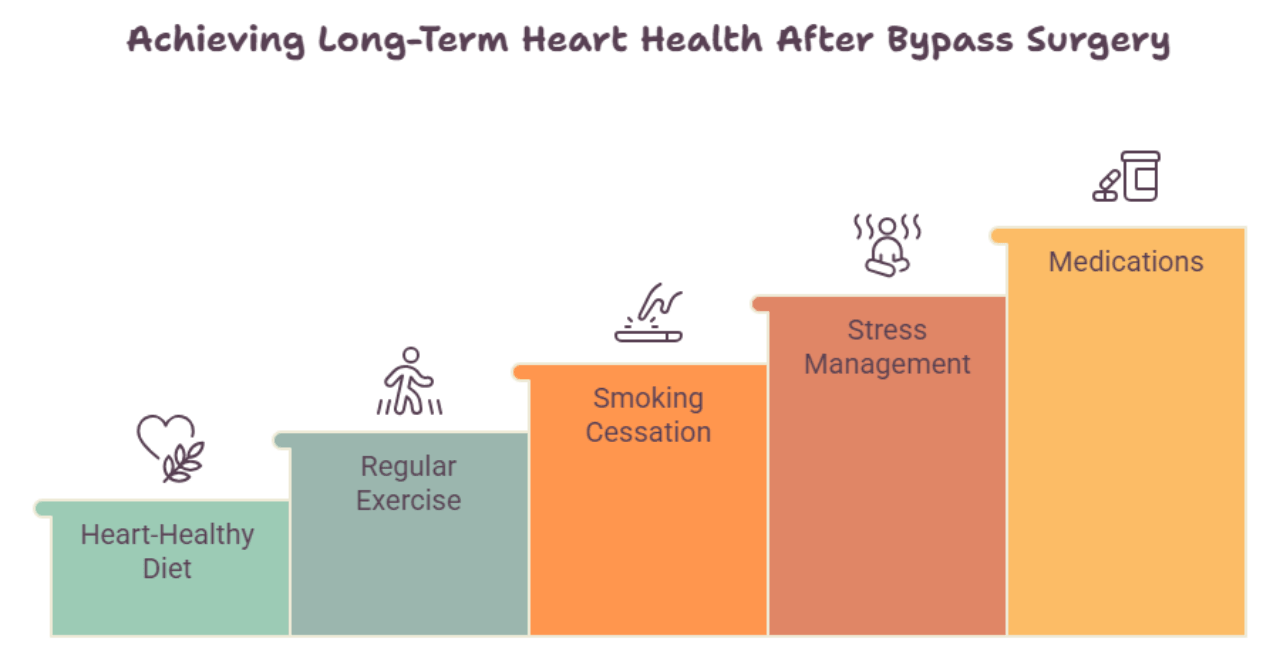
Bypass surgery gives your heart a second chance — but only a healthier lifestyle protects that investment. Your care team will advise:
- A heart-healthy diet: Research shows that certain foods clean arteries naturally and reduce the risk of re-blockage — including oily fish, oats, leafy greens, and nuts. Incorporating these consistently after surgery is strongly recommended.
- Regular exercise — brisk walking for 30 minutes, 5 days a week, once cleared
- Smoking cessation — non-negotiable
- Stress management — meditation, yoga, and breathing exercises
- Medications as prescribed — statins, antiplatelets, beta-blockers, and ACE inhibitors are typically continued long-term
For a comprehensive post-surgery lifestyle plan, our guide on how to improve heart health naturally covers evidence-based strategies that work alongside your medical treatment.
For International Patients: Planning Bypass Surgery in India
India welcomes thousands of international patients every year for cardiac surgery, and the support infrastructure is well developed. If you are travelling from abroad for bypass surgery, here is what to plan for:
- Medical Visa: India offers a dedicated Medical Visa (M-Visa) for patients and attendants. Azzocare’s visa assistance service can guide you through the application process, including required documents from your treating hospital.
- Travel & Accommodation: Most major cardiac hospitals are located near international airports. Budget for accommodation for 2–3 weeks (1 week hospitalisation + 1–2 weeks recovery before flying).
- Telemedicine Consultation: Before you travel, you can book an appointment online with Azzocare to get a pre-treatment consultation, cost estimate, and hospital recommendation tailored to your diagnosis.
- Post-Discharge Follow-up: Most hospitals now offer tele-cardiology follow-ups so international patients can consult their surgeon remotely after returning home.
For a complete overview of what India offers to medical travellers — from treatment planning to accommodation — visit our medical tourism in India guide.
Frequently Asked Questions
How much does heart bypass surgery cost in India in 2025–2026?
Heart bypass surgery cost in India in 2025–2026 ranges from ₹2,00,000 to ₹7,00,000 (USD 2,400 to USD 8,500) in private hospitals, and ₹1,00,000 to ₹2,50,000 in government hospitals. The final cost depends on the type of bypass (single, double, triple), the hospital and city chosen, the surgeon’s experience, and any complications during or after surgery. Metro cities like Delhi, Mumbai, and Chennai are at the higher end of the range, while Tier-2 cities like Kolkata, Ahmedabad, and Pune offer lower costs with comparable quality.
What is the difference between single, double, and triple bypass surgery costs?
The number of arteries that need to be bypassed directly affects how long the surgery takes and how many grafts are required, which raises the cost. A single bypass typically costs ₹2,00,000 – ₹3,50,000, a double bypass ₹2,50,000 – ₹4,50,000, and a triple bypass ₹3,00,000 – ₹5,50,000. A quadruple bypass — involving four arteries — can reach ₹7,00,000 at premium private hospitals. Your surgeon will determine how many bypasses are needed based on your angiography results.
Which is the best hospital for bypass surgery in India?
There is no single best hospital — the right choice depends on your city, budget, and clinical needs. For the highest clinical standards and international accreditation, Apollo Hospitals (Chennai, Delhi, Hyderabad), Fortis Escorts Heart Institute (Delhi), and Medanta — The Medicity (Gurugram) are consistently ranked among the finest. Narayana Health in Bengaluru is renowned for combining excellent outcomes with lower costs. AIIMS Delhi is the top choice for government hospital care. Explore all hospitals on Azzocare to compare facilities and find the best fit.
Is bypass surgery safe in India?
Yes. India’s top cardiac centres maintain clinical safety standards that are comparable to the best hospitals in the world. Most leading hospitals are accredited by the National Accreditation Board for Hospitals (NABH) and the Joint Commission International (JCI) — the two most respected healthcare quality certifications globally. Thousands of medical tourists from the USA, UK, Middle East, Africa, and Southeast Asia choose India annually for bypass surgery with excellent outcomes.
What is the success rate of bypass surgery in India?
The success rate of heart bypass surgery at India’s top hospitals is 95–99% for elective procedures in stable patients. Apollo Hospitals reports a 99.6% success rate for CABG. Fortis Escorts and Narayana Health report similar figures. Success rates depend on the patient’s age, overall health, complexity of the blockages, and the surgical team’s experience. High-risk patients (elderly, diabetic, or post-heart-attack) may have slightly lower but still very high success rates.
Does health insurance cover heart bypass surgery in India?
Yes, most health insurance plans in India cover heart bypass surgery as a major surgery benefit. Coverage typically includes hospitalisation charges, surgeon fees, ICU costs, and pre- and post-hospitalisation expenses. Some policies also include it under a critical illness rider. Always check your specific policy’s sub-limits and exclusions. For cashless hospitalisation, choose a hospital in your insurer’s network. You can also learn more about available cardiology treatments and procedures on Azzocare.
Is bypass surgery covered under Ayushman Bharat (PM-JAY)?
Yes. Heart bypass surgery (CABG) is covered under the Pradhan Mantri Jan Arogya Yojana (PM-JAY) for eligible beneficiaries. The scheme covers up to ₹5,00,000 per family per year for medical and surgical expenses at empanelled hospitals. Eligibility is determined by the Socio-Economic Caste Census (SECC). To check your eligibility, visit the official Ayushman Bharat portal or contact your nearest Common Service Centre (CSC). Eligible patients can receive bypass surgery at zero out-of-pocket cost.
How long does recovery take after bypass surgery?
Most patients are discharged from hospital within 7–12 days of bypass surgery. Full recovery — returning to desk work, driving, and light exercise — typically takes 6–12 weeks. The first two weeks require complete rest and wound care at home. By weeks 3–6, patients gradually increase their activity. Once cleared by your doctor, heart-healthy exercises at home form an important part of the rehabilitation process and help rebuild cardiovascular strength.
What is the cost of robotic heart bypass surgery in India?
Robotic-assisted heart bypass surgery in India costs between ₹6,00,000 and ₹12,00,000 (USD 7,200 – USD 14,500), depending on the hospital and complexity. This is significantly lower than the USD 30,000 – USD 50,000 charged in the USA for robotic CABG. Apollo Hospitals, Fortis, and BLK-Max offer robotic cardiac surgery. The benefits include smaller incisions, less blood loss, reduced infection risk, and faster recovery.
Can international patients get bypass surgery in India?
Absolutely. India is one of the world’s top medical tourism destinations, and cardiac surgery is the most common reason international patients visit. Leading hospitals have dedicated international patient desks with English-speaking coordinators, assistance with medical visas, airport transfers, and accommodation guidance. Azzocare’s visa assistance service can help with medical visa applications, and you can book your initial consultation online before travelling. For full travel and treatment planning, see our medical tourism in India guide.
What is included in the bypass surgery package cost?
Standard bypass surgery packages at most Indian private hospitals include: pre-operative diagnostic tests (ECG, echocardiogram, angiography), the surgery itself, anaesthesia charges, ICU stay (3–5 days), hospital ward stay (5–7 days), in-hospital medicines, and initial post-operative consultations. Some packages also include cardiac rehabilitation sessions. Excluded items typically include personal room upgrades, international patient services, travel, and accommodation.
How can I reduce the total cost of bypass surgery in India?
Several strategies can help reduce your out-of-pocket burden: (1) Choose a NABH-accredited hospital in a Tier-2 city where costs are 20–30% lower. (2) Opt for a standard general ward room instead of a premium suite. (3) Use your health insurance or Ayushman Bharat coverage for cashless treatment. (4) Compare package quotes from 2–3 hospitals before deciding — Azzocare’s hospital directory makes this easy. (5) Ask specifically about hidden charges such as consumables or take-home medications that may not be in the quoted package.
Conclusion
Heart bypass surgery can be a life-changing — and life-saving — procedure. The good news for patients in India is that world-class cardiac care is both accessible and affordable. Whether you choose a premier JCI-accredited private hospital in Delhi or Chennai, a government facility like AIIMS, or an emerging cardiac centre in Hyderabad or Pune, heart bypass surgery cost in India remains among the most competitive in the world — without compromising on quality or safety.
Understanding the factors that drive cost, knowing your insurance and government scheme entitlements, and choosing a hospital that fits your medical needs and budget are the three most important steps toward a successful outcome.
Ready to take the next step? Azzocare connects you with India’s top cardiac surgeons and hospitals, provides transparent cost estimates, and guides you through every step of your treatment journey.
👉 Book an appointment on Azzocare or explore our network of hospitals to get started today.
This article is for informational purposes only. Always consult a qualified cardiologist or cardiac surgeon before making any medical decisions. Individual costs and clinical outcomes may vary based on your specific health condition and chosen hospital.